
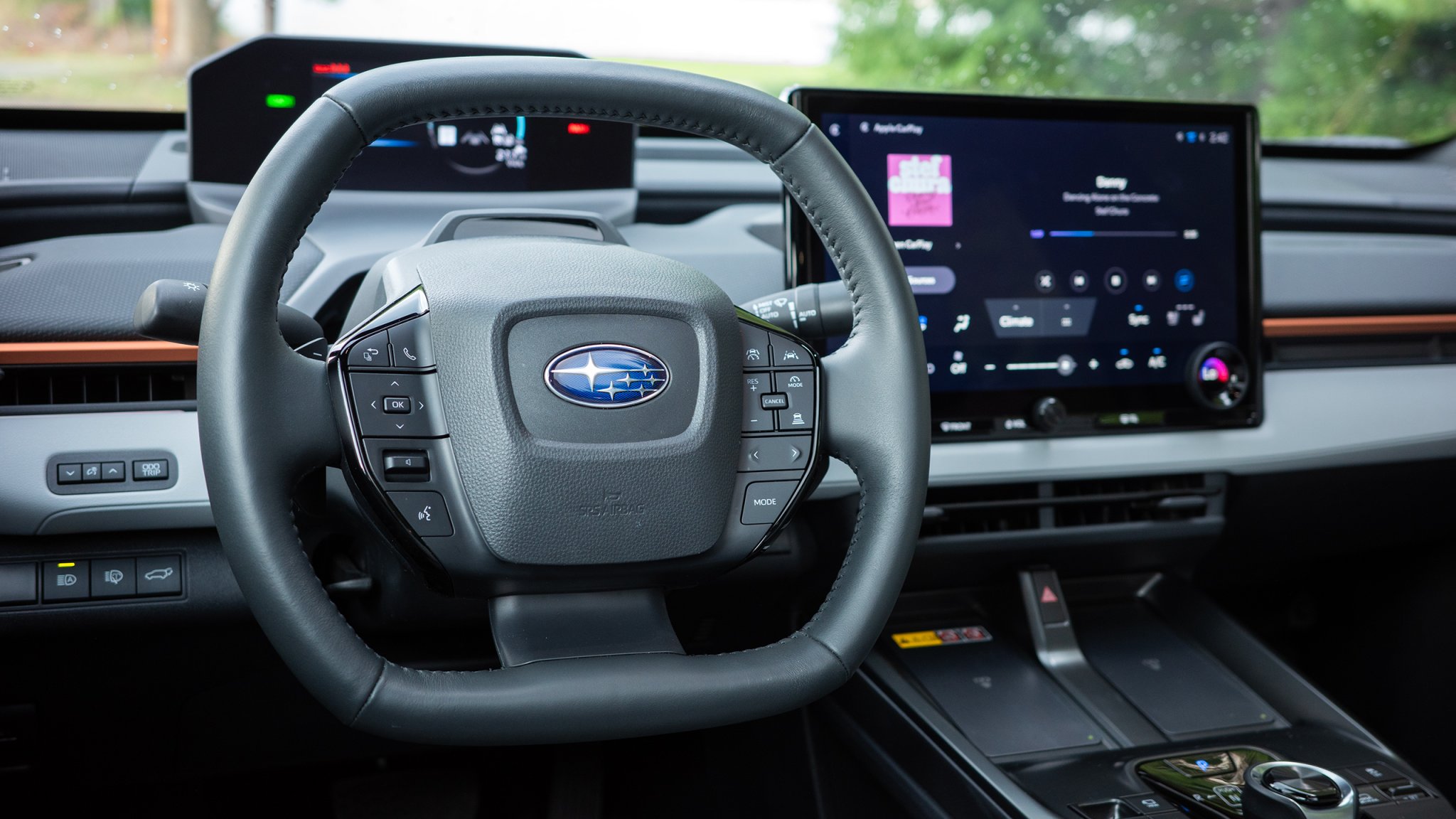
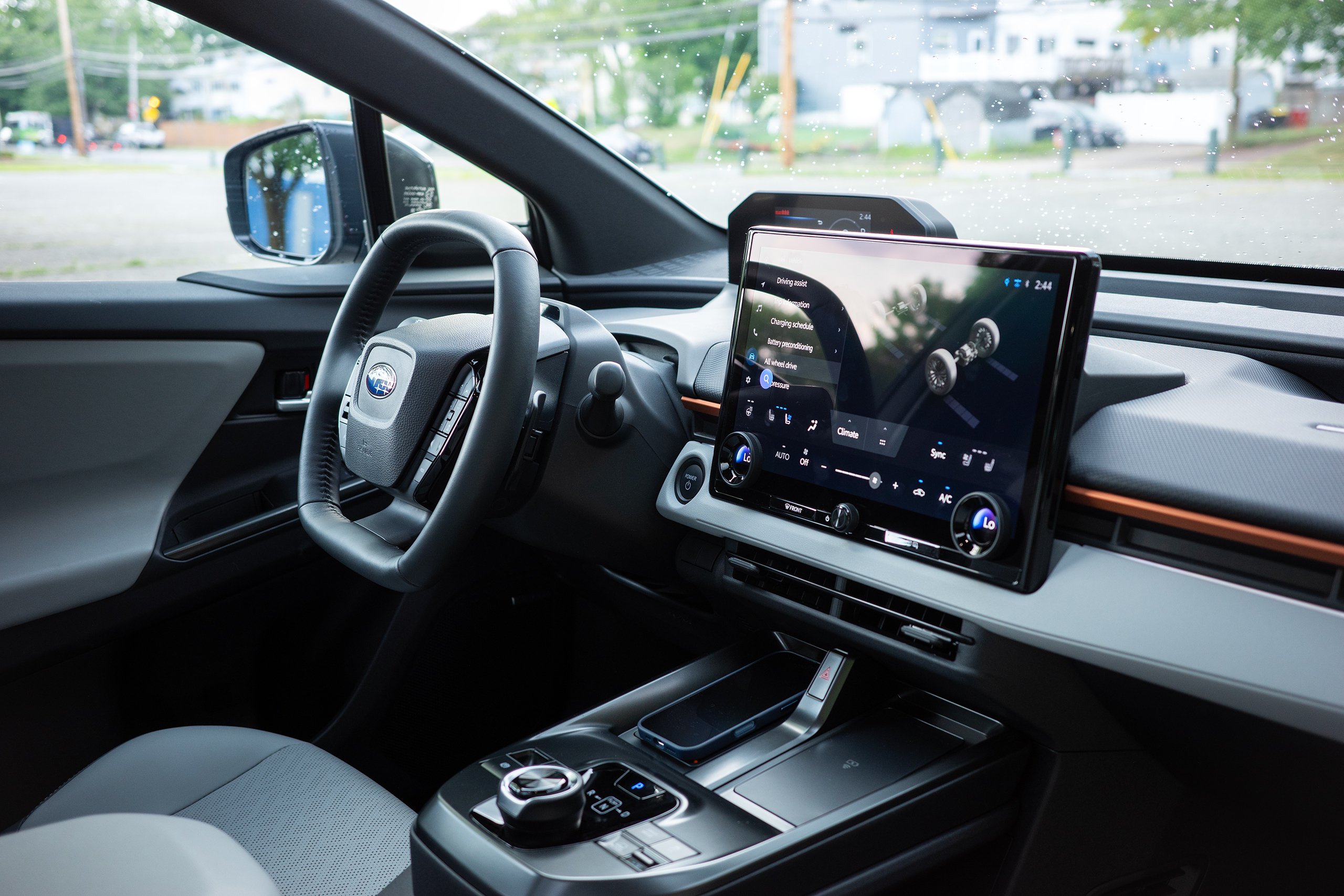
Over the years, we’ve seen plenty of automakers get cute with the very concept of a steering wheel. Yokes and squircles have become commonplace, despite not a single person ever asking for them. Likewise, when I first saw the pseudo-hexagonal wheel inside the Subaru Uncharted that I tested last week, I was highly skeptical. In time, though, I actually came to realize that none of the frustrations I often associate with non-standard steering devices applied here. To my surprise, I actually liked wrangling the 4,500-pound EV with this thing.
To be clear, that’s not entirely because of this wheel’s shape. The most positive thing I could say about that aspect was that I didn’t hate it nearly as much as I expected to, and it wasn’t the learning adjustment that, say, the Lincoln Nautilus’ even flatter wheel was for me a few years back. There’s a weird sense of pinpoint accuracy I get when grabbing the wheel by one of its “corners,” coupled with the very tight steering ratio and the lack of force required to move it.
That said, I’m way more of a 9-and-3 guy than a 10-and-2, and so that’s how I typically got to grips with the Uncharted, finding the wheel’s outline to be conducive to that positioning. Subaru (and/or Toyota, which sells the same vehicle as the C-HR) also places copious physical buttons to the left and right of the center within easy reach. And this, truth be told, is why I really fell in love with this steering wheel.
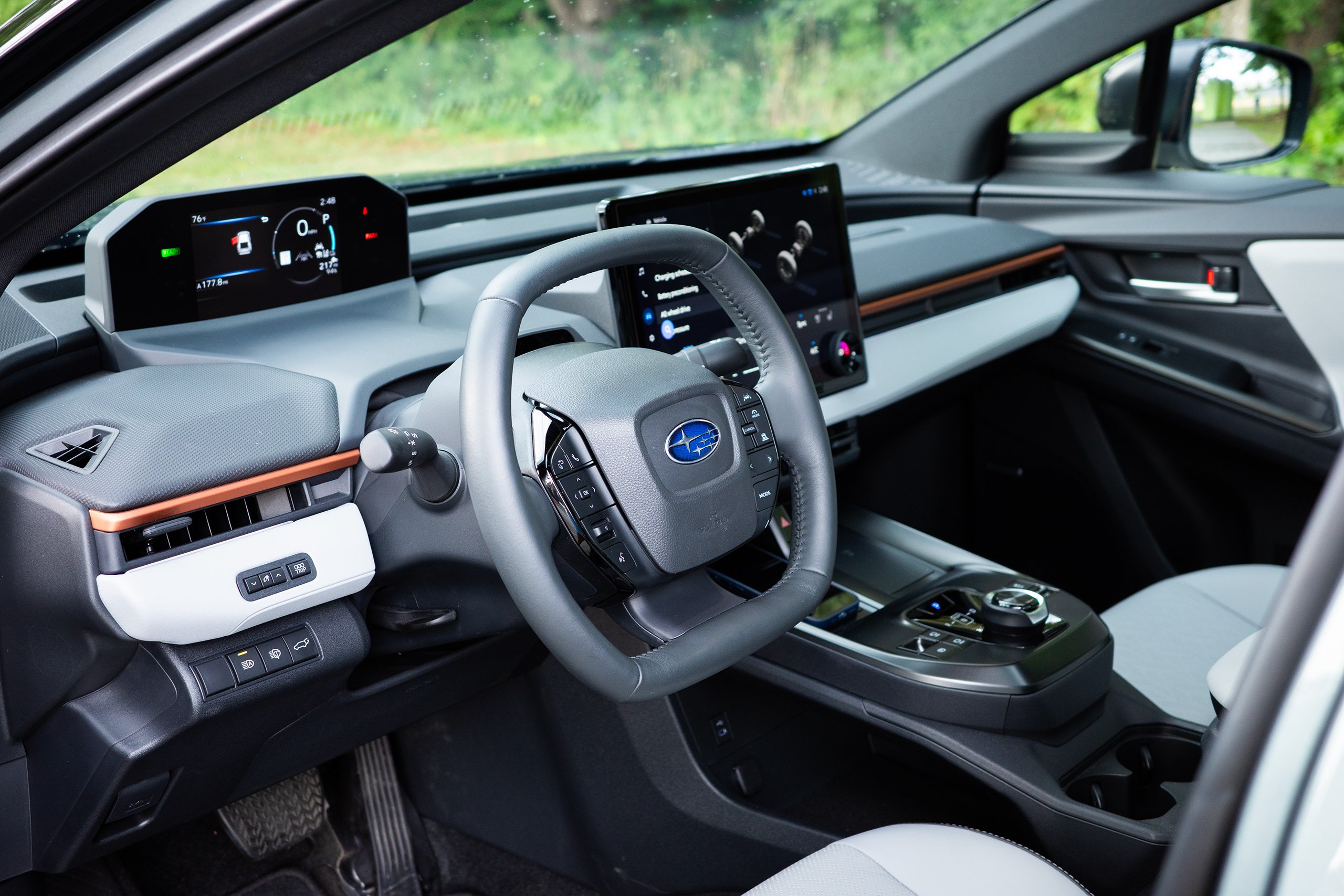
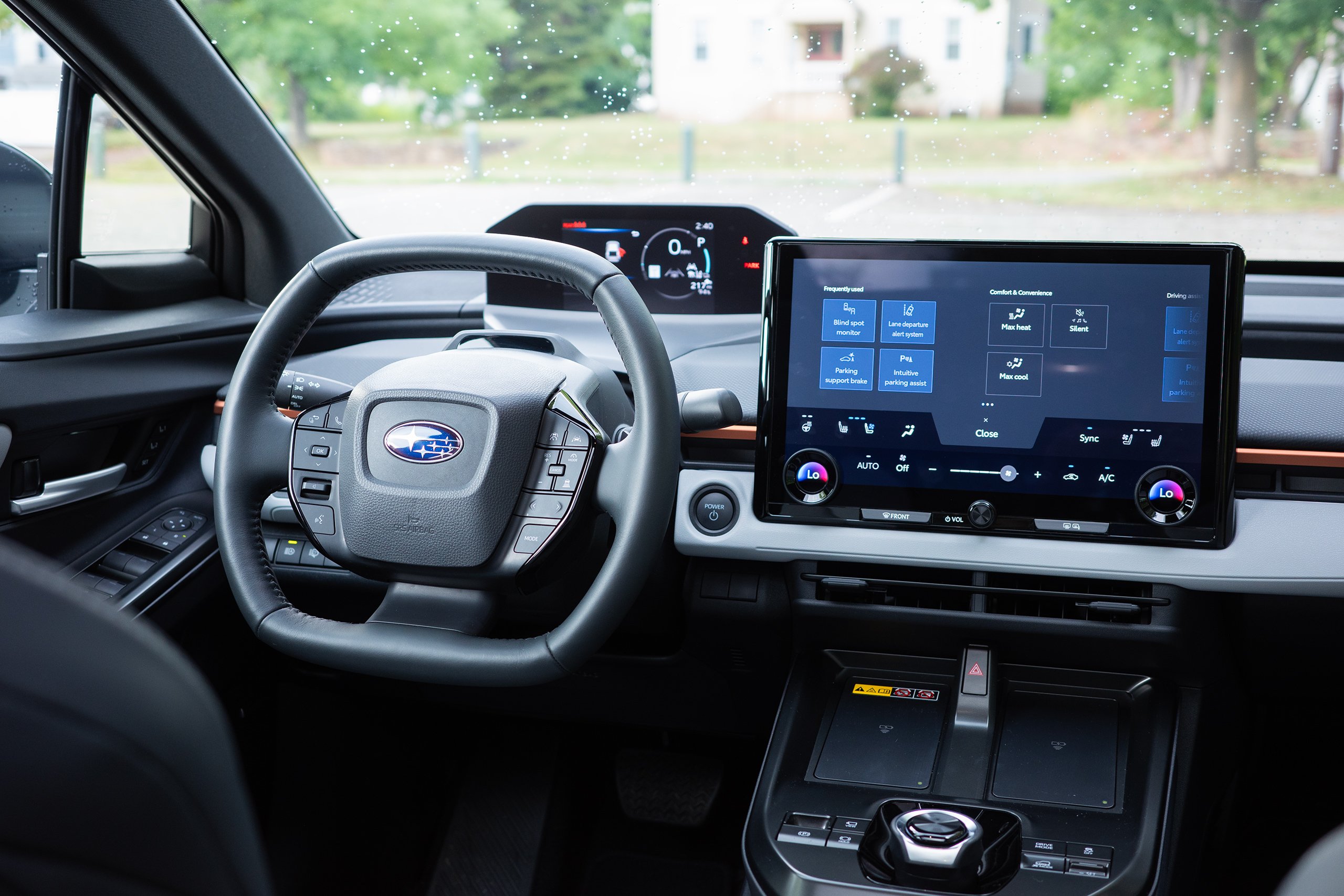
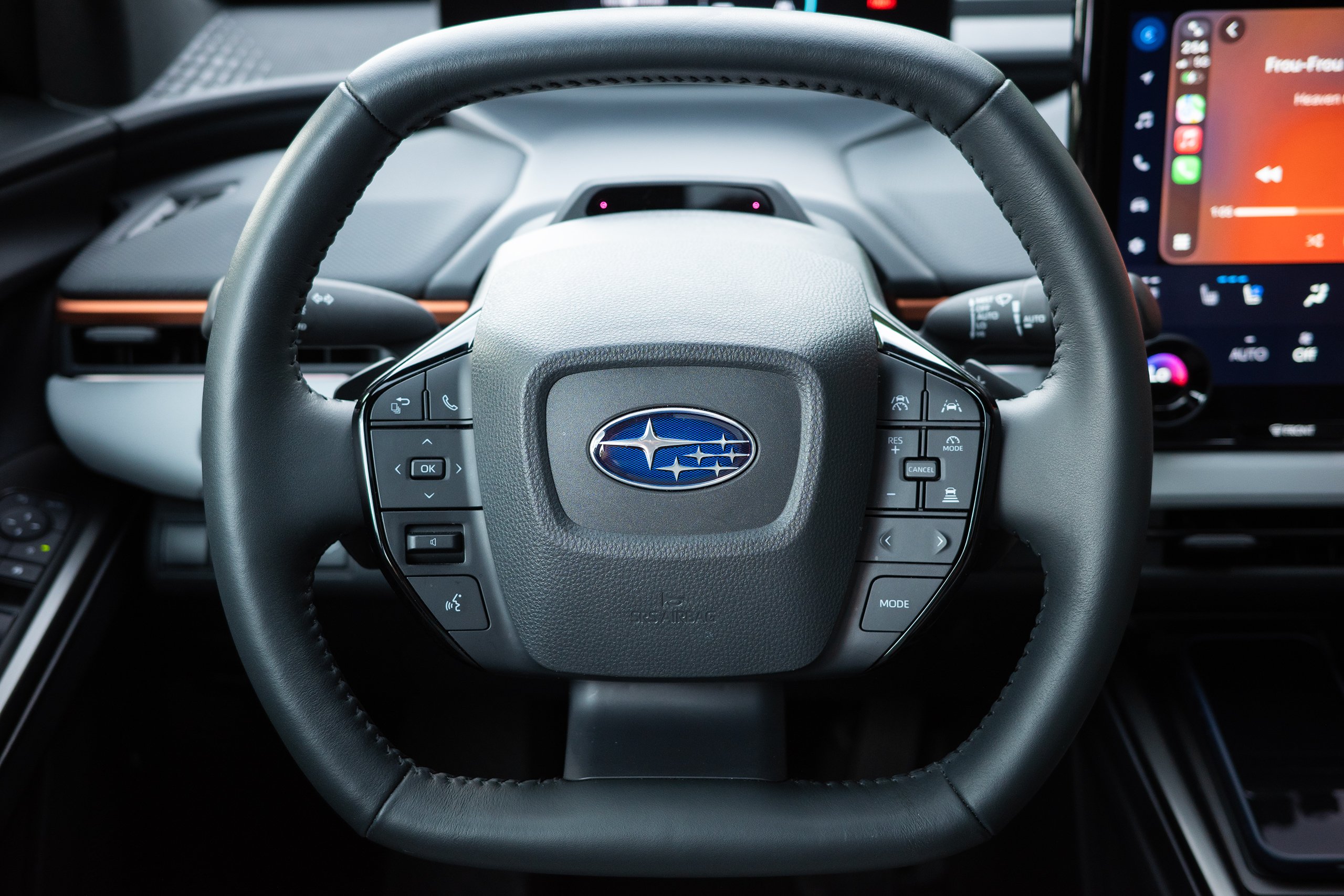
These buttons are almost comically huge, and laid out in a way that just makes sense. Volume takes the form of a rocker. Skipping tracks is done using the left and right arrows. (I know that sounds like the most ordinary idea in the world, but apparently not if you designed the Cadillac Optiq I’m testing now!) The directional pad, used to change what’s shown on the tiny digital instrument cluster that’s mounted oh-so-far-away in this car, is similarly spacious, and overall, I was just taken aback by the lack of a learning curve here.
To be fair, this phenomenon is more unique to car journalists than to most people. We complain about the minute differences in automakers’ infotainment systems, ergonomics, or software logic, because we get into different cars on a weekly or monthly basis. This isn’t something most folks have to face; they simply buy a car and learn to use it. That said, I do believe that common-sense design and engineering are ideals worth chasing and, in spite of the off-putting shape of the Uncharted’s steering wheel, it is a remarkably common-sense instrument.
There’s something else I adore about the way this whole thing was designed, and that’s the paddles. In the context of Subaru and Toyota’s EVs, the regenerative braking force can be stepped up or down off-throttle, with four levels of strength available. I know everyone feels differently about regen, but as someone who, frankly, hates one-pedal driving, I love the granularity with which you can modify the car’s behavior, and I definitely appreciate the ease.
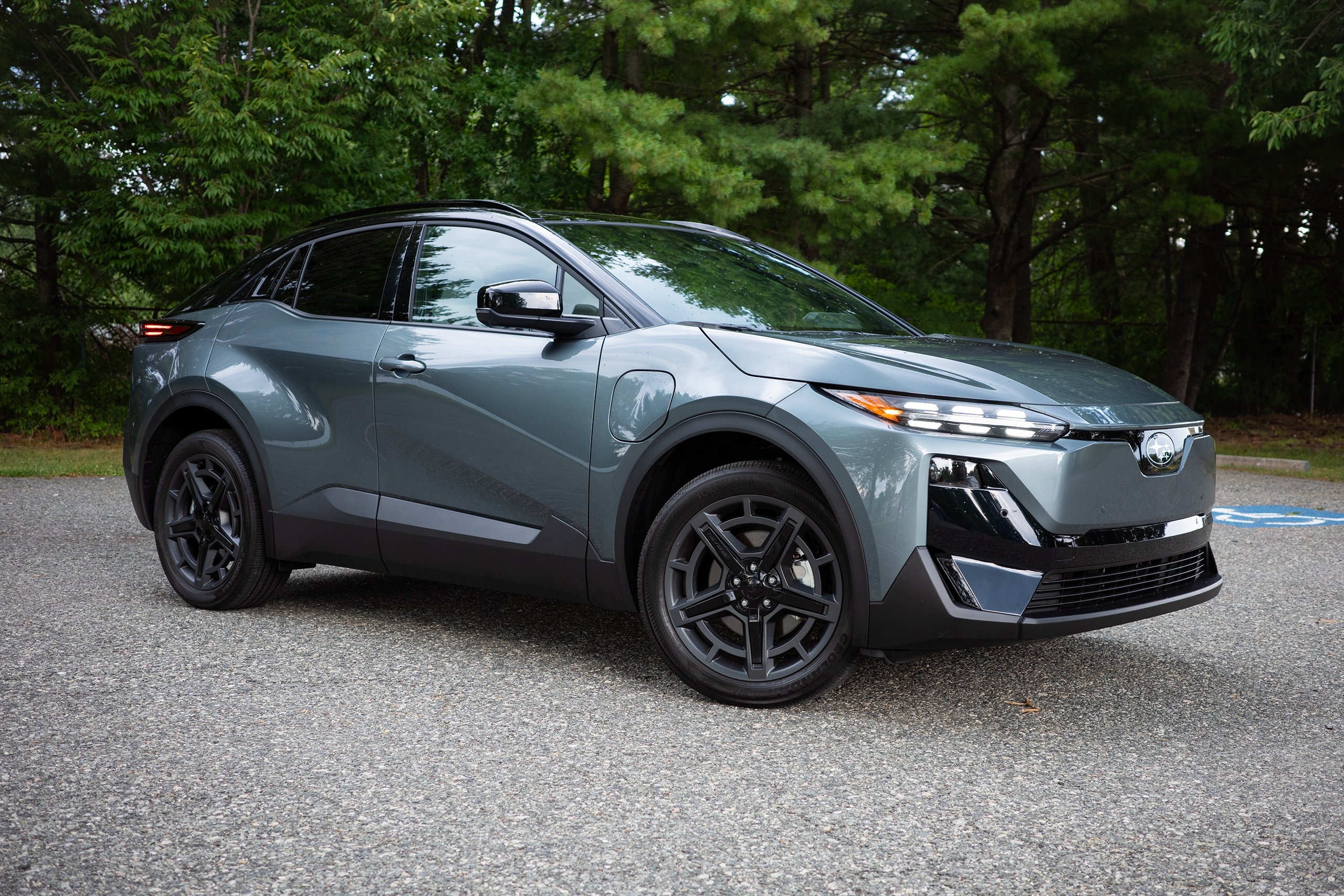
Most EVs shuffle you through a menu or three to change this setting, and here, Subaru has put it right in front of the driver, allowing you to adapt the vehicle’s behavior to whatever driving situation you’re in. Honestly, it’s the way all EVs should work.
My only gripe is that the Uncharted doesn’t remember what level of regen you left it at since the last time you used the car, so it always defaults to the lowest strength. Again, that doesn’t really bother me because super-heavy energy recuperation drives me nuts, but there’s no practical reason the vehicle simply can’t retain that choice.
Overall, though, the Uncharted’s steering wheel really surprised me. It has the appearance of something foreign and futuristic, but it’s actually pretty straightforward, and I wish more EVs were designed like this—like normal cars. Too many automakers lose themselves in this convoluted mindset that EVs are spaceships that need arcane, esoteric controls and user-facing software, and all that ultimately turns away potential buyers and frustrates those who decide to take the plunge. Many of the qualities that make a good gas car or hybrid also make a good battery-powered one, and it’s that ethos that has generally left me pretty pleased about the Uncharted. Keep your eyes peeled for my full review in the coming weeks.
Is there a modern steering wheel that you happen to like? Let us know down in the comments!
Loading comments…
Comments couldn’t be loaded. Please refresh the page.