
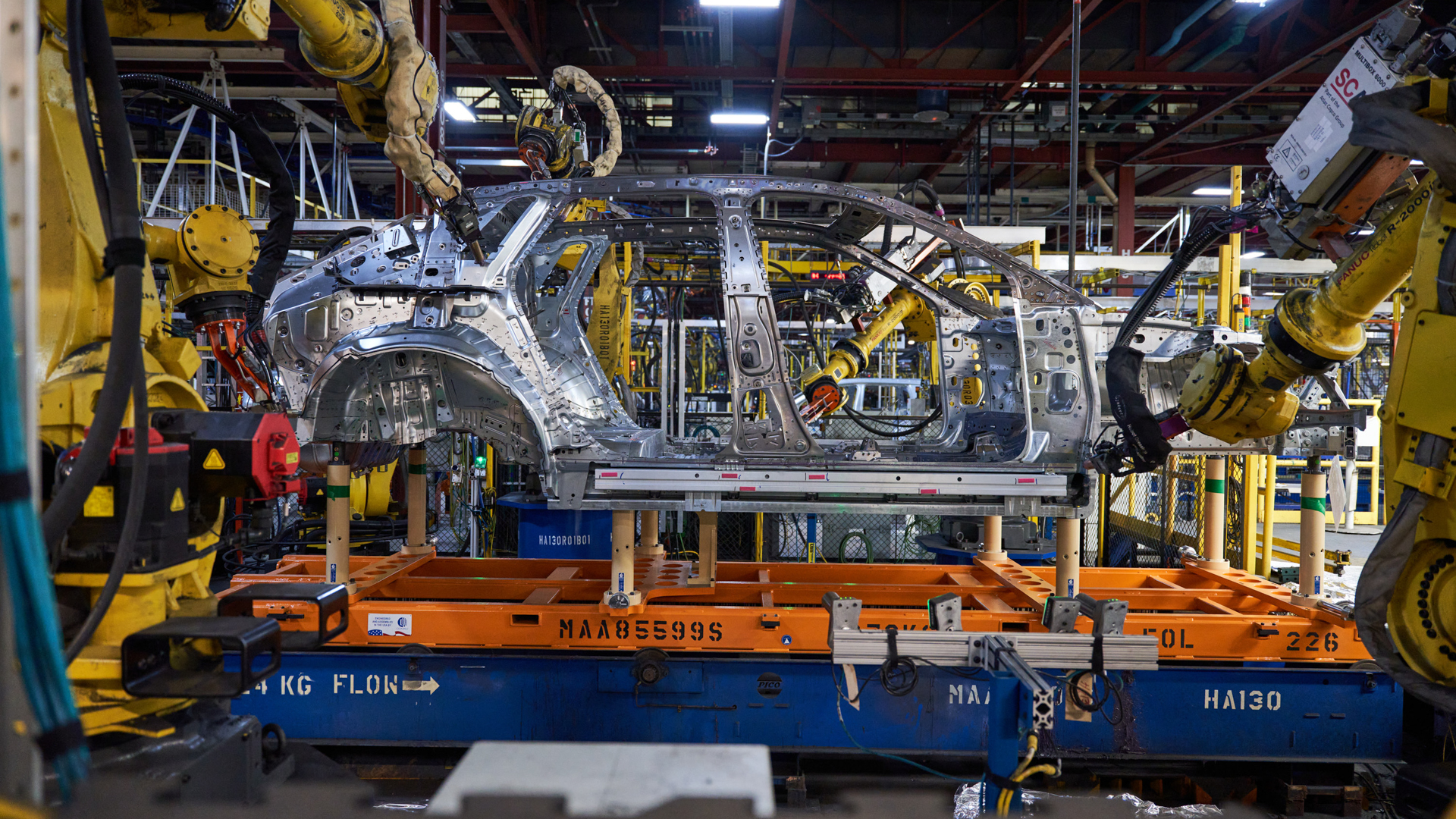
General Motors is aware of its current electric cars’ shortcomings, and it has every intention of addressing the main issues with its next-gen cars.
At the launch of the 2026 Cadillac Lyriq-V, Vehicle Dynamics Performance Integration Engineer Alexander Doss told The Drive “packaging and mass” are the two top priorities as the team begins to work on future electric vehicles.
Specifically, Doss said the team is looking at the efficiency of the architectures themselves. This will go right down to both the metal and electrical systems. From the ground up.
From the 2025 Cadillac Escalade IQ to the Vistiq right down to the Chevrolet Blazer EV and Equinox EV, GM’s current crop of EVs aren’t just competitive. A lot of them are class leading, and that’s translating to sales.
But almost all of them suffer from being overweight and, at best, and saddled with mediocre packaging. Only the largest of these EVs, specifically the Cadillac Escalade IQ, Chevrolet Silverado EV, GMC Sierra EV, and Hummer EVs have front trunks. Despite the Cadillac Visitiq and Lyriq’s long hoods there’s no front trunk. Pop the hood and it’s a bunch of plastic covers hiding the front electric motor.
Every single GM EV has a ridiculously, borderline hilariously, long dashboard that’s so deep, that sometimes the plastic covering it is wavy. The reason? GM places some of the vehicle’s cooling systems and HVAC controls under the dashboard panel.
Doss said the reasoning for today’s packaging is because General Motors decided early on to go with one single platform to scale all the different size vehicles around. Technically it’s two with those huge trucks and SUVs with the frunk on one and everything else on the other. But even these share common parts.
Doss confirmed the reason for this decision was to scale the EVs as quickly as possible to bring each to market by sharing common parts, especially the parts that can’t be seen. The commonality beneath the metal skin enabled GM to shave costs and development time and launch a bevy of EVs in short order. The downside was packaging and efficiency.
How the efficiency of GM’s future EV architecture(s) will address today’s packaging and mass issues present with the current crop of EVs wasn’t divulged by Doss. But the engineer made it clear that the one platform solution for various size vehicles led to today’s issues.
Got a tip on next-gen product? Send us a line at tips@thedrive.com