
I’m a writer, but I know words have their limitations. I can make you feel this or that way with my cadence, deploying poetic techniques to make the voice in your head rise and fall as needed. I can connect to your sensibilities with folksy vocab like “oughta” or “gotta.” I can even lull you into comfort or drive you to decision depending on how directly I address you. But words alone can’t do it all.
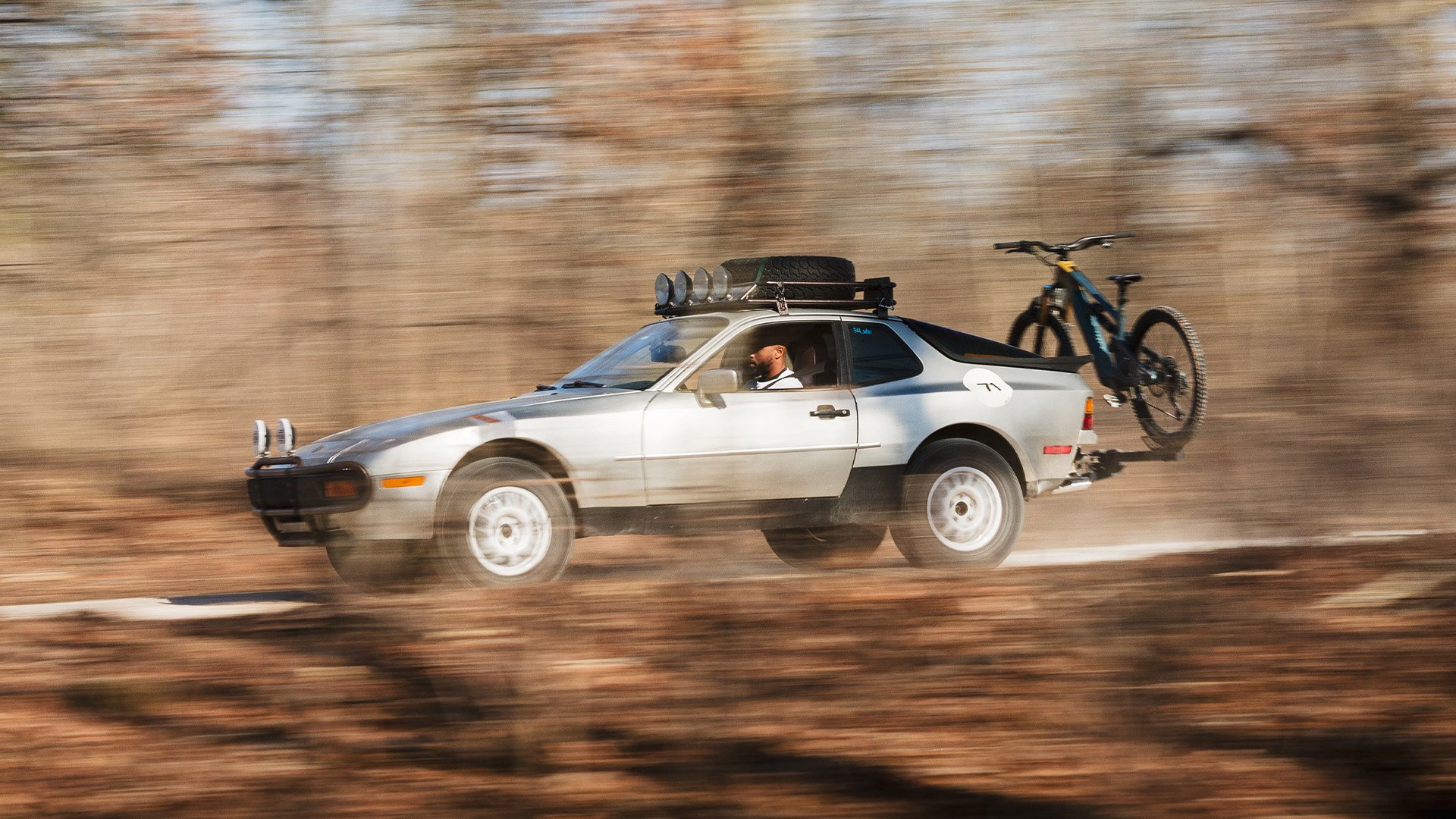
Fortunately, art exists in many forms to make you feel in many ways. If I penned an engaging essay on what it’s like to drive a Safari-modded Porsche 944, you’d only pick up on what I told you. Or you could watch this short film called Jaunt, which stars such a car and creates emotions I just can’t convey—at least, not this well.
Jaunt has been shown around the globe as part of the Banff Centre Mountain Film World Tour, among others. It’s the work of Blk Elk Co., a creative studio from the Ozark hills of Northwest Arkansas. They’re incredibly handy with cameras of all kinds, but of course, cinematography doesn’t end there.
They sent me an early screening of Jaunt a while back, and now, it’s on YouTube. I chatted with them to learn how they made me feel what I felt when I watched it for the first time, so the rest of this story will be about that. First, however, you’ve gotta watch the four-minute film:
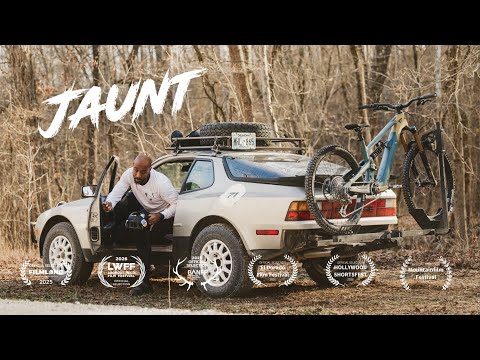
Pretty slick, huh? Although it’s short, there’s a lot going on here to engage your senses. I’m fairly naive about how that’s done, which is why I asked the film’s director, Daniel Mitchell, to explain.
Rather than simply telling me, using words and their pesky limits, Mitchell annotated some stills of his favorite shots.

Let’s start with the opening shot. Not only is there a main camera operator, who’s tasked with proper positioning via the stabilizing Dana dolly, but there’s another crew member off to the right whose job is to keep the shot sharp with a tool called a focus puller. He uses the wireless handset with a rotating dial to adjust focus as needed.
It takes work to set the proper stage. Prop selection is key, too, as the crew was able to reinforce the drab office space theme with thrift store items. A CRT monitor with no visible logo makes the scenario seem extra generic, along with the stand-up book whose spine reads, “Real World, Here I Come.”
Basically, it’s the setting you’d expect to find a fella in who’s just been handed a stack of paperwork to complete.
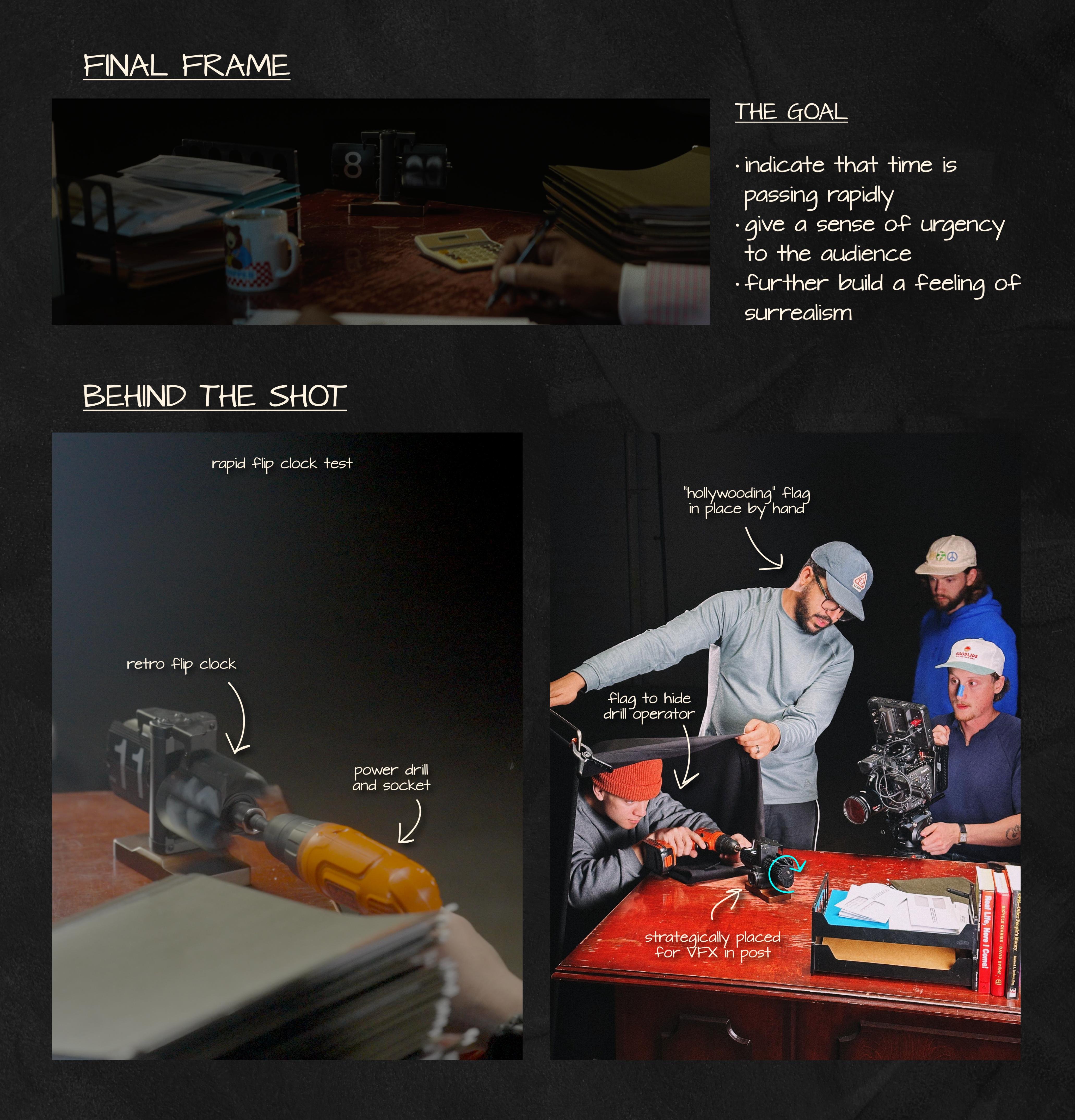
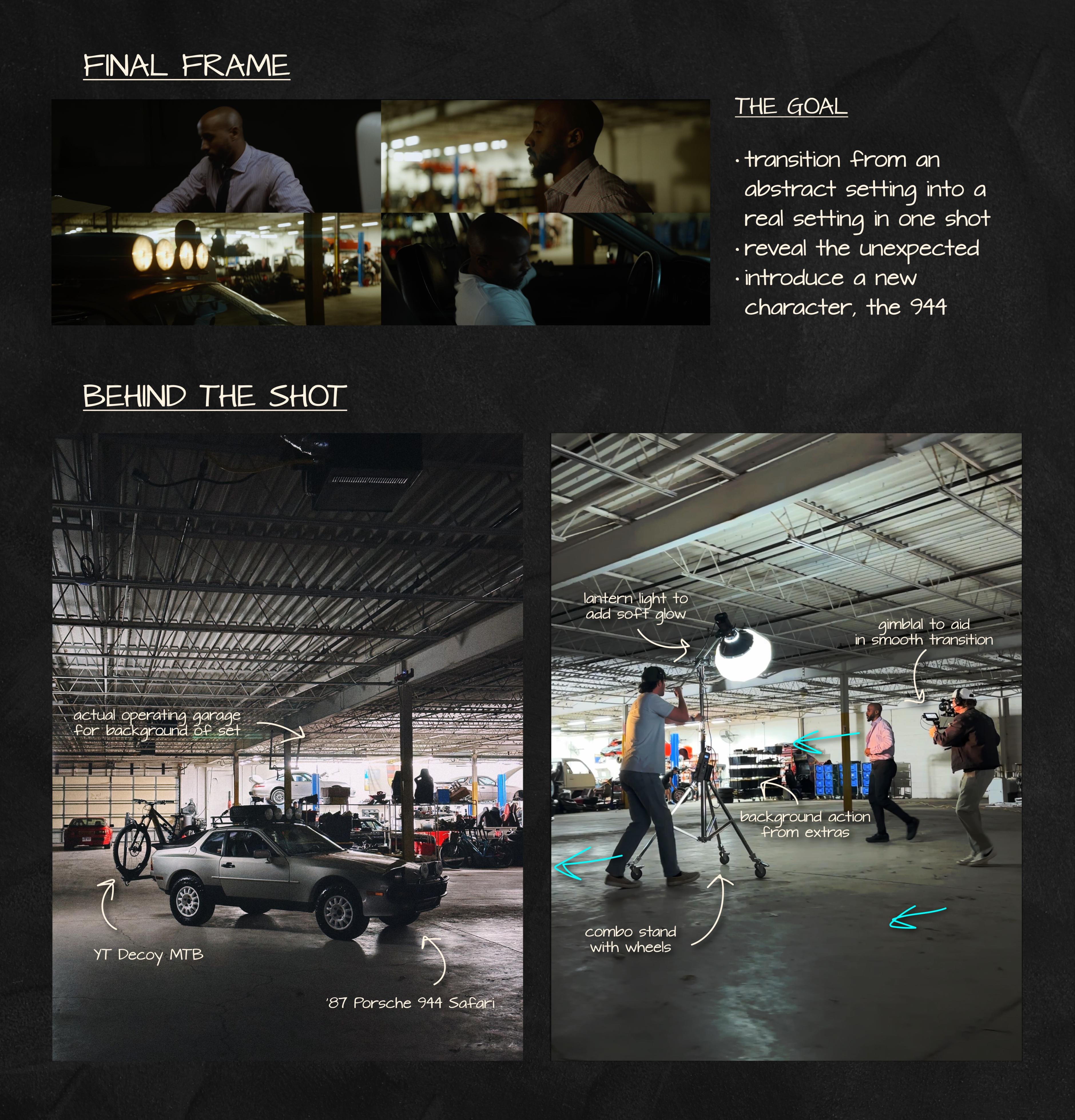
Dissecting these scenes side-by-side makes sense as they kickstart the action. Rewatching the film for a second time, I wondered just how they made the flip clock spin so fast. Artificially speeding through frames seemed unlikely, as moving the cards one at a time would have been tedious. I was tickled to learn that they used a power drill to spin through time, lickety-split.
This scene’s jazz soundtrack also does a lot to build the frenetic energy. Nothin’ gets you goin’ like horns, interspersed with flashy percussion that spares no cymbal. A piano virtuoso carries the tune along.
Mitchell told me he was especially proud that they could pull off the transition shown between the left and right scenes. The pitch-black setting in the film’s first part was staged inside the 944 Safari building, which also houses a functioning modification shop. It was done in a single shot to take you, the viewer, from the plain-jane desk atmosphere to one teeming with life. Pneumatic impacts whir and crank plenty of ugga-duggas as the actor climbs inside the Porsche.
This particular machine is 944 Safari’s exemplary build. It’s a naturally aspirated model, though as any 944 owner will tell you, the engine is not what makes these special. The front-rear layout is what’s most unique, and unlike the more powerful 928, these are lighter and far more flickable. Daniel Davis, owner of the Porsche and the shop, has found a pretty solid recipe to capitalize on those strengths: taller suspension for better clearance, more aggressive tires that help it get around on gravel, and Hella lights for vibes as well as visibility. Racks abound to make it more usable, as there isn’t much room for a mountain bike or a full-size spare in (or on) a stock 944.
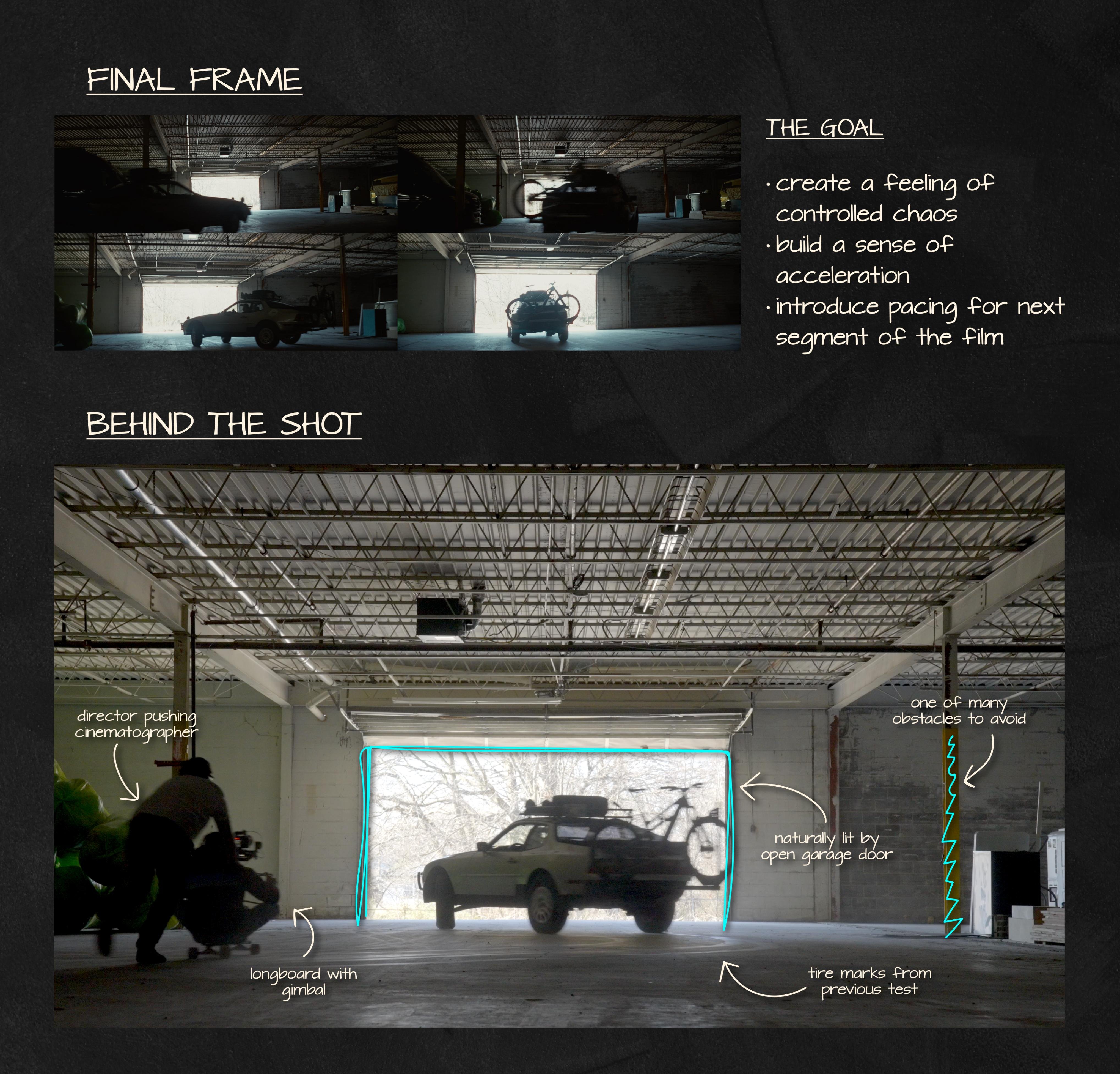
As the P-car exits, the frame benefits from natural lighting. It’s chased out the door by the almost comical director-cinematographer combo on a longboard. Really, though, the pressure is on the driver. And don’t think for a second that they hired a stuntman for that job, as it’s all the same guy—from the desk, to the car, to the bike, and back—named Justice Jax Berry. Quite the renaissance man, eh?
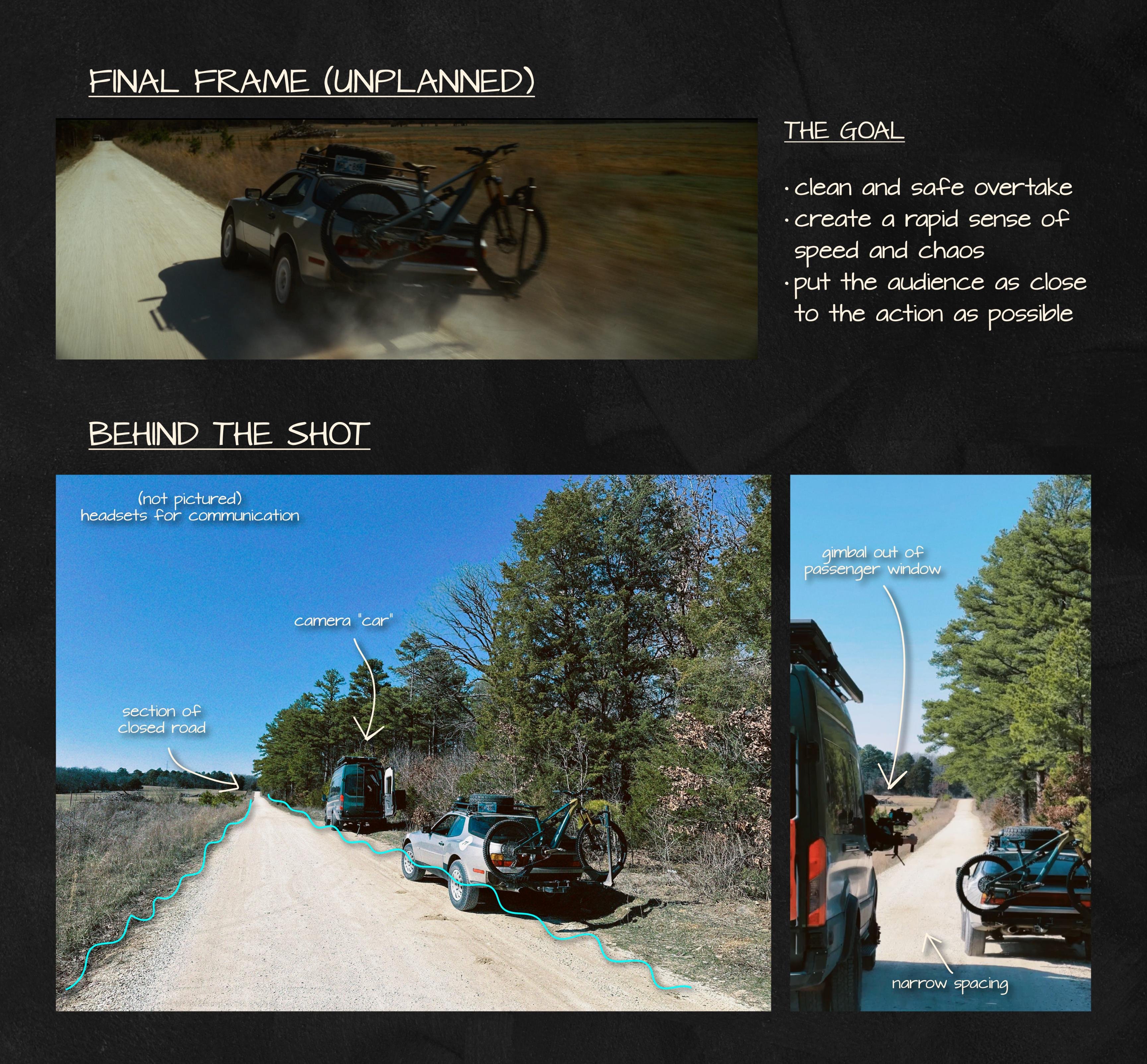
After a sweet parking lot drift, the 944 heads for a dirt road outside of town. While there is some music in the background—an original song called “How Sad” by A Dark Skinned Ghost—you also get a healthy dose of ambient noise. The throaty, big-bore four-cylinder makes a nice sound, and anybody who likes to party can appreciate the sound of tires slinging gravel.
This is very much the “journey” portion of the story. Justice even makes it more interesting by putting a couple of tires in the ditch, which is the type of thing you can do in a lifted car. It’s all captured cleanly via the cable cam and overhead drone.
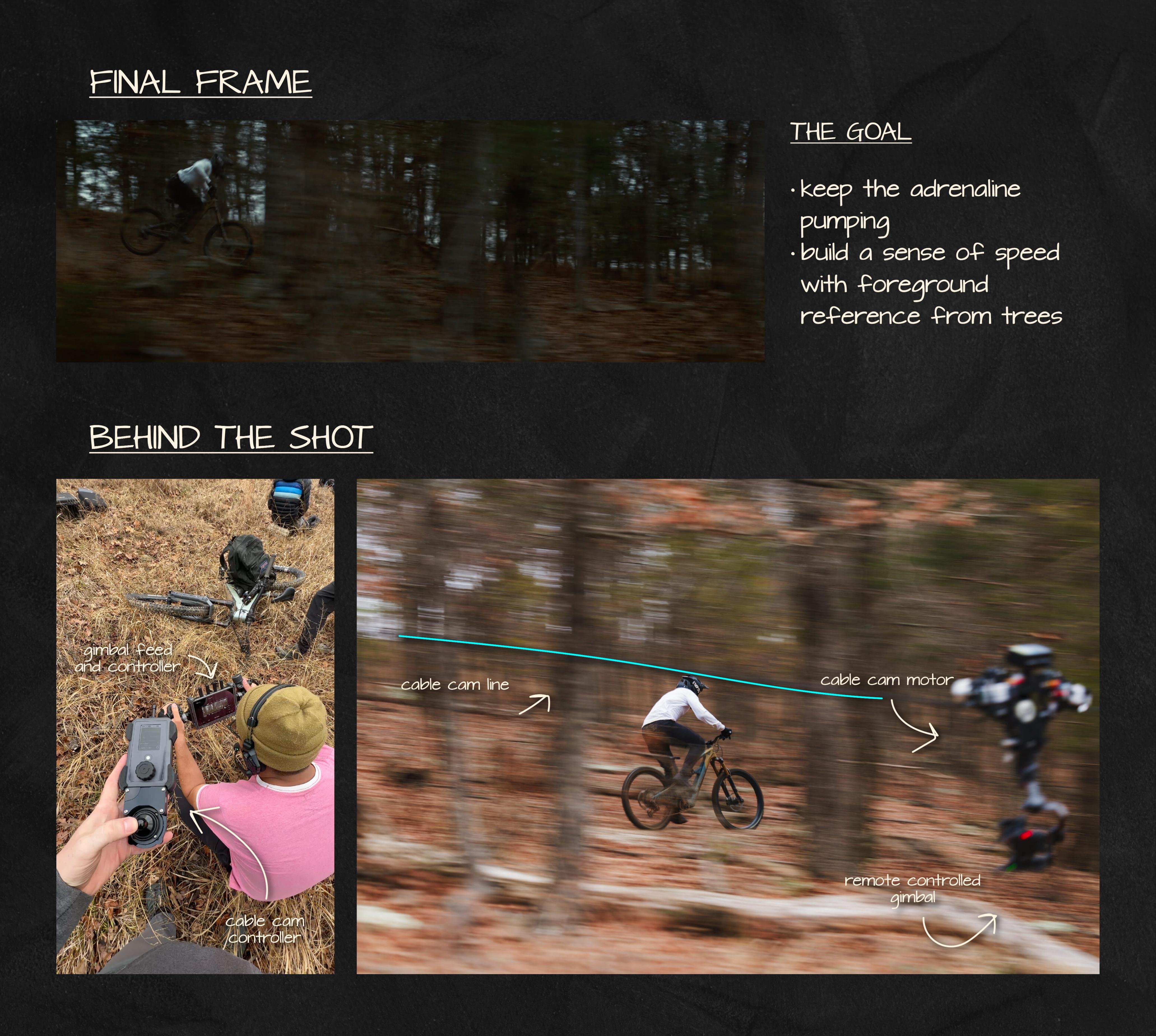
By all measures, these woodsy shots were the trickiest to get. You may or may not know that Northwest Arkansas is home to some of the country’s greatest mountain-biking trails. (Walmart is headquartered there, and the Walton family pours a ton of money into those projects.) It’s absolutely central to the culture, so capturing it as part of the film makes sense.
Plus, who doesn’t like a Porsche with a bike rack on the back?
Tempo is everything in this scene, and keeping rhythm with the actor/rider/do-it-all-dude was understandably tricky. The cable cam can track up to 43 miles per hour, but nailing the timing took work. A crew member controls the cable cam remotely, while the gimbal feeds footage to a handheld display.
Because they were able to nail the pace here, you get a sense of speed. The shot stays focused on Justice, while trees breeze by in the foreground. It’s a little bit of practical magic.
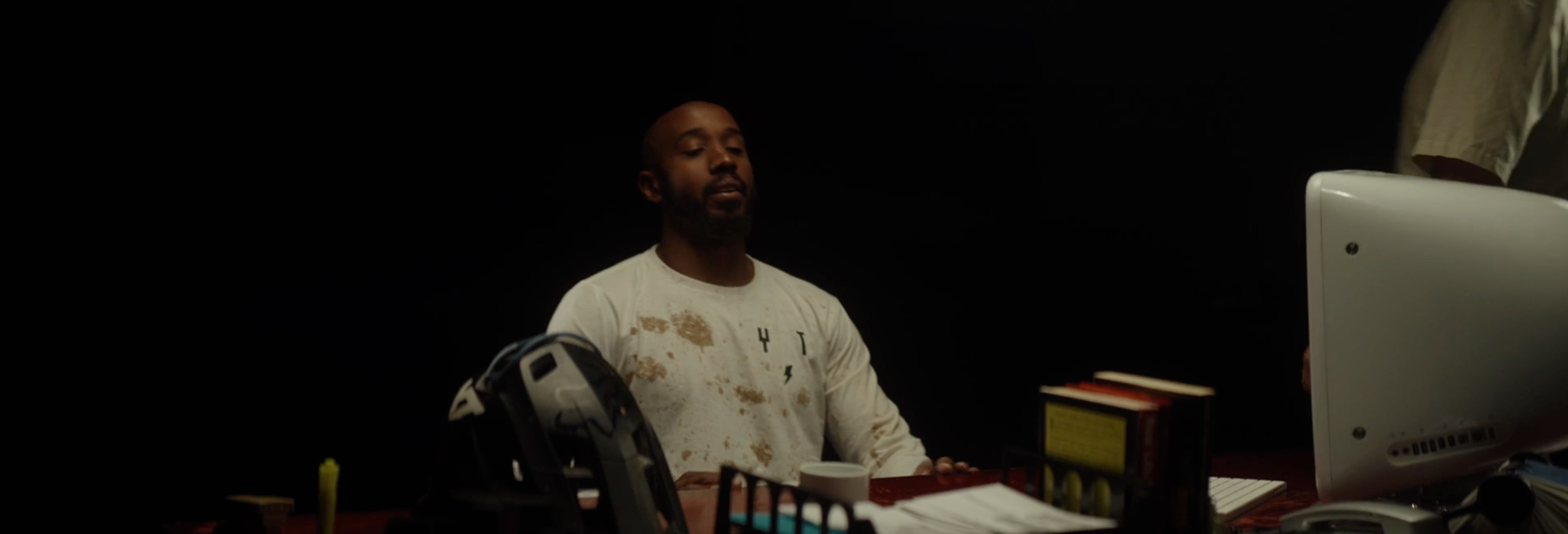
It all ends back where things started, in the dark of the warehouse, with a bit more mud on Justice’s get-up. He ditched the button-down and tie for a long-sleeve tee. And once the faceless boss welcomes him back in, you realize all this was done on his lunch break.
A short jaunt can really make a difference, even on the most mundane days.
Got a tip or question for the author? Contact them directly: caleb@thedrive.com
Loading comments…
Comments couldn’t be loaded. Please refresh the page.