
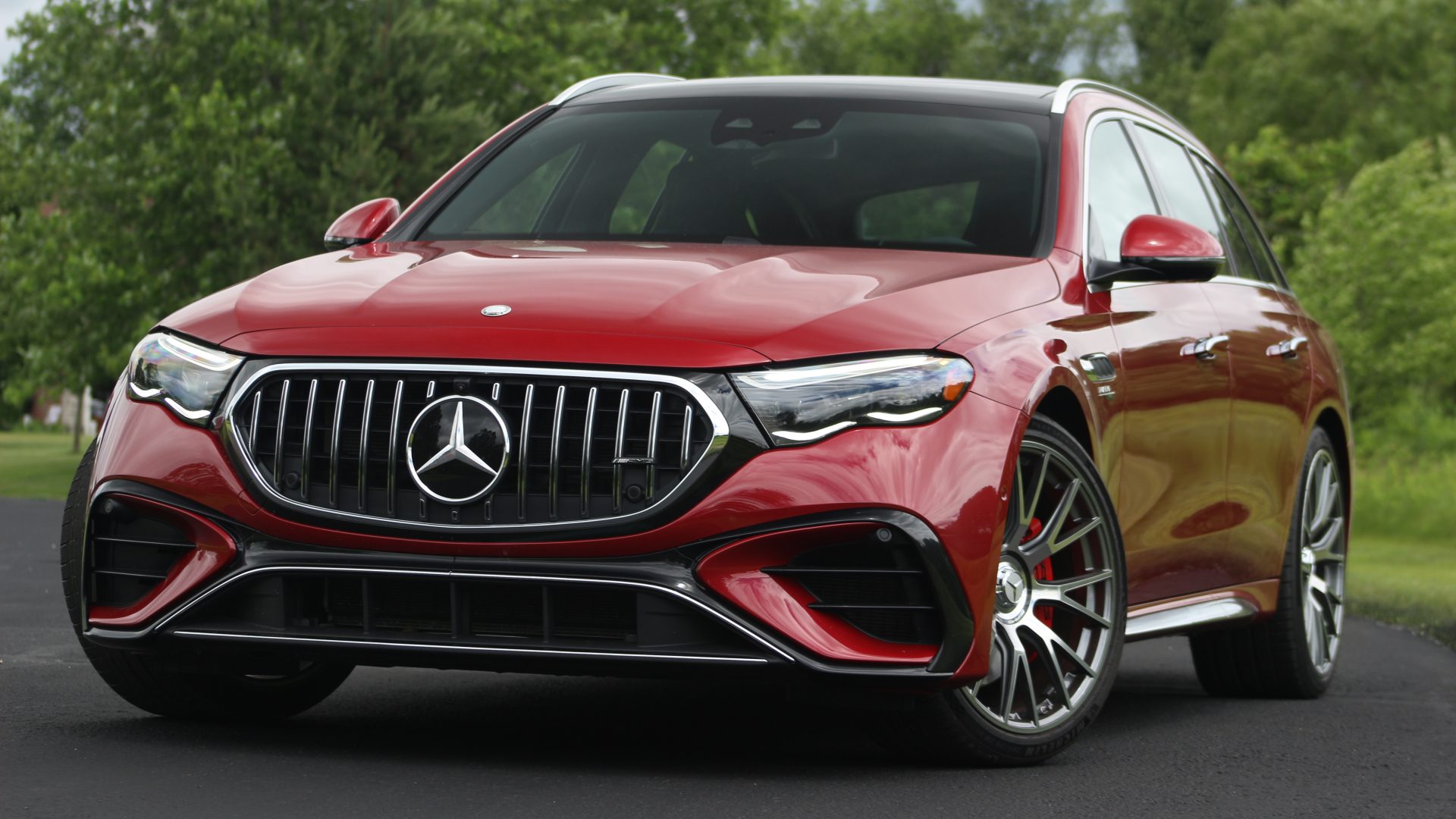
If you look at the history of “mild” AMG models (which really isn’t all that long), the 2026 Mercedes-AMG E53 hybrid is an outlier. Previous takes on this formula paired a tuned-up version of the E’s six-cylinder engine with a throatier exhaust and perhaps a performance-tuned air suspension. The last E53 made a whopping 429 horsepower. I’ll save you the math; that’s less. 2026
If you squint at the spec sheet, you’ll see the old E53 hiding underneath all this hybrid hullabaloo. This wagon’s inline-six makes 443 horsepower and 413 pound-feet of torque on its own; the electric motor adds another 161 hp and 354 lb-ft. Combined output is 577 horsepower, but if you opt for the Dynamic Start package, it bumps it to 604 horsepower thanks to its “Race Start” system, which is basically launch control with an extra shot of electrons. We’ve seen similar things before; remember Dodge’s “PowerShot” hybrid boost in the Hornet?
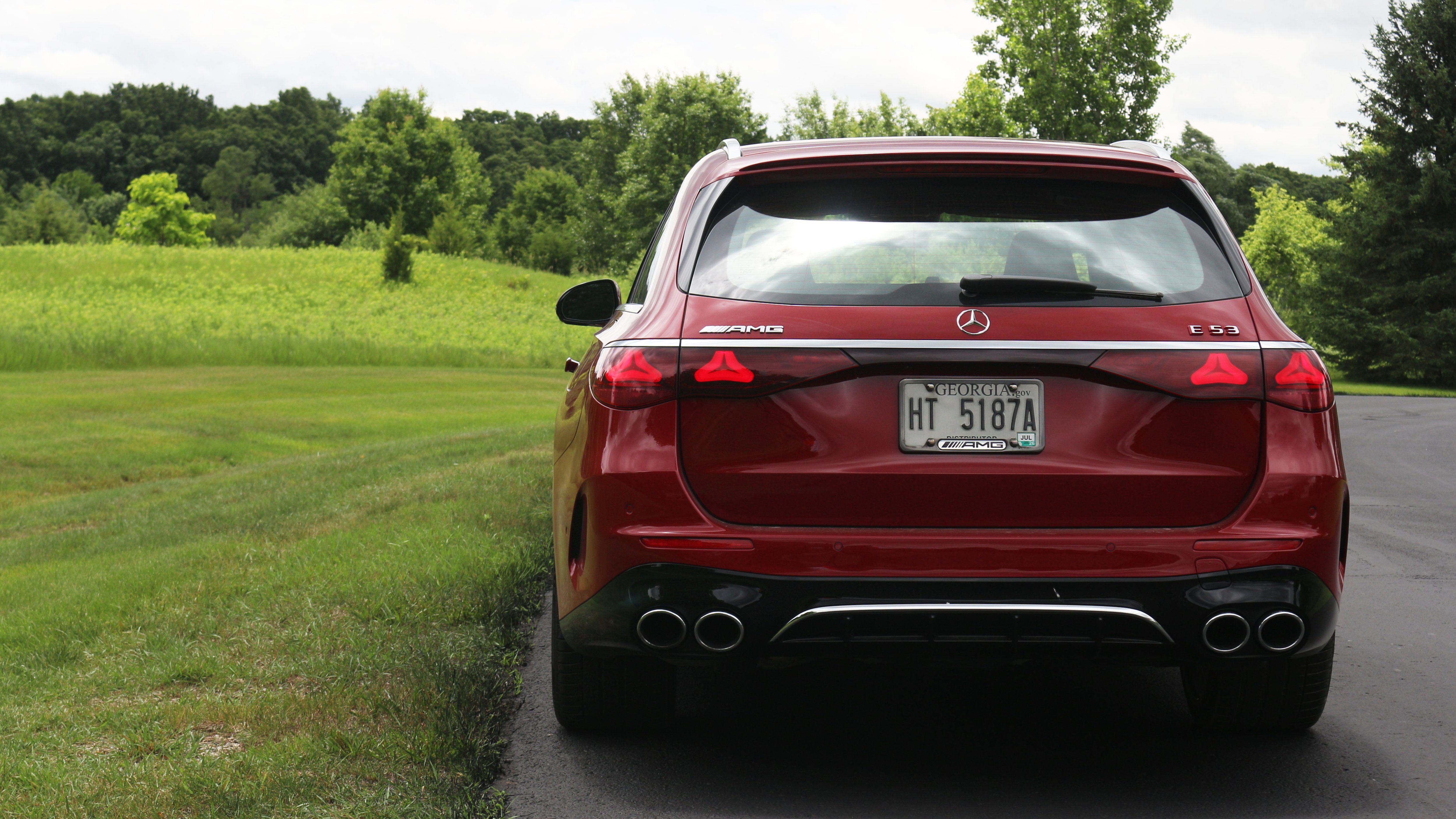
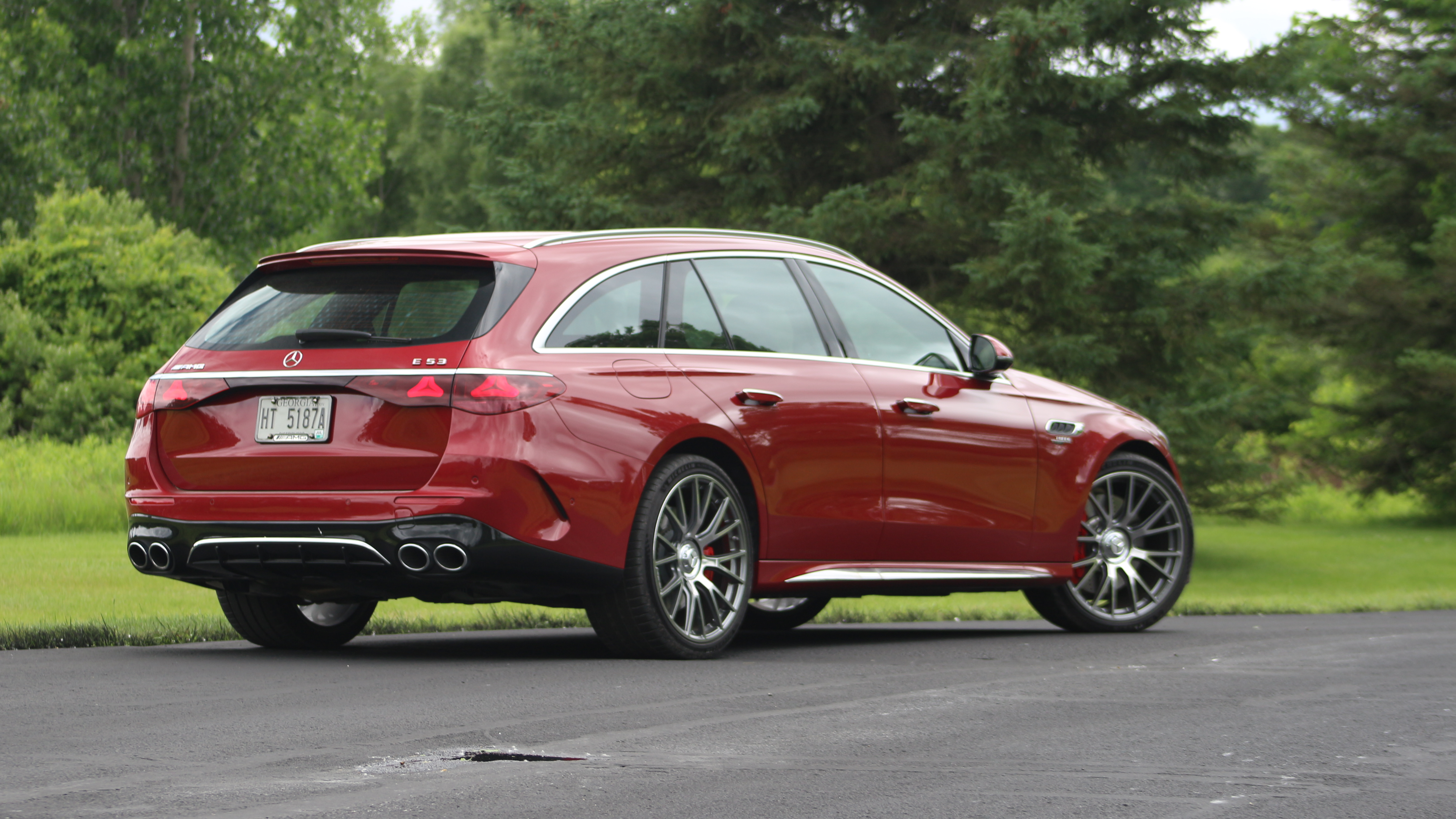
With all of that, this AMG only gives up about 20 horsepower to the V8-powered Audi RS6 Avant, but at the cost of some weight—though perhaps not as much as you’d expect. At 5,401 pounds, the E53 is almost 400 pounds heavier than the Audi, pitting it more favorably against the BMW M5 Touring (5,525 pounds), though the big Bavarian bruiser has about 100 horsepower more than the Benz.
Let me try that again: Remember the Dodge Hornet?
If you’re thinking that’s a pretty big generational leap for what should be a mid-grade performance car, you’re not alone. I suspect that Mercedes had every intention of turning the wick up on this car even more and offering it as the E63, but pivoted at the last second in the wake of the four-cylinder C63 fiasco, perhaps concerned that customers would shun it in favor of a V8-powered competitor, whether it offered superior performance or not.
The difference here, of course, is the E53’s excellent inline-six, which makes a big chunk of the E53’s power without feeling high-strung. The somewhat novel inline configuration also lends it a unique sound, and of course, the performance exhaust system plays up that attitude. Crank the drive modes over to the Sport/Track end of the dial, and everything sounds properly beastly. And it goes like stink, too. With Race Start, it’ll hit 60 mph in just 3.8 seconds.
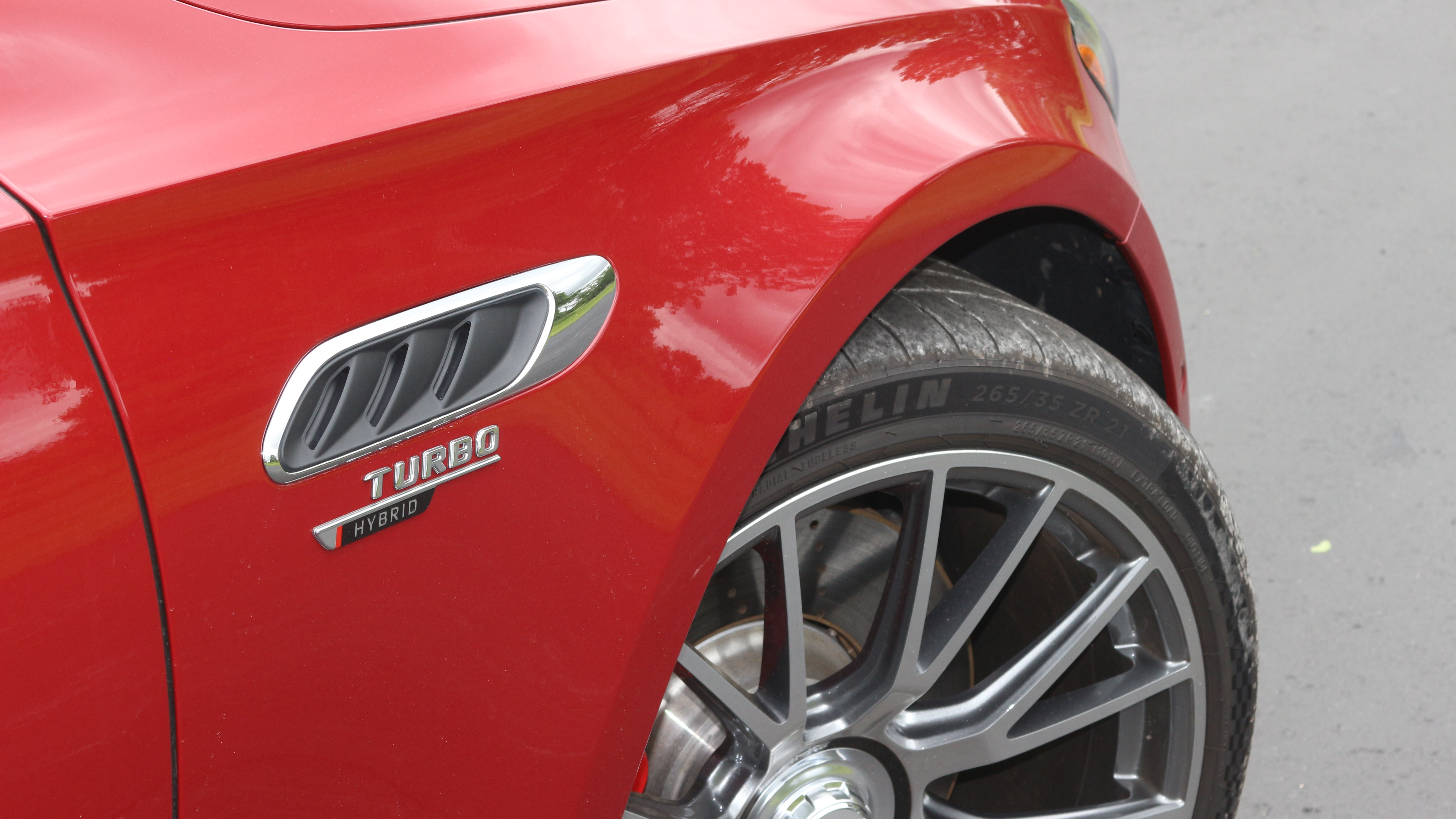
Getting there takes some doing. By default, the E53 Hybrid starts in EV mode, which is fine for cruising around town or navigating parking lots, but I don’t care how much torque you throw at it, 161 horsepower in a 5400-pound family car is never going to feel quick. If the battery is too depleted for electric-only operation, the gas engine will fire up too—good news perhaps for those who deliberately neglect to charge their PHEVs.
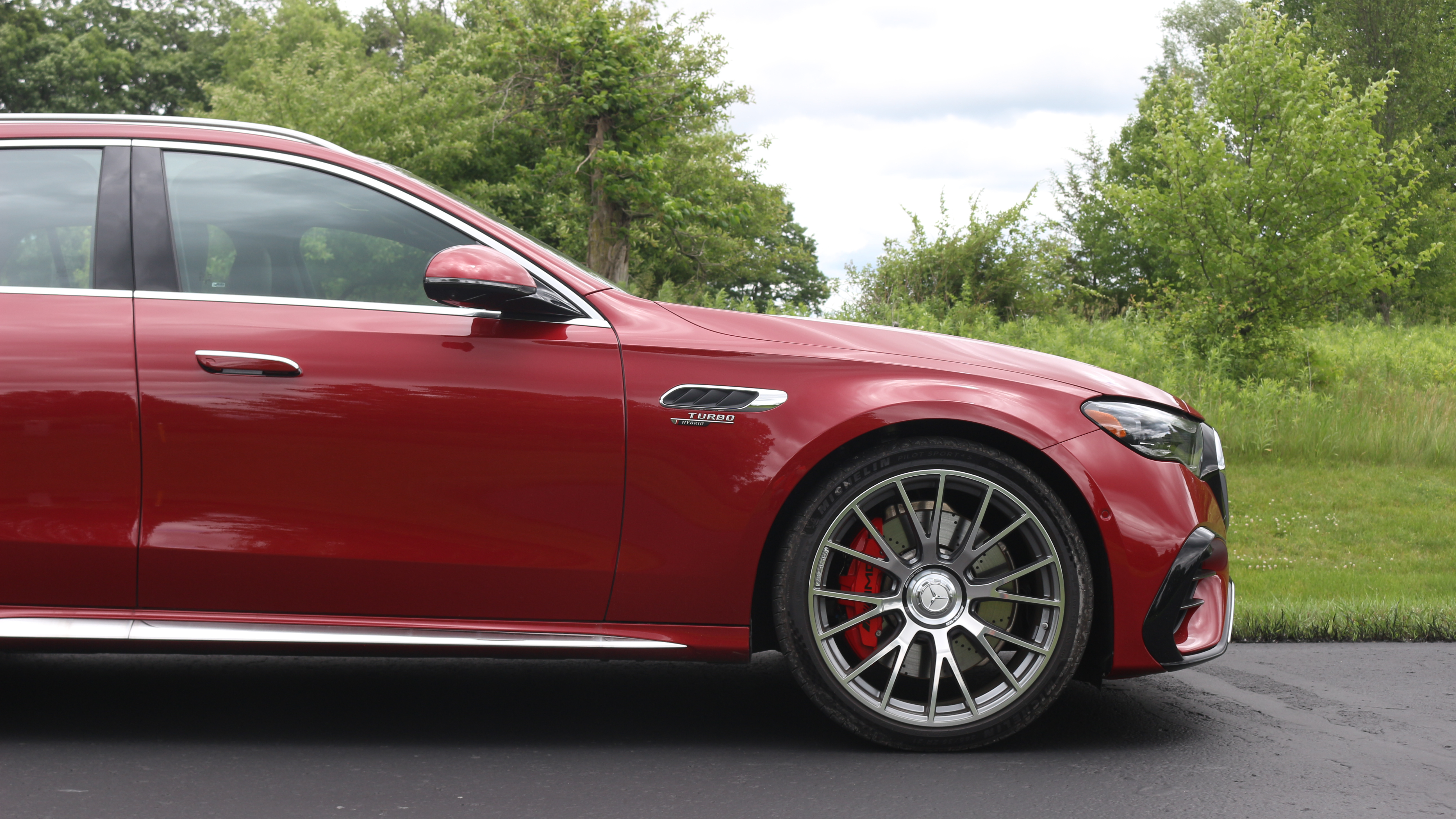
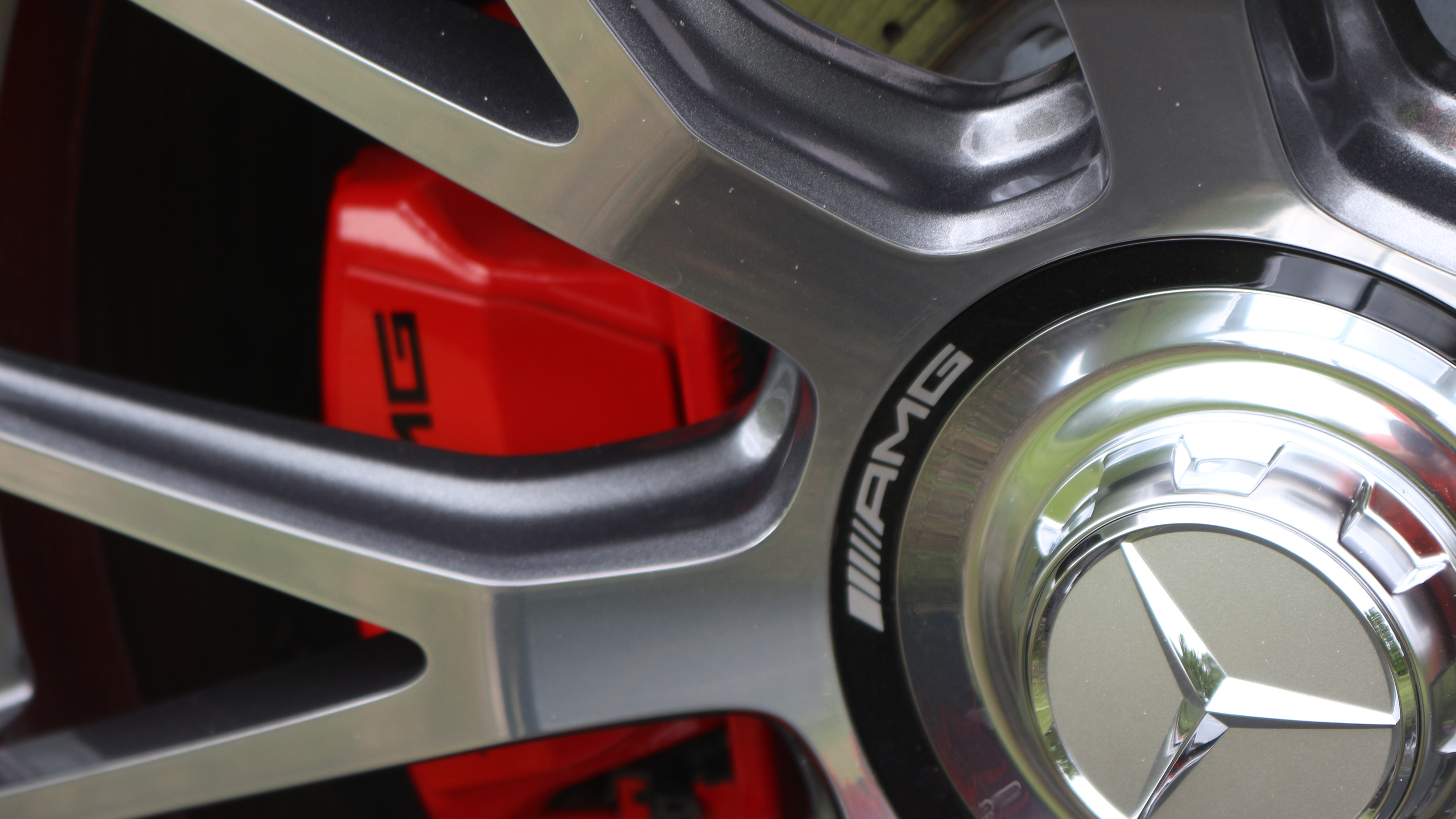
On the road, the E53 is all Mercedes. In Comfort mode, it coddles, piping in less noise and transmitting less vibration into the cockpit. My tester came with 21-inch AMG cross-spoke wheels that did little to diminish the E53’s excellent ride quality; the add-on performance seat package was also appreciated, but for this enthusiast’s backside, it might not be the right vibe for a long-haul family wagon.
Quick though the E53 may be, it’s neither EV-quick nor as quick as the aforementioned BMW M5 Touring and Audi RS6 Avant; both can pull off a 0-60 sprint about a half-second quicker. And that would all be fine if there were an E63 Wagon above it to defend that territory. But for the moment, that’s not the case.
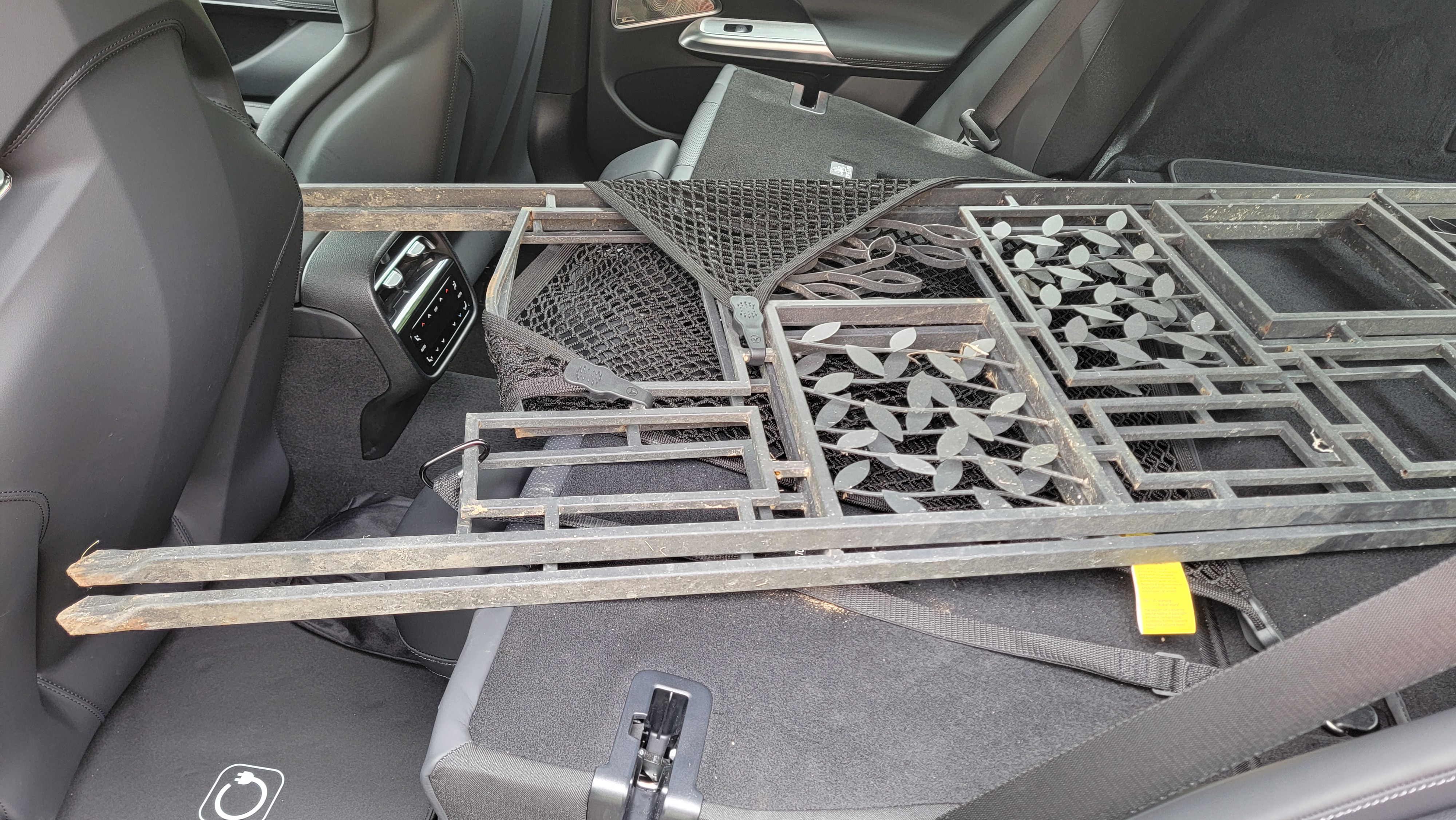
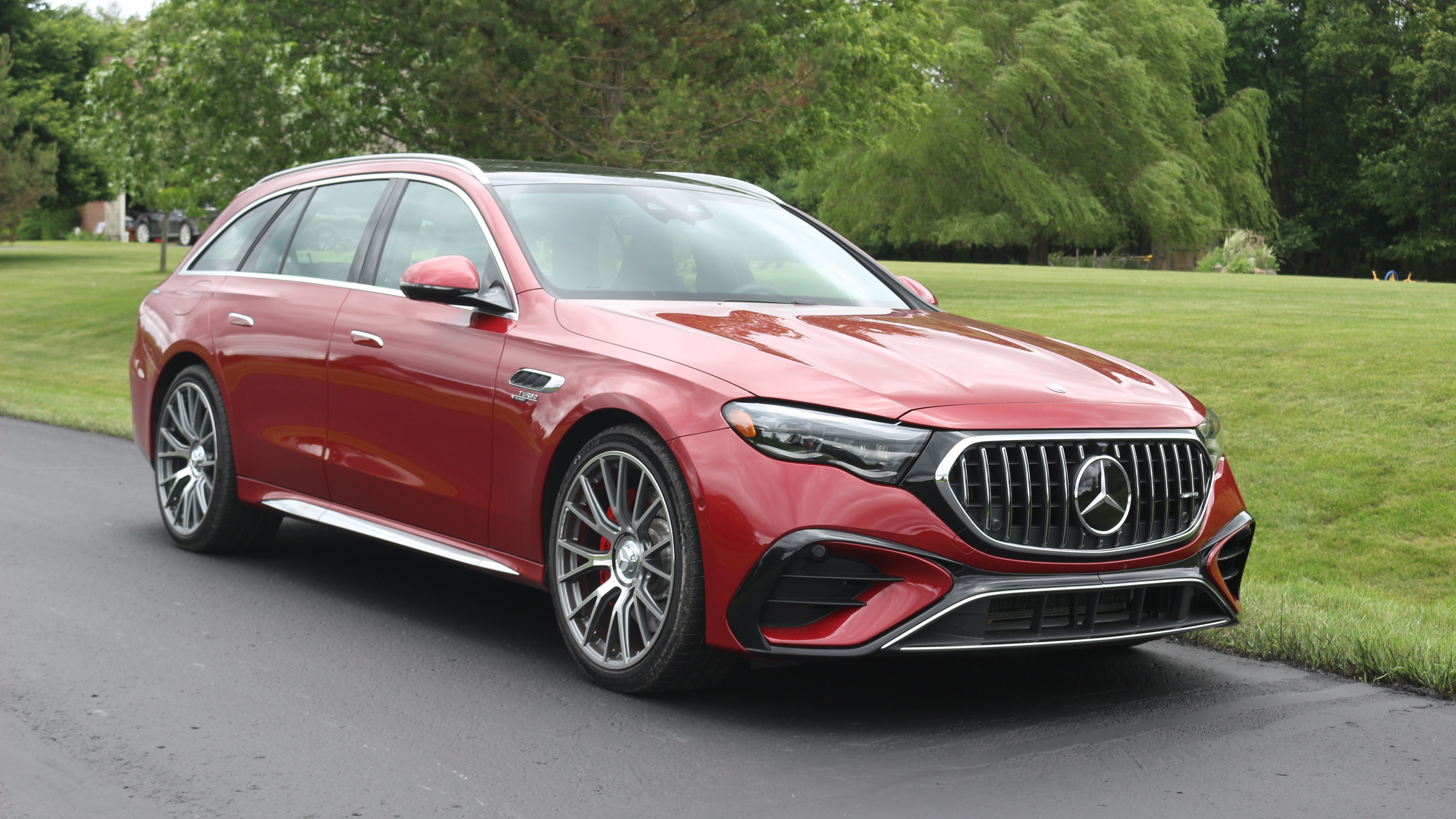
That’s not the only thing that grounds the E53 in its second-tier status. There’s also the price, which is quite a bit lower than that of the flagship Audi and BMW models. The Mercedes starts under $95,000, and even loaded to the gills, my test car checked in at $116,980 including destination. The E53 also probably has little to no waiting list at that price, which is still cheaper than the tier-one competition, which is also likely to be saddled with hefty dealer markup (assuming you can find them at all; the Audi is already on its way out of the market).
The 2026 Mercedes-AMG E53 Hybrid Wagon does many things well, but it’s simply trying to do too much at once. With a little polish, this formula seems like a solid second-tier offering for the next chapter of Mercedes-AMG, but it’s a bit of an awkward fit for this one.
Mercedes-Benz provided The Drive with a seven-day loan of this vehicle for the purpose of writing this review.
2026 Mercedes-AMG E53 Hybrid Wagon
| Base Price (As tested) | $93,350 ($116,980) |
| Powertrain | 3.0-liter turbocharged inline-six and transmission-mounted electric motor | 9-speed automatic transmission |
| Horsepower | 443 @ 5,800 rpm (gas) 161 (electric) 577 (total) 604 (with “Race Start”) |
| Torque | 413 lb-ft @ 5,150 rpm (gas) 354 lb-ft (electric) 553 lb-ft (total) |
| Seating Capacity | 5 |
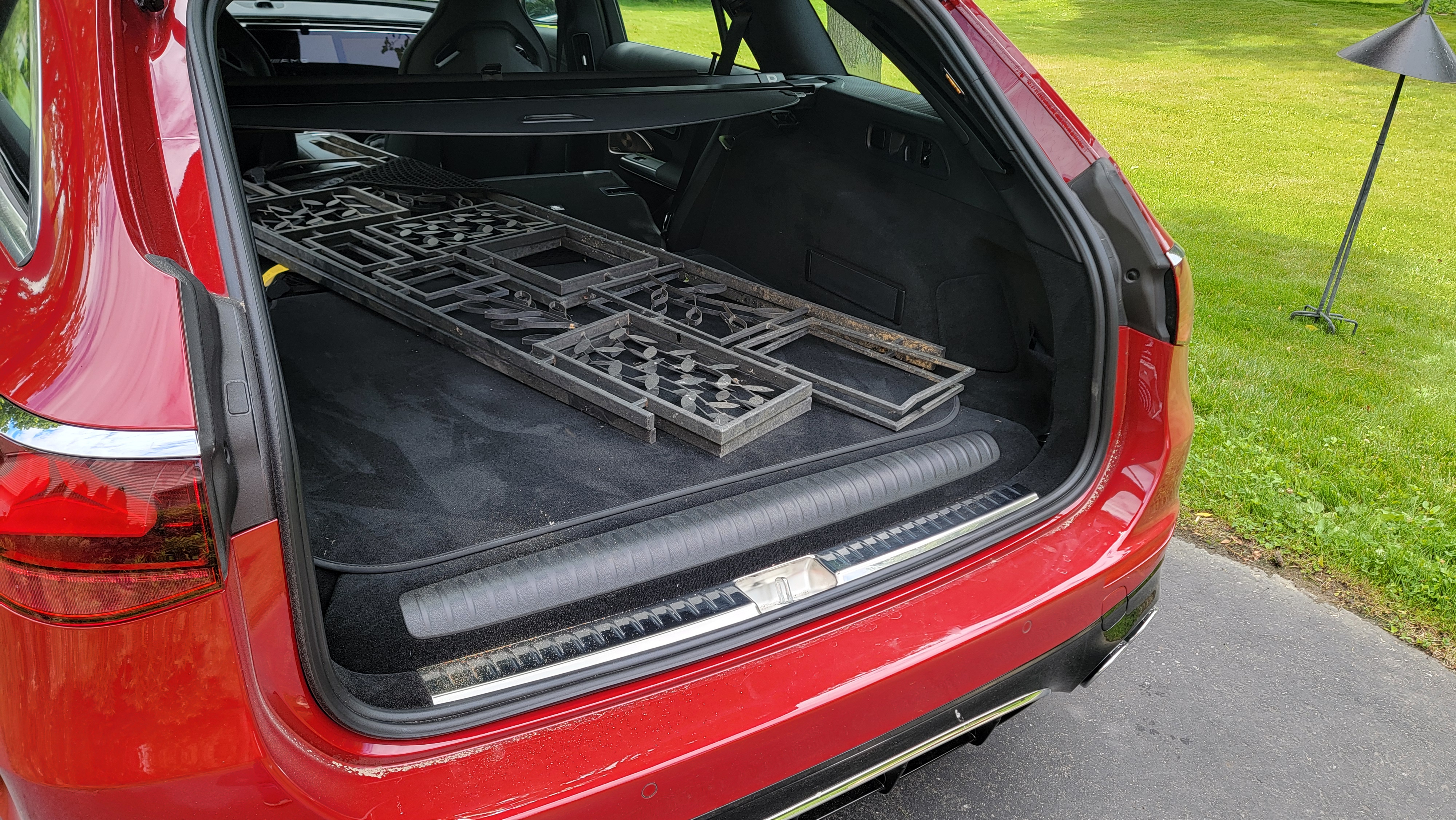
| Cargo Volume | 33.1 cubic feet |
| Curb Weight | 5,401 pounds |
| 0-60 mph | 4.0 seconds 3.8 seconds (with “Race Start”) |
| Top Speed | 155 mph 177 mph (with “Race Start”) |
| EPA Fuel Economy | 22 mpg combined / 56 MPGe combined |
| EPA EV Range | 41 miles |
| Score | 6.5/10 |