
Key Takeaways
- Hummer EV’s off-road prowess. Advanced steering modes like CrabWalk and King Crab enhance maneuverability on tight trails.
- Impressive yet impractical design. The vehicle’s size and carbon fiber features suggest it’s more of a showpiece than a practical off-roader.
- Technology solves its own problems. The Hummer’s tech aids in overcoming obstacles created by its massive size.
- A toy for enthusiasts. Like luxury sports cars, the Hummer EV offers capabilities most owners may never fully utilize.
Bottom line: A technological masterpiece that comes with a long list of pros and cons.
AI assisted, editor reviewed
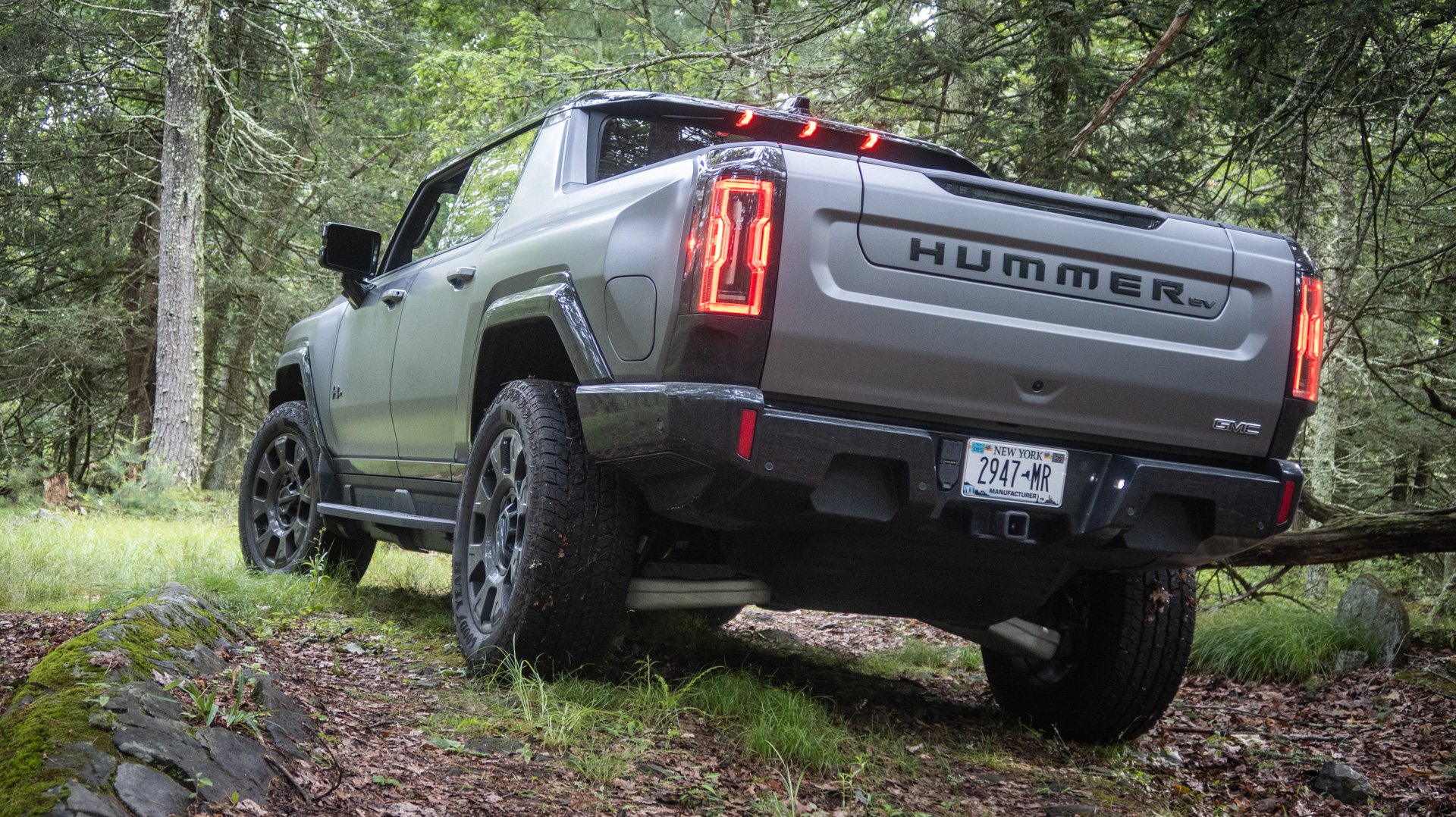
The 2026 GMC Hummer EV‘s specs are wild. Abundant ground clearance, aggressive approach angle, Zeusian power output, and tank-like wheel control; it really does push the envelope of off-road capability with novel technology. But it’s also about the width of a container ship, and that introduces a new challenge in real-world off-road driving.
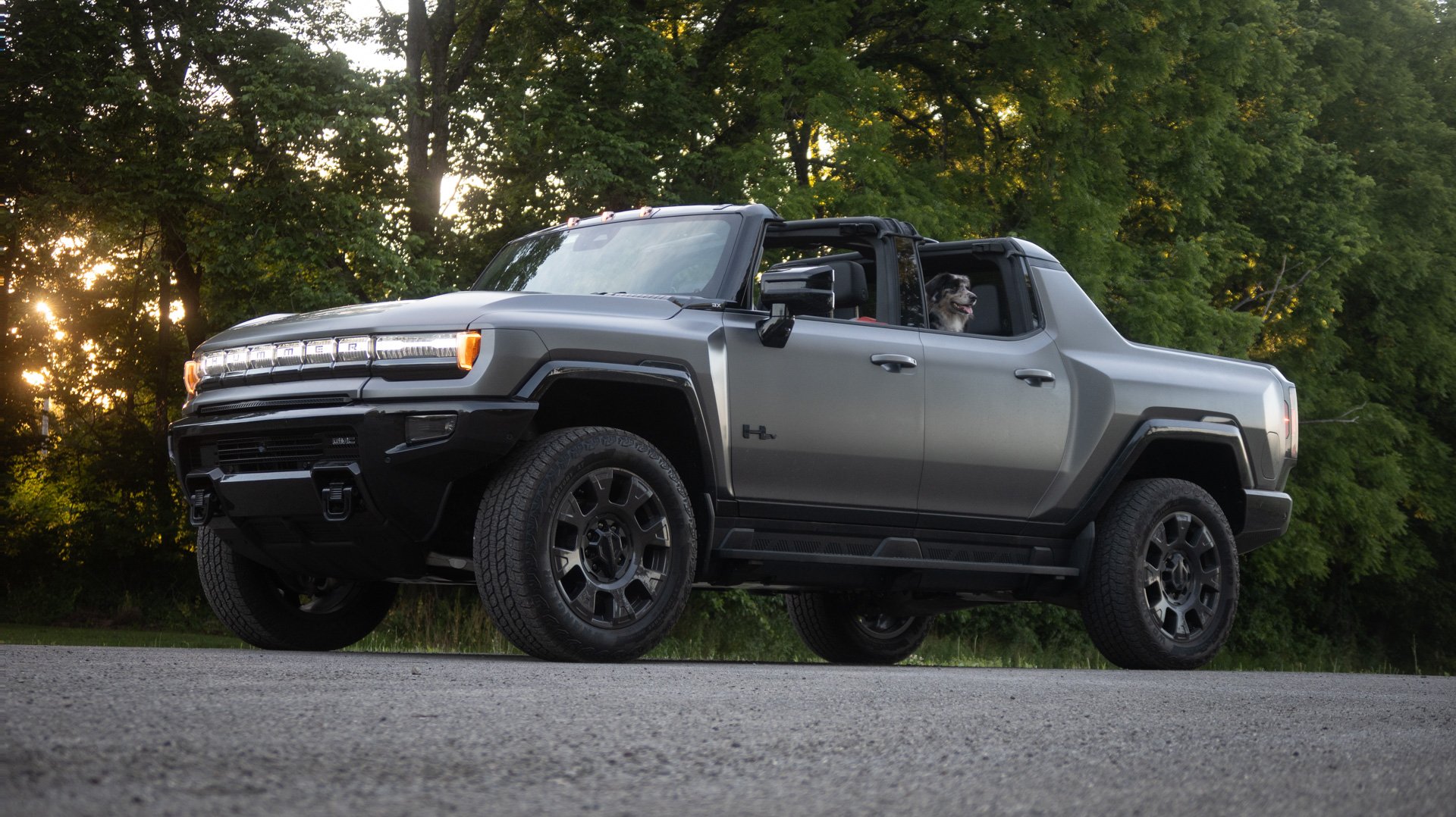
After a few days of tootling around the Hudson Valley with the roof off, I brought this Hummer EV 3X Pickup Truck to Northeast Off-Road Adventures—a 75-acre off-road driver training facility where I work as a trail guide. The property has a deep network of mild-to-wild trails, and they do everything from teaching Subaru Crosstrek owners how to get out of their comfort zone without cooking their CVTs to advanced recovery training with fully built overland rigs.
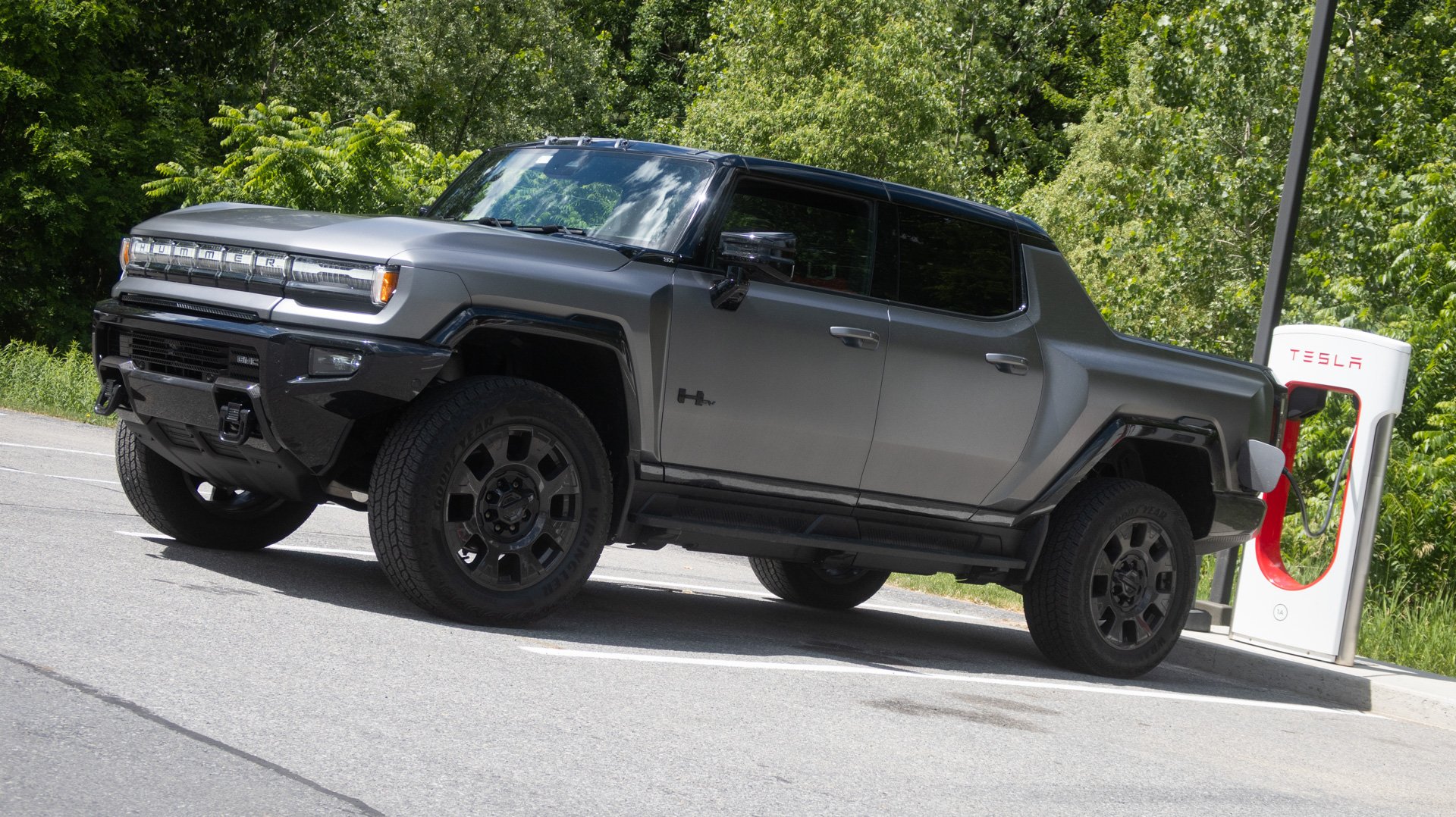
In my many years of professional off-road driving, squeezing a 9,600-pound electric Hummer through tight, tree-wrapped northeastern trails was actually not the stupidest “big fish, little pond” scenario I’ve had to wheel in. That memory still belongs to weeks spent bushwhacking through Australian jungles in an Isuzu NPR box truck, which was as much swearing, sweating, and shoveling as it was driving. I’ve gotten a lot better at vehicle handling since then, and the ’26 Hummer is practically a spaceship in comparison to that lumbering barge (although, hilariously, the box truck was actually skinnier according to spec sheets).

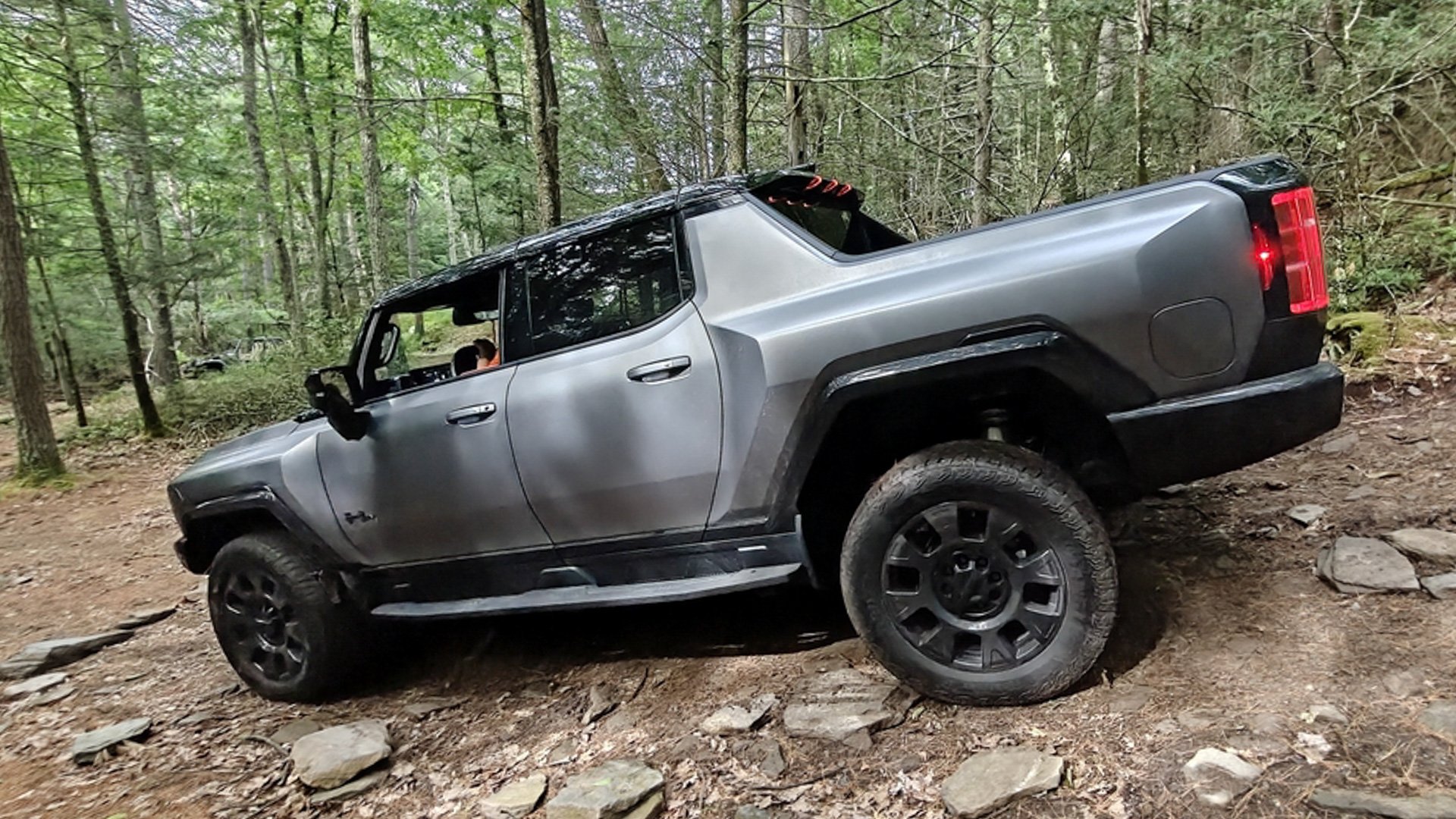
Anyway, I’ve now had enough real-world off-road time in the Hummer EV to form a more nuanced analysis than “trok big.” While I doubt many of these trucks will actually be used in high-risk handling scenarios, you still want to know if those multi-wheel-steering party tricks are gimmicks or actually any good, right?
Equipment
My test rig was a 3X Pickup Truck three-motor model with the optional 24-module battery pack and the Carbon Fiber Edition package, unlocking the preposterous power output claims of “up to 1,160 horsepower and up to 13,000 lb-ft of torque.” That’s not a typo, but it is a bit of a slanted spec—GMC shares wheel torque rather than motor torque to make the truck sound cooler. Actual output is closer to 1,200 lb-ft, which is still a lot, even if the truck weighs almost 10,000 pounds.
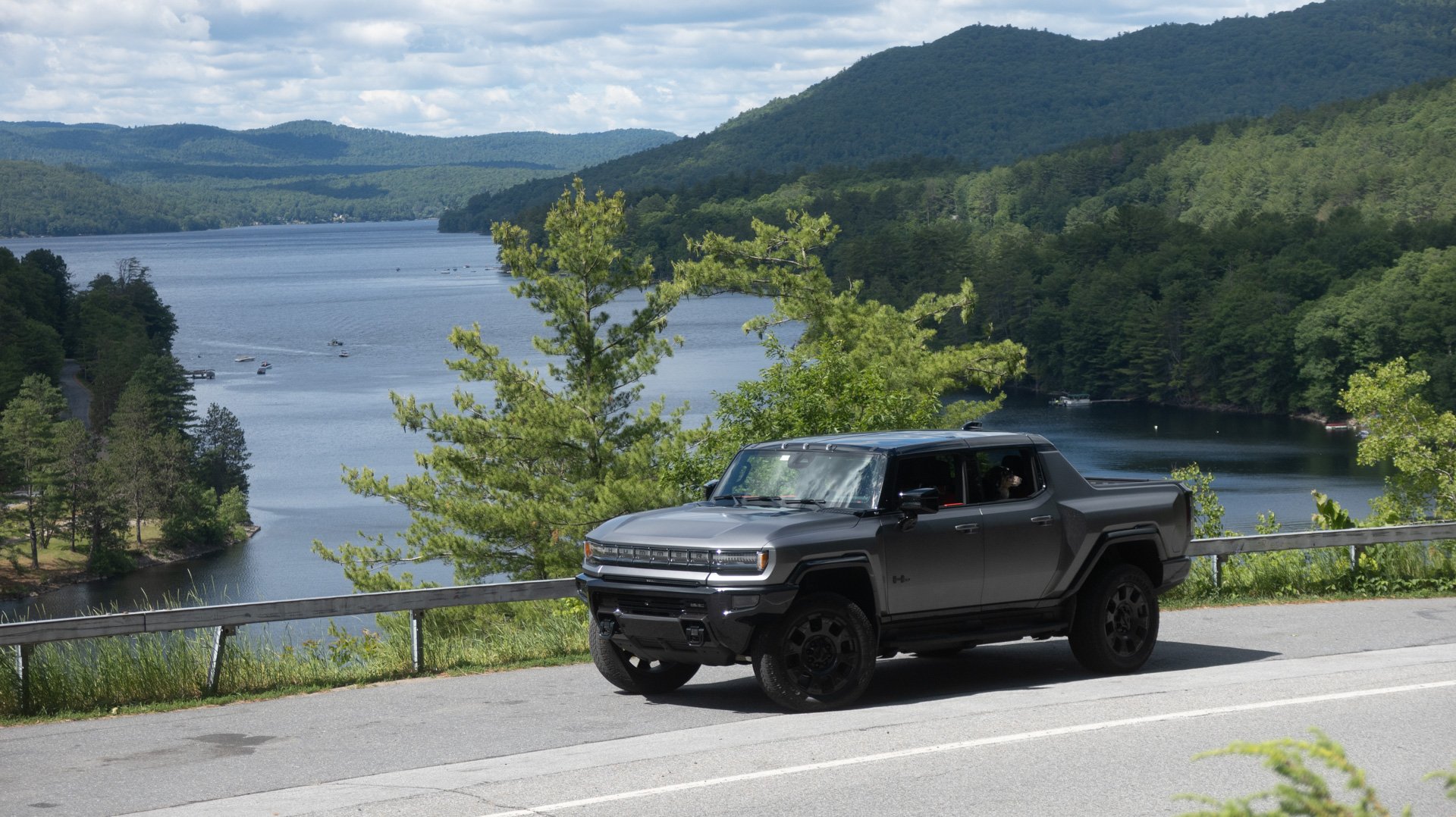
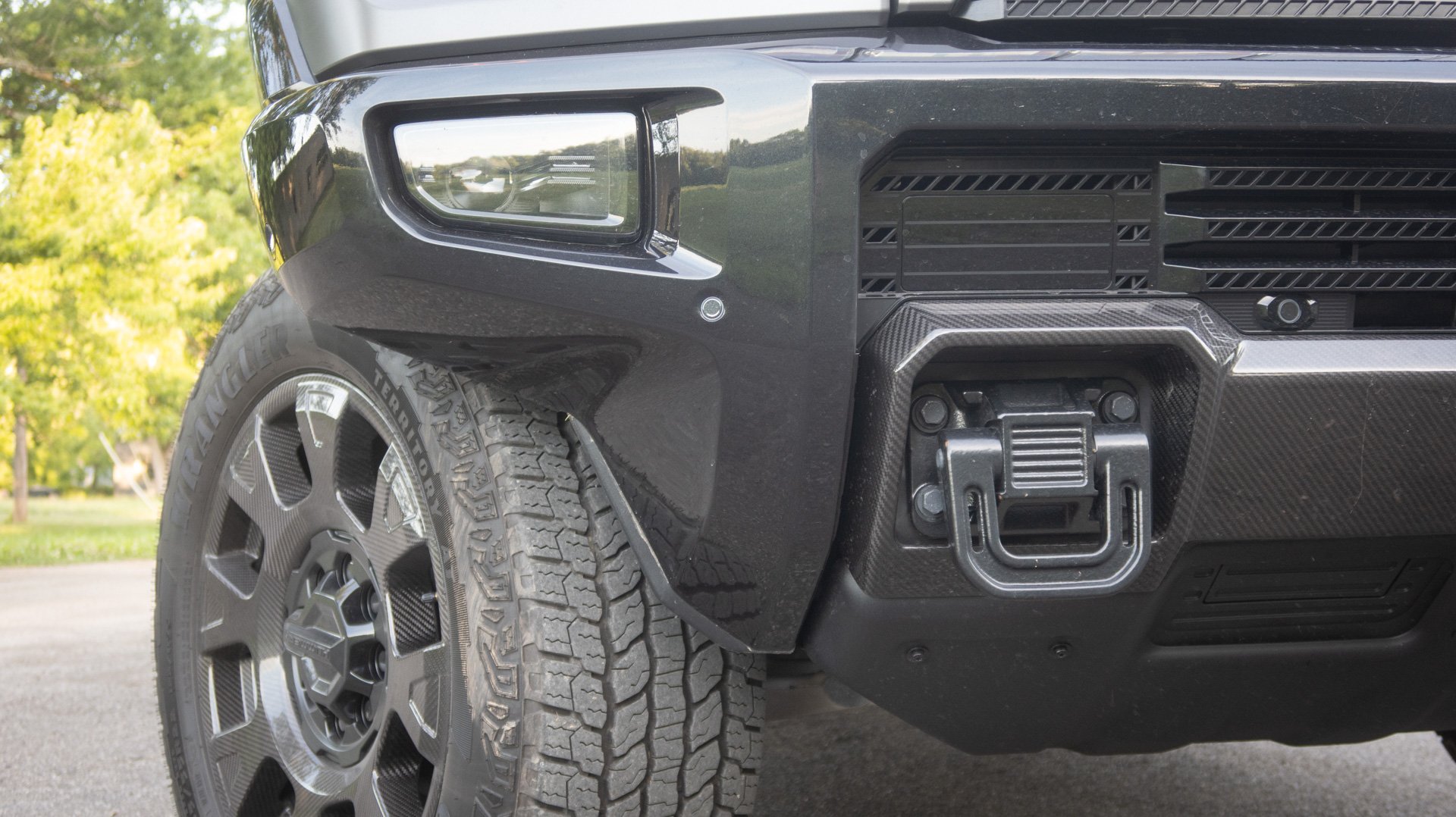
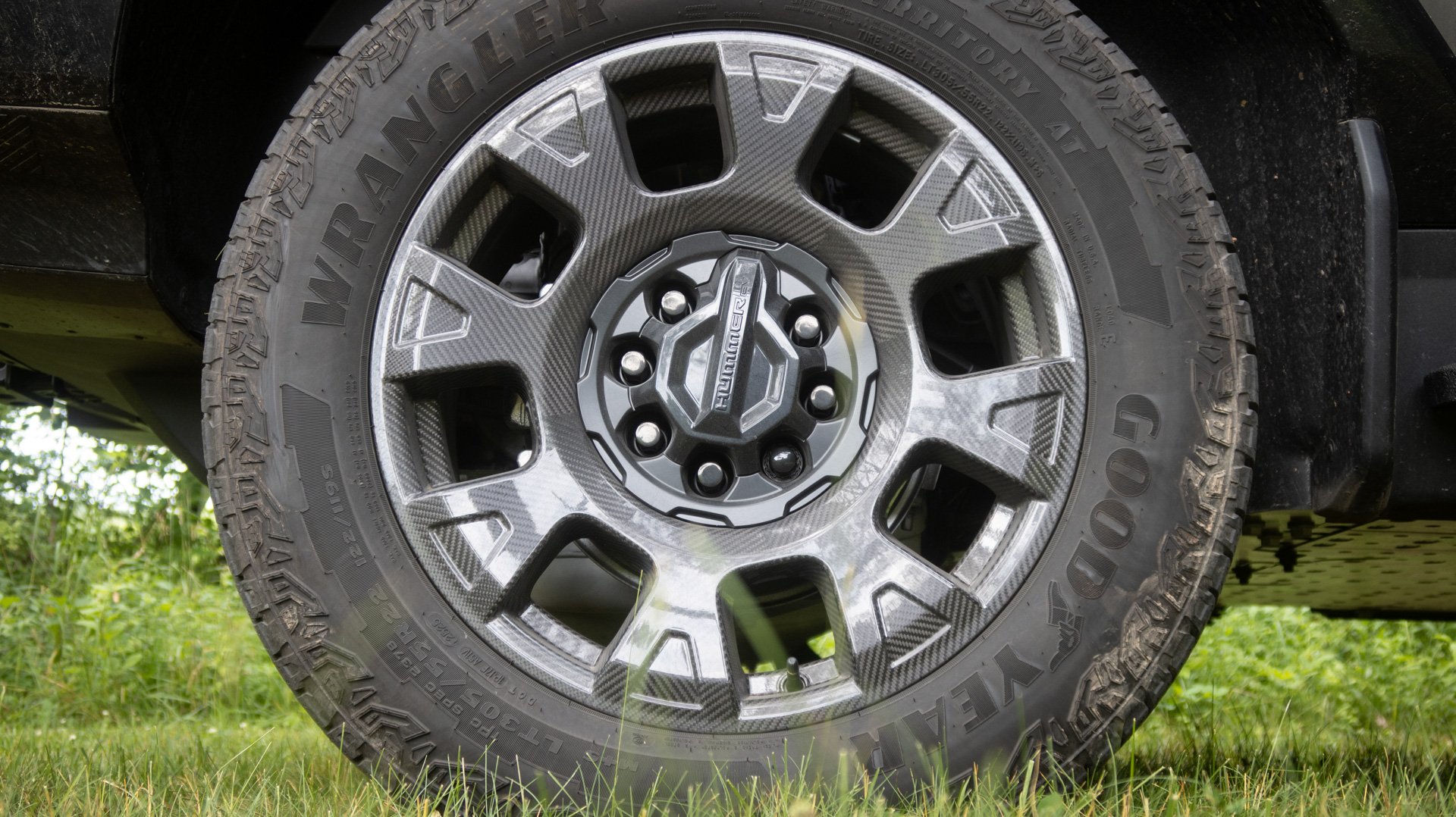
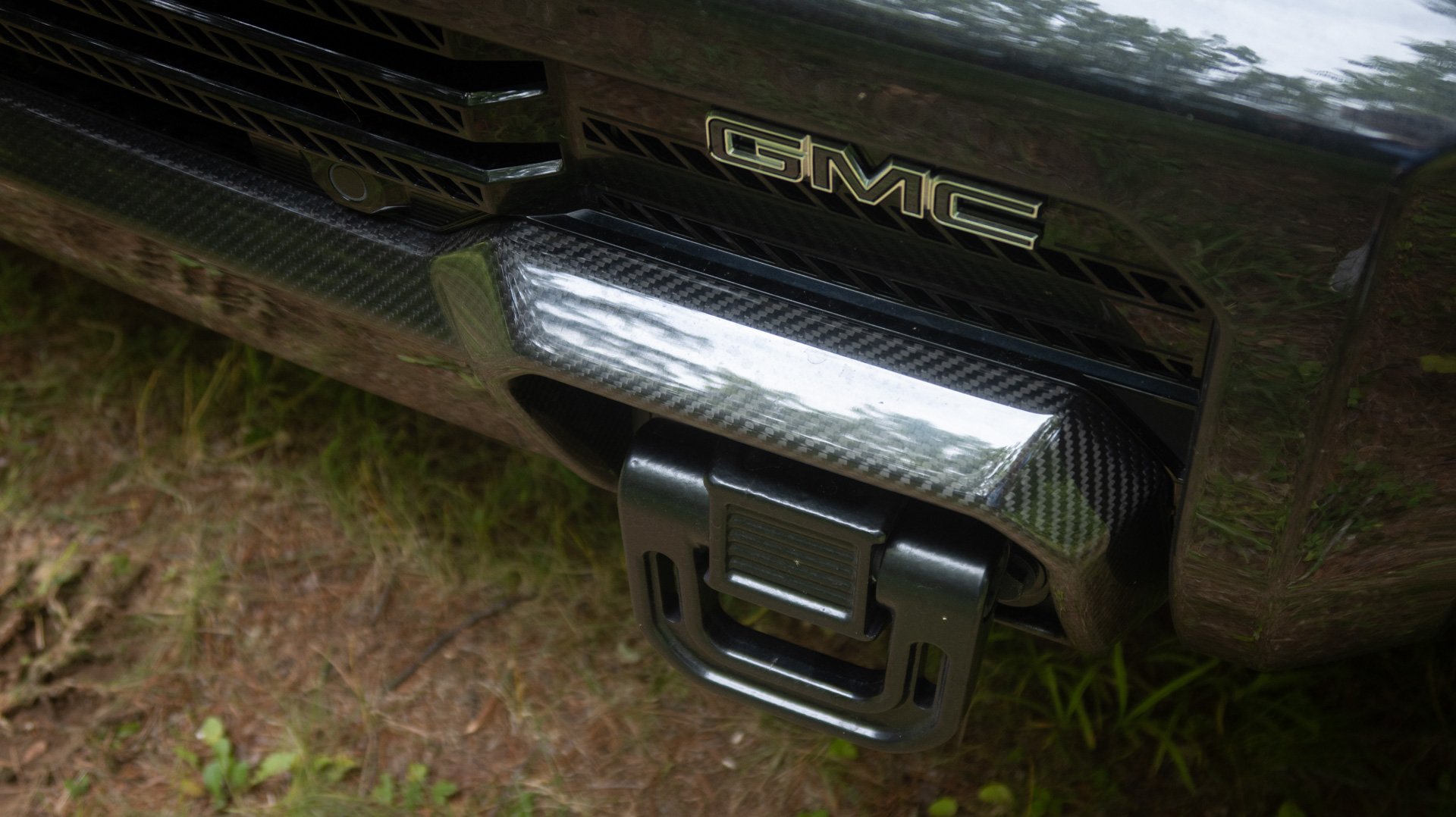
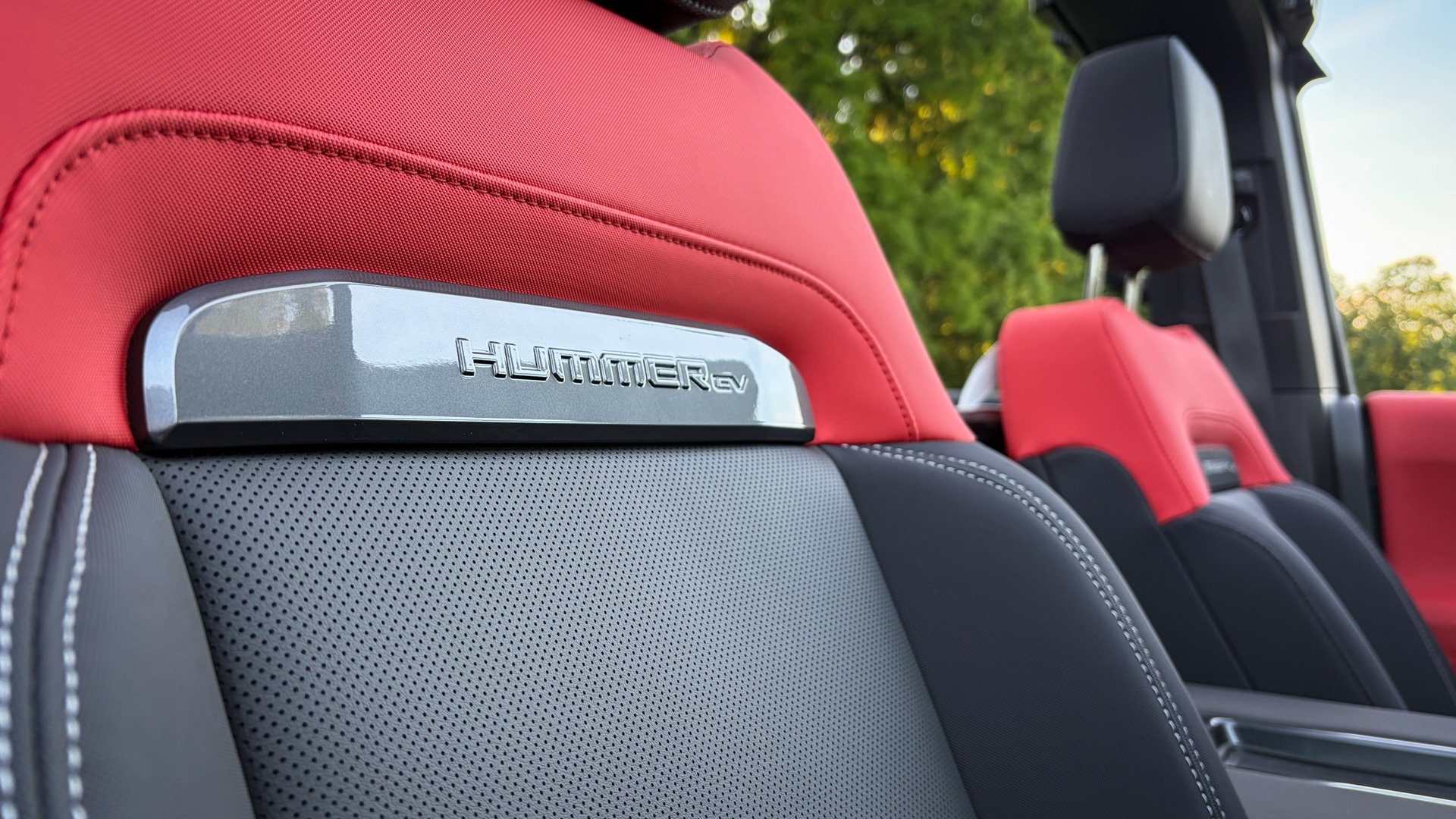
Tires are 35-inch (LT305/55R22) Goodyear Wrangler Territory all-terrains, which don’t have a particularly aggressive tread or much sidewall. They were wrapped around 22-inch carbon fiber wheels (yes, they’re real), part of a $13,700 Carbon Fiber Edition Package that features the material extensively on the vehicle’s exterior.
The carbon kit looks absolutely incredible, but I mean, I’m having a hard time imagining a louder “this truck will never actually be driven off-road” signal to anybody who knows what they’re looking at. It’s scary enough imagining how much it’d cost to fix the vehicle’s aluminum body if it hit a tree. What the heck are you supposed to do if you bang a carbon wheel into a rock?
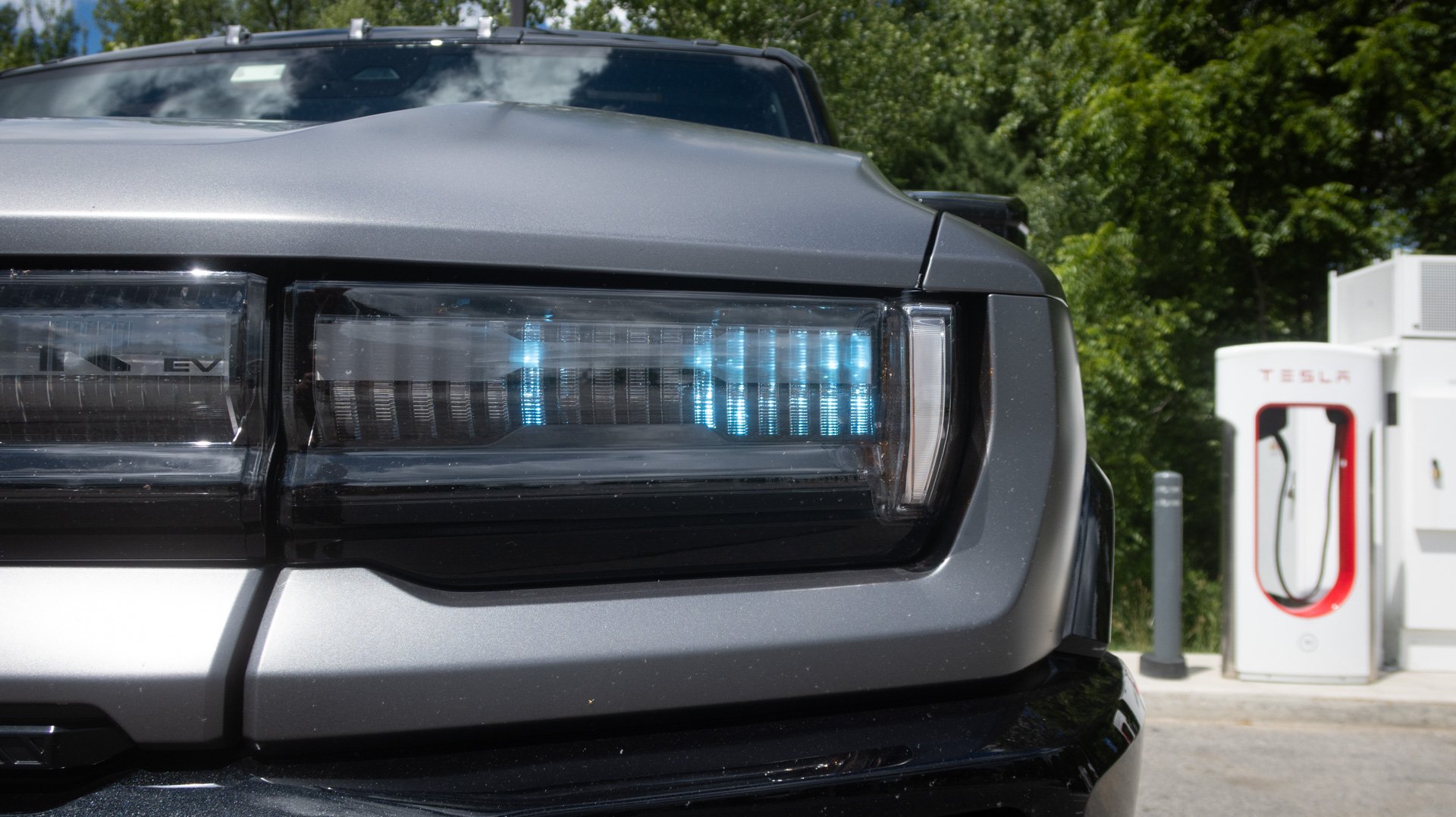
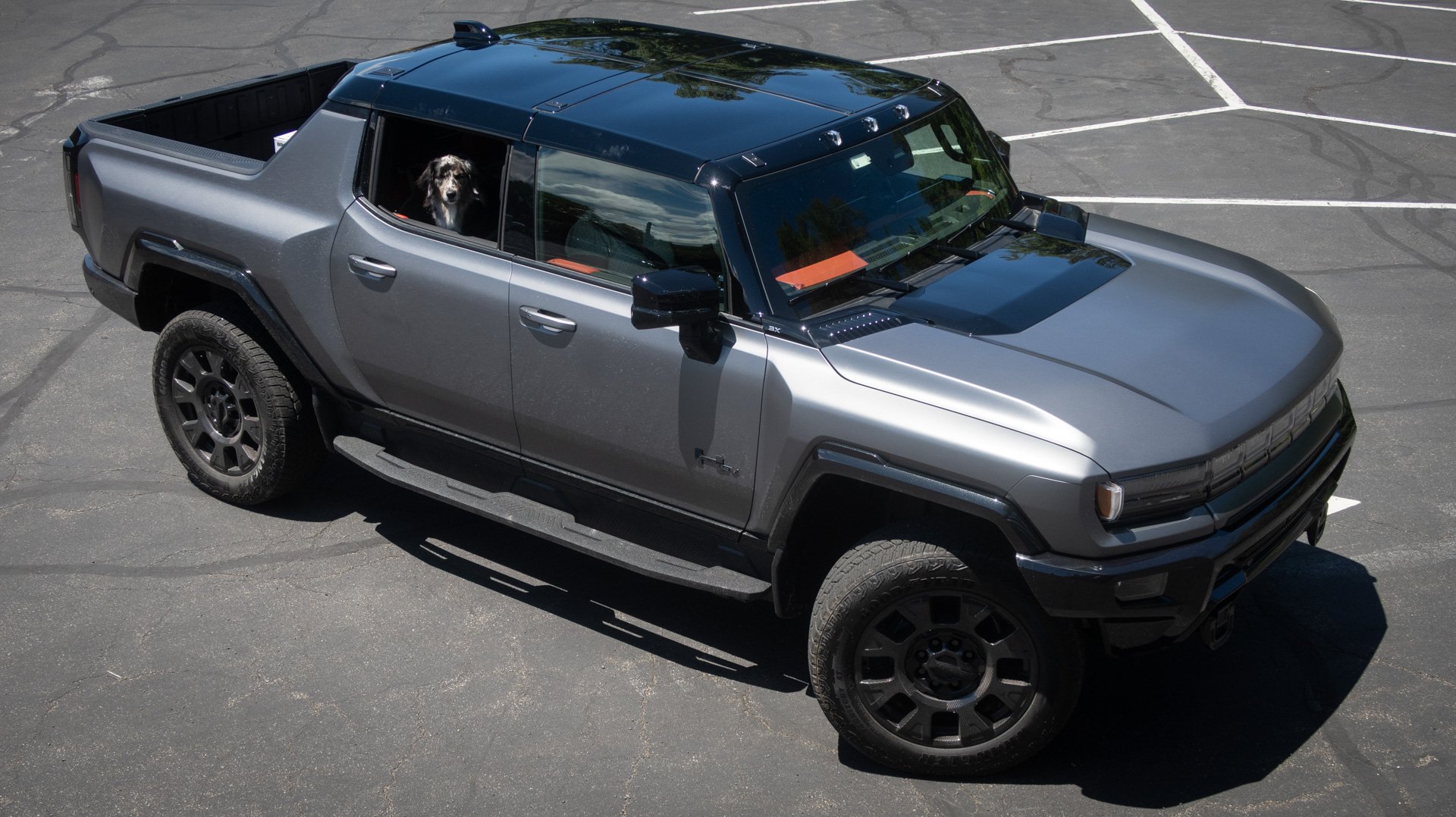
The test truck did not have GMC’s Extreme Off-Road Package, which swaps the 22s for 18s (giving you much more tire sidewall), adds front and rear locking differential control (not quite the same as diffs in a gas truck), skid plates, underbody cameras, heavy-duty ball spline half shafts, and rocker protection. Those features would have aided significantly in traction and capability. But it’s also a $10,000 box-tick at the dealership, so you might not be inclined to splurge on it.
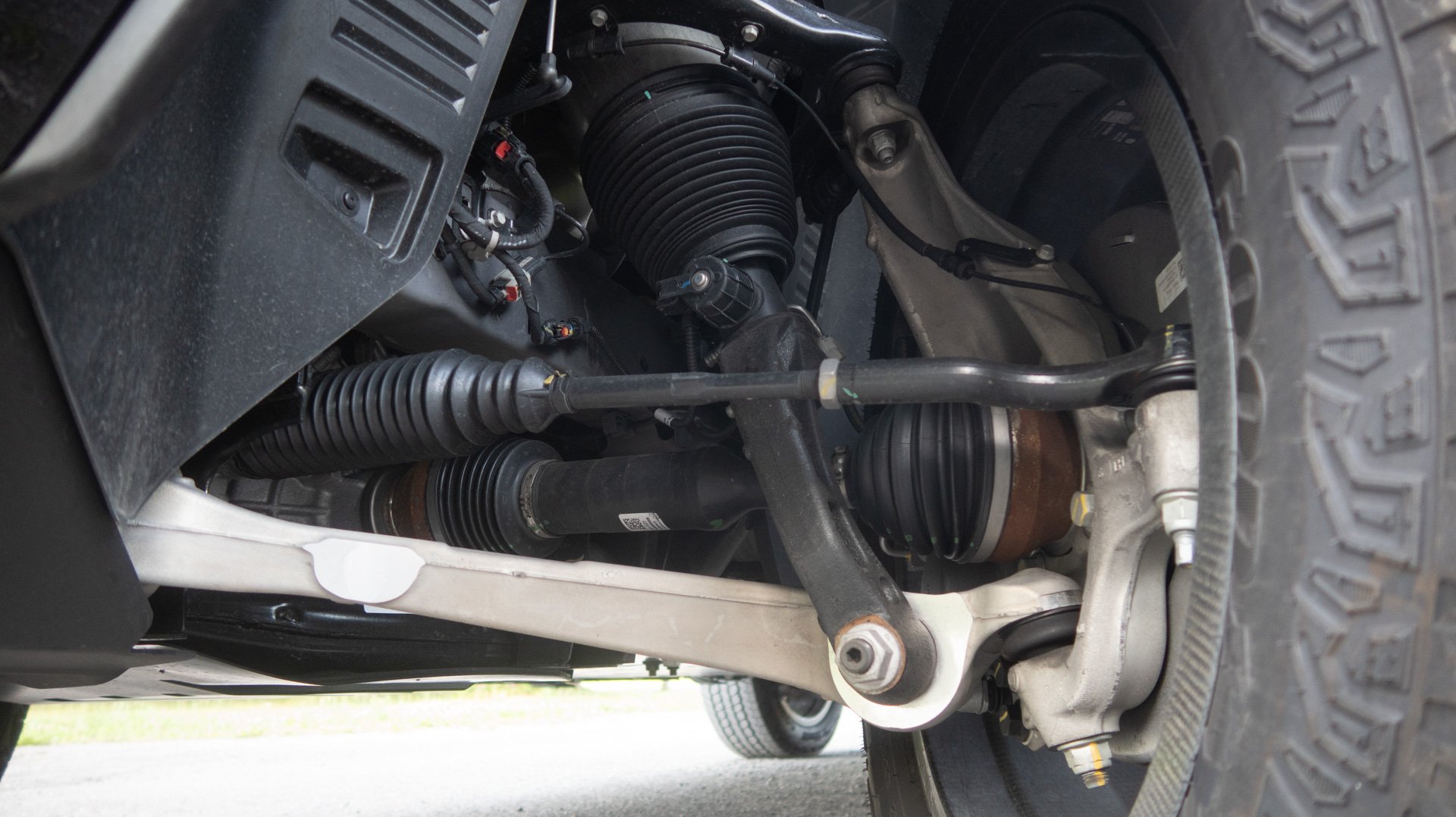
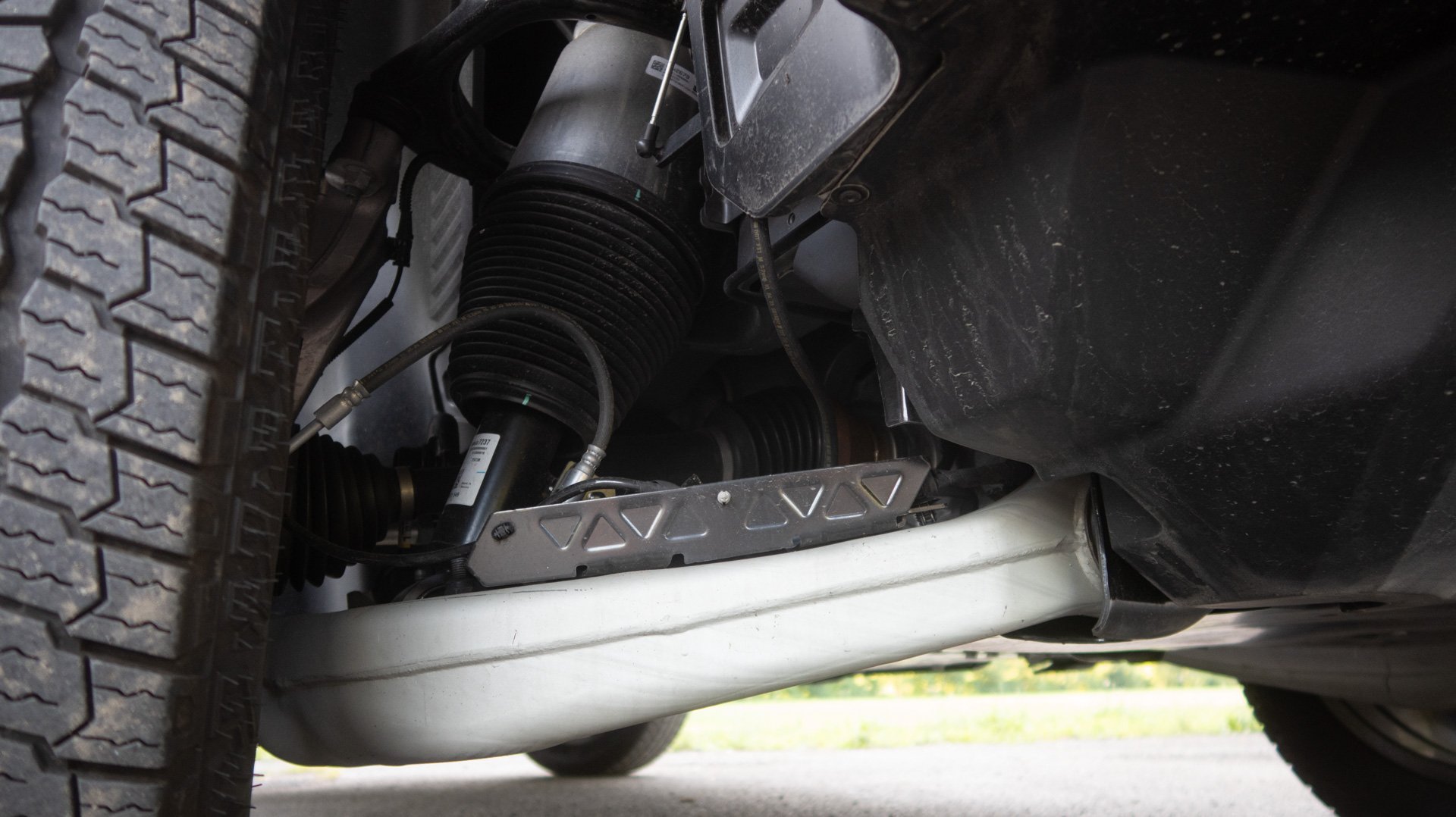

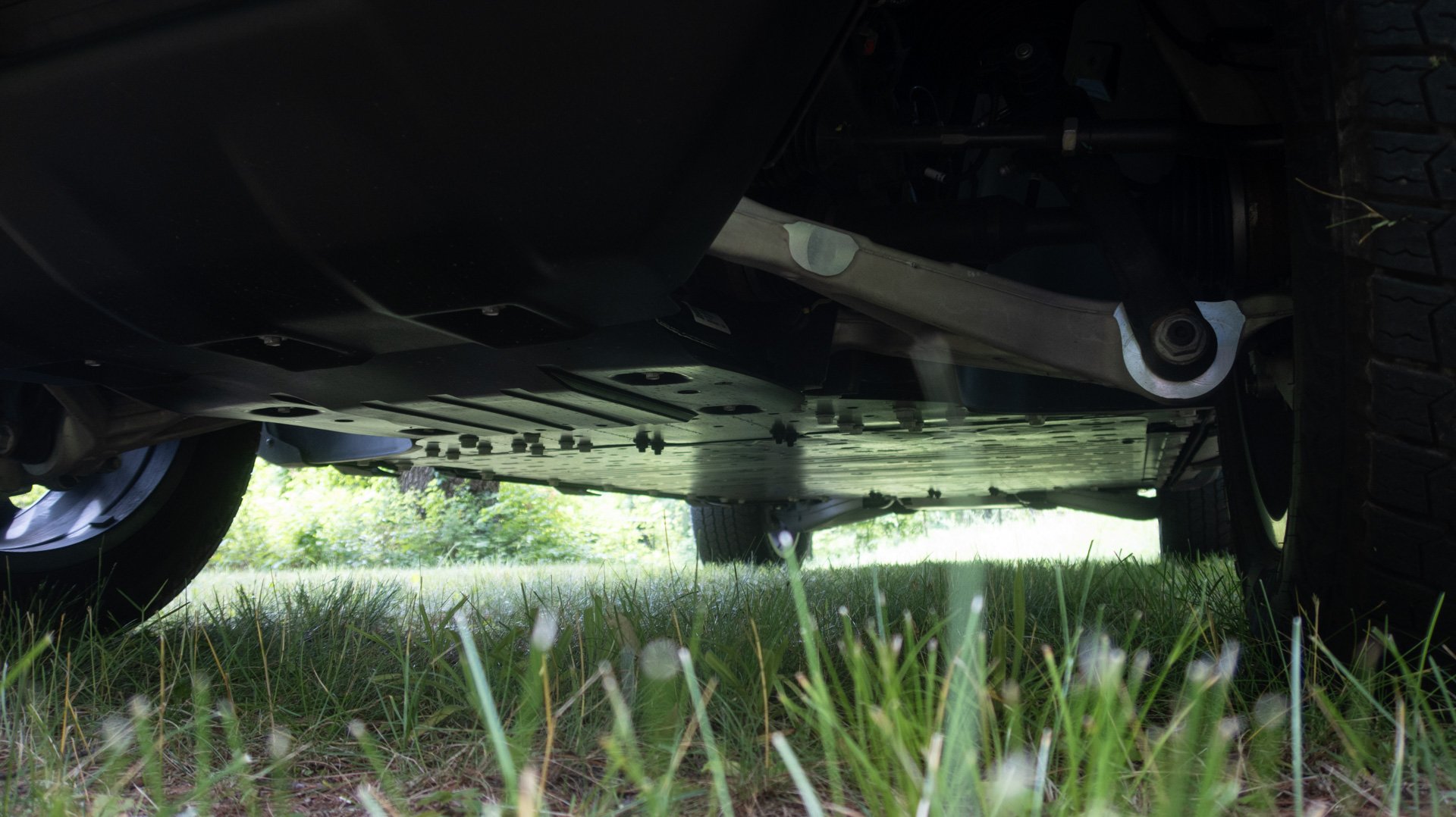
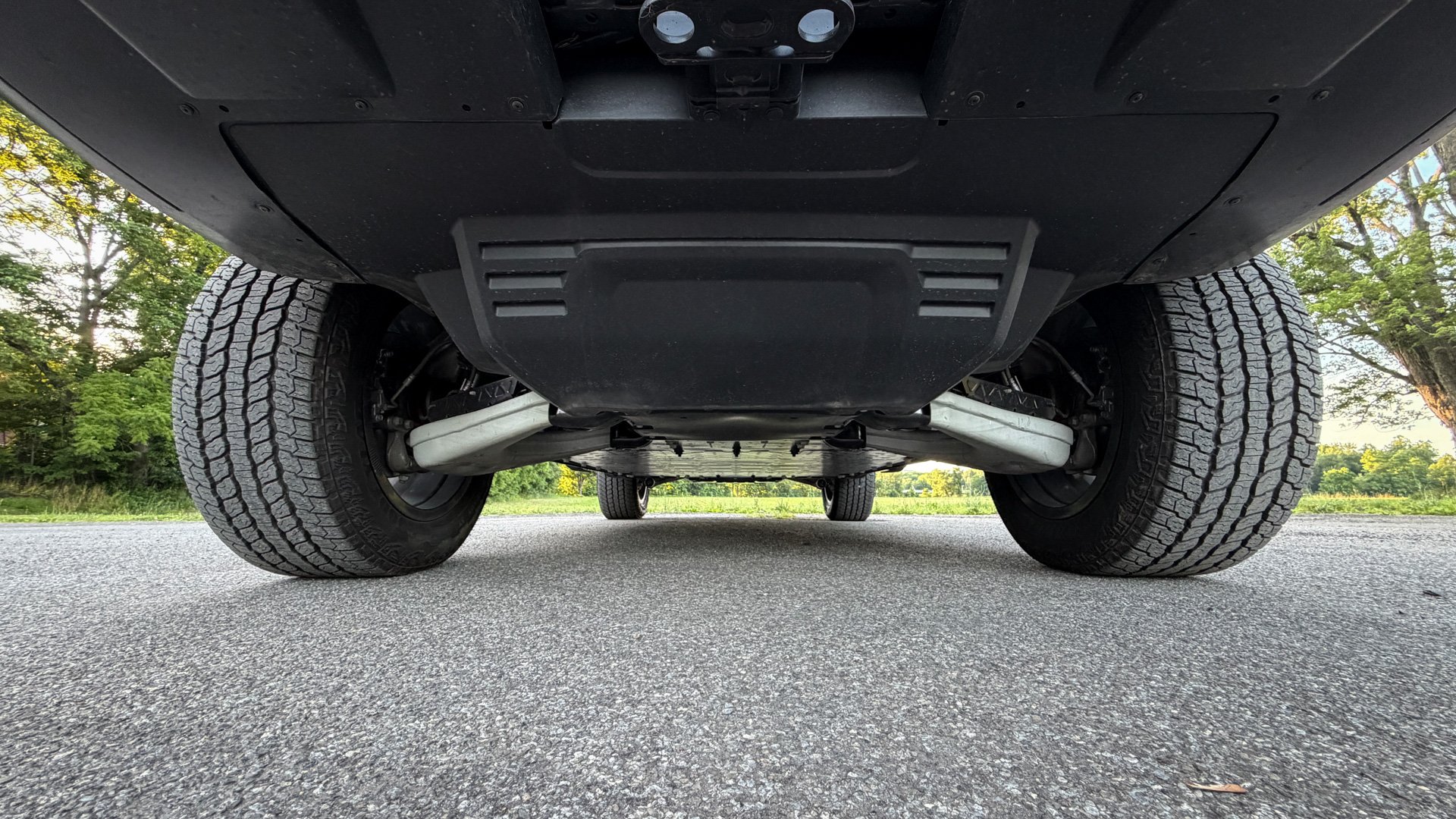
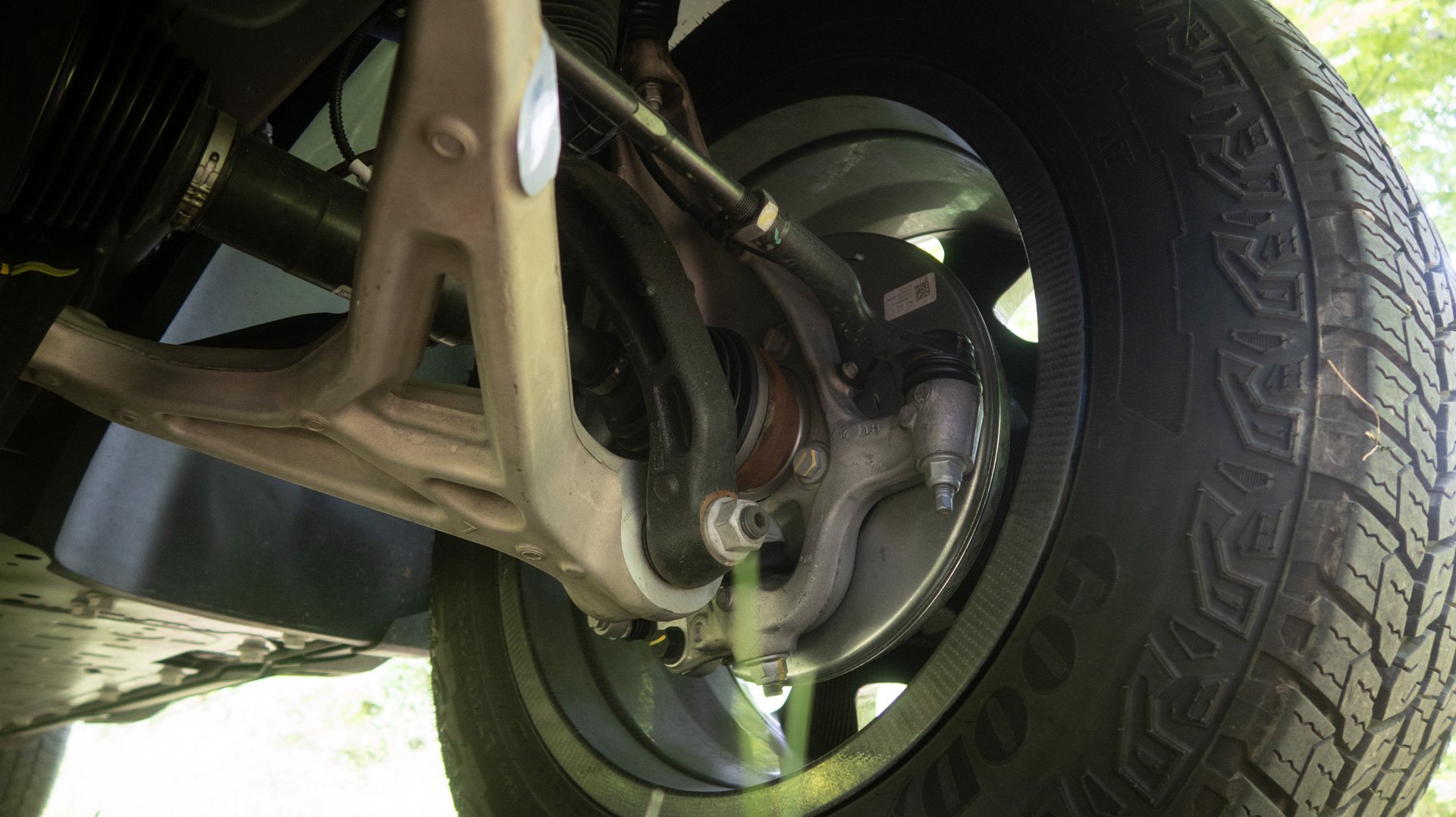

The Hummer EV’s steering and the software that controls it are a lot more interesting than its accessories. The truck’s rear wheels can steer up to 10 degrees, and it uses this capability in two distinct ways. Both the “CrabWalk” and “King Crab” modes were probably mainly cooked up as a party trick for owners to brag about, but without spoiling the next section of this review, I gotta say, they really work when you want them.
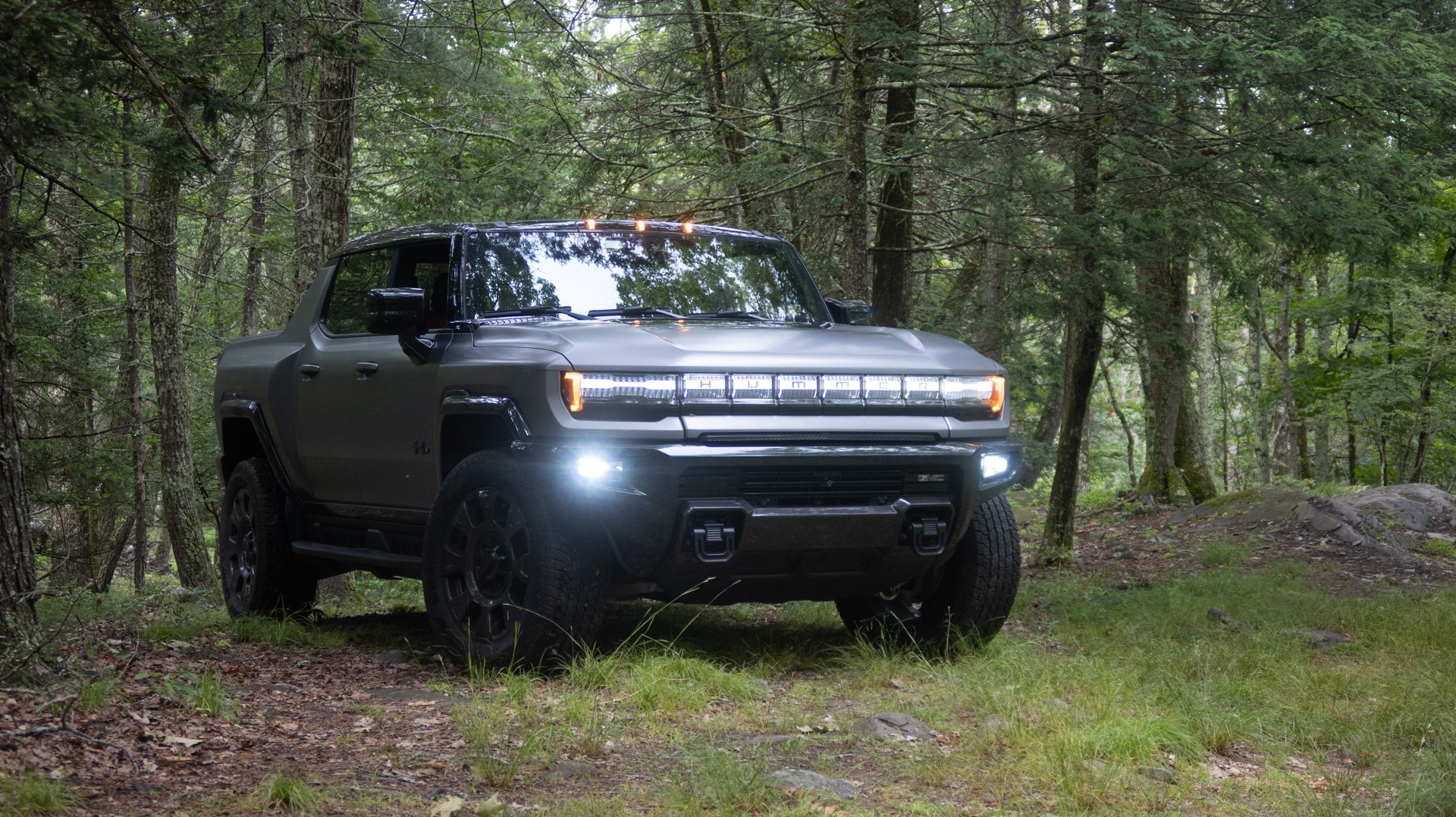
CrabWalk
CrabWalk is a “four-wheel steer mode that gives diagonal-drive functionality at low speeds,” per GMC. “At low speeds, CrabWalk turns the rear wheels at the same angle as the front wheels, allowing the vehicle to move diagonally to help traverse tight trails.”
King Crab
King Crab mode “makes the rear wheels turn up to two times more than the front so you can swing the rear of the vehicle to help reposition the vehicle on a trail.” In practical terms, it lets you make very aggressive lateral position changes.
The best-articulated explanation of how these systems work is on a Connecticut GMC dealer‘s site:
The Hummer’s “rear-steer system uses electric motors to adjust toe angles at each rear wheel independently, responding to commands from the vehicle’s control systems within milliseconds.
Multiple sensors continuously monitor vehicle speed, steering wheel angle and rate, throttle position, brake pressure, and individual wheel speeds. The control computer processes this data hundreds of times per second, calculating optimal rear-wheel angles to achieve the driver’s intended path while maintaining stability and traction. The system operates seamlessly whether you’re navigating a mall parking lot or conquering a boulder-strewn trail.
Safety systems work in concert with the steering technology. If sensors detect potential instability or loss of traction, the system can independently adjust rear-wheel angles, apply individual wheel braking, or modulate motor torque to maintain control. You experience this as simply a vehicle that goes where you point it, even in conditions that would challenge conventional SUVs.”
I mean, even a Luddite like myself has to admit that’s pretty cool and technologically creative.
On the Trail
I ran my off-road familiarization in three stages. First I tried to get comfortable with the vehicle’s size and visibility, then I played with the steering modes in a wide-open lawn to see how they felt, then I got wedged so tightly between trees that I had to have my buddy Alex hop out and spot me while praying I wouldn’t have to buy GMC any new pieces of carbon fiber. Getting comfortable with an EV powertrain spinning road-bias AT tires over loose stones and sticks was also quite an experience.
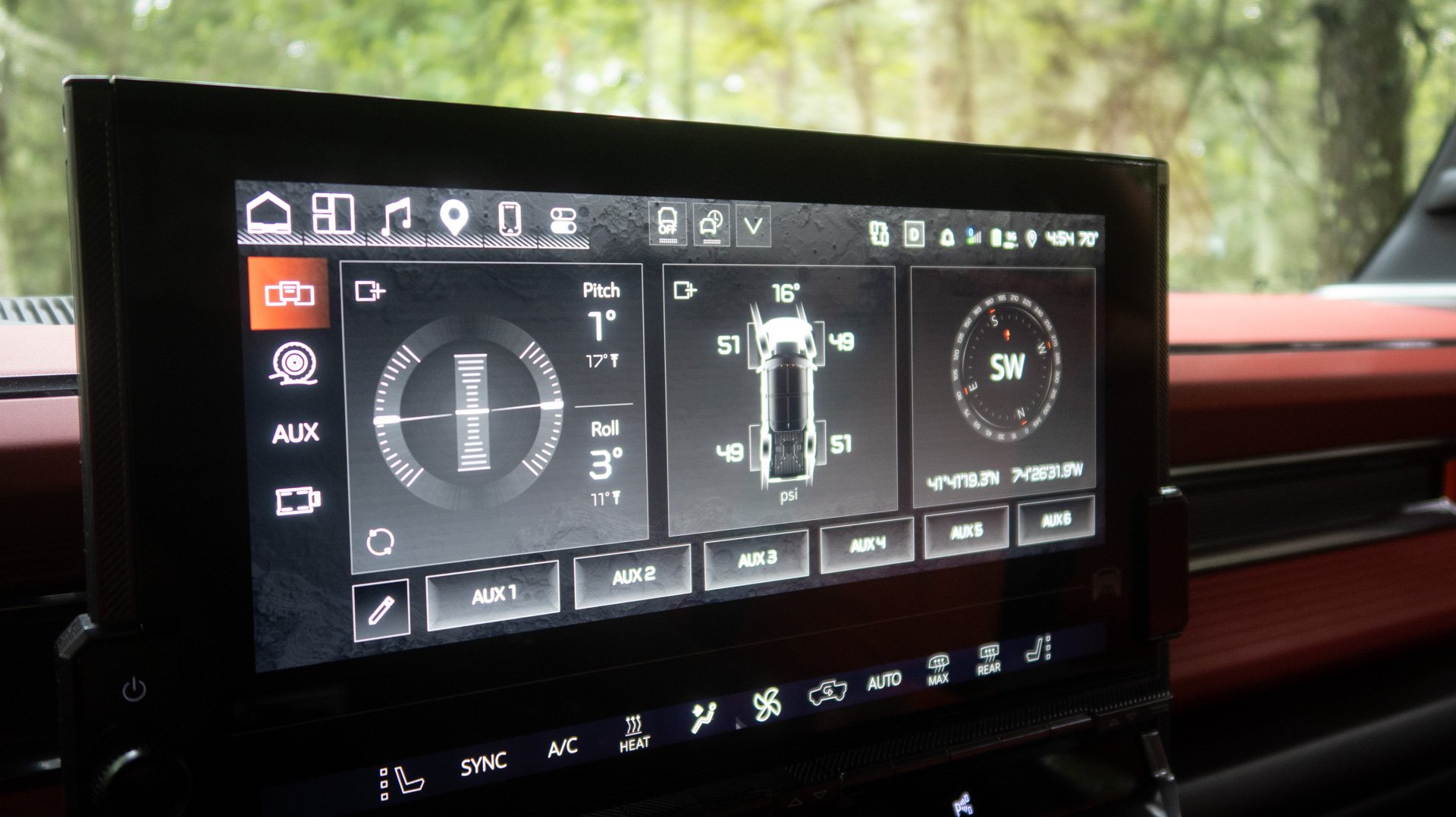
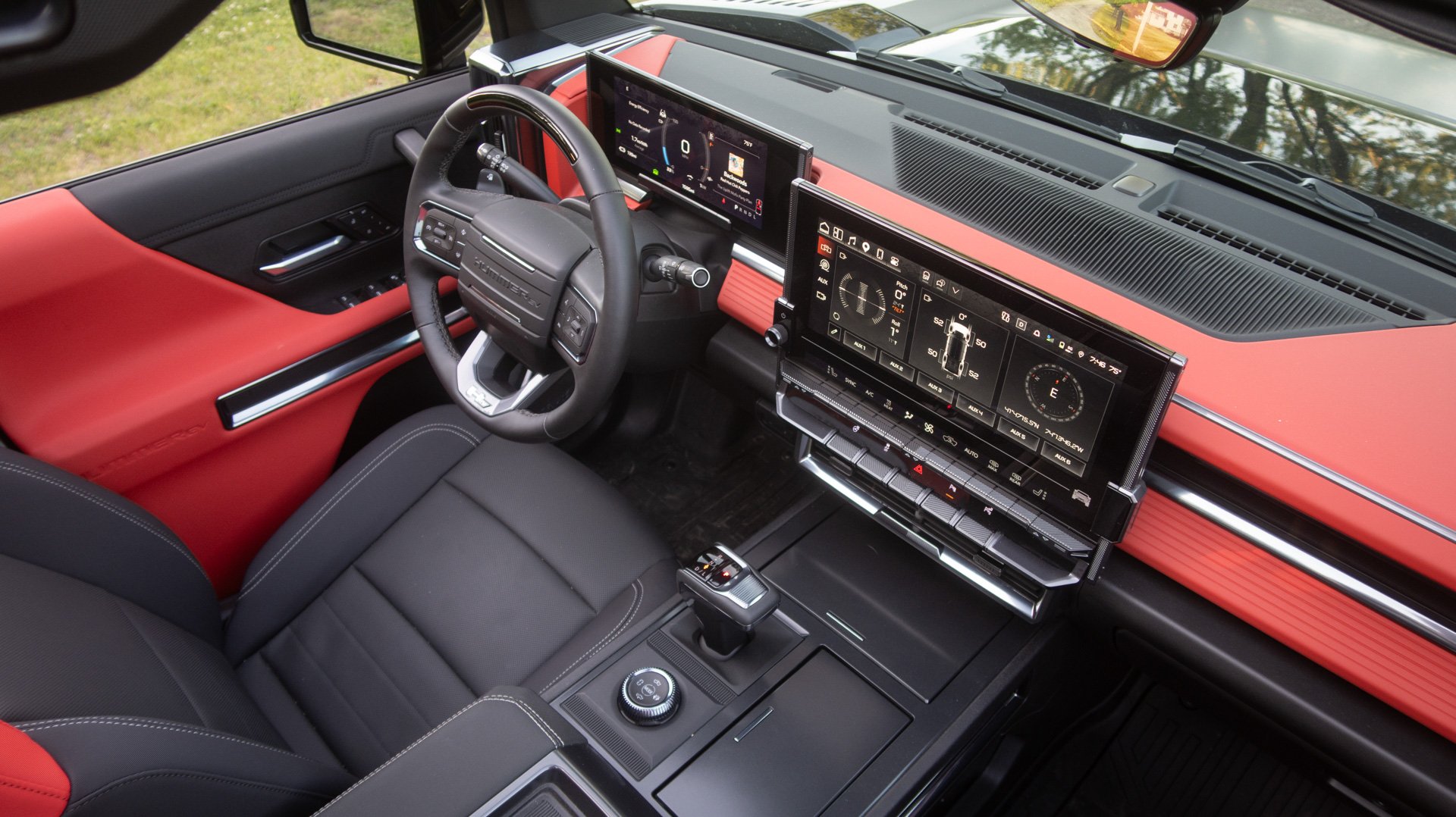
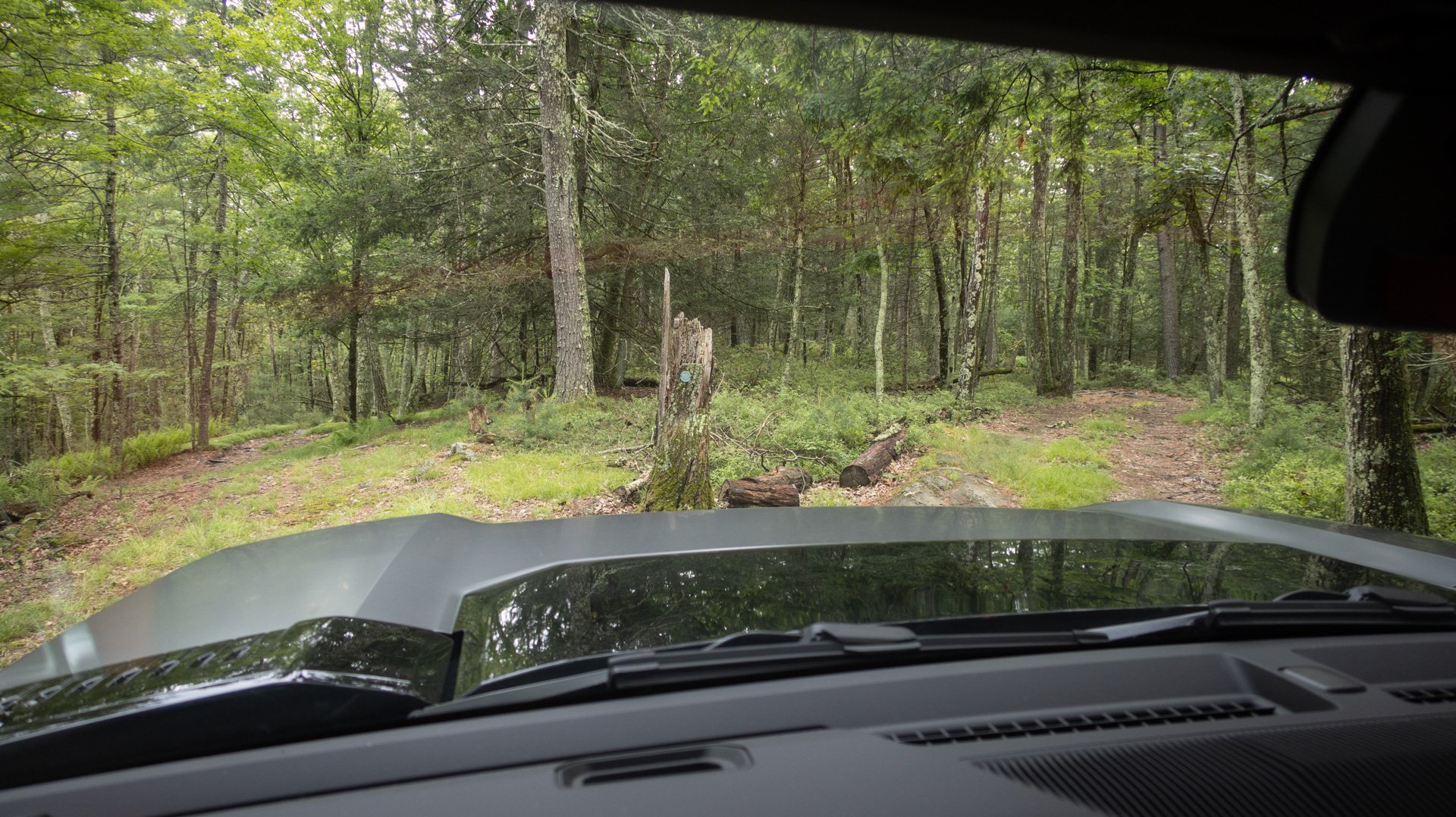
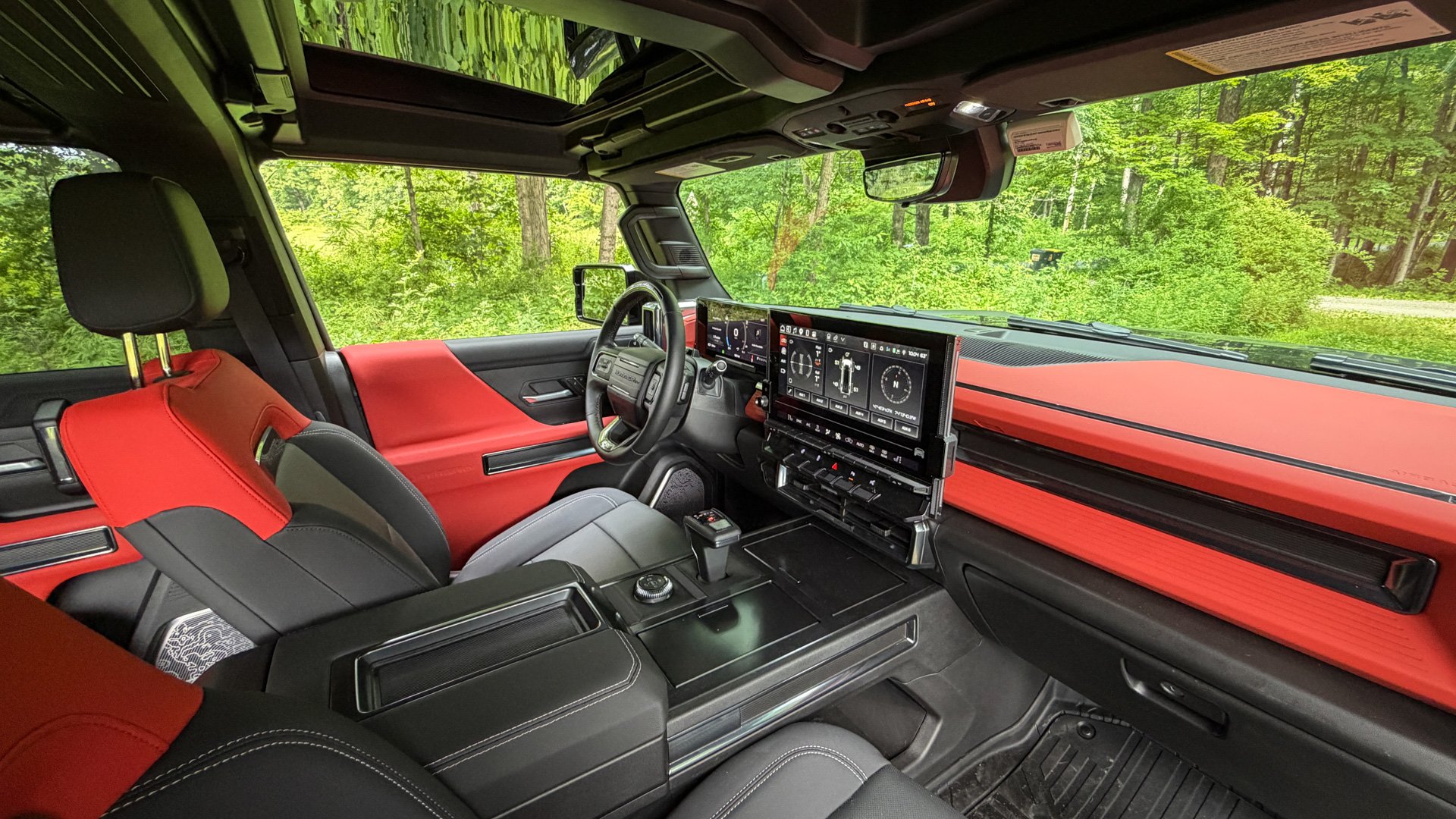
Surveying the world from the cab of a Hummer EV feels like peering out from a fortress turret. Everything’s far below you, and the windows are weirdly small. It’s easy enough to get used to on the street, but it really makes it tough to look at obstacles. Annoyingly, the vehicle’s 360-degree bird’s-eye camera only shows you what’s immediately next to the truck. Which, again, is perfectly fine for parallel parking but not particularly helpful in trail course plotting.
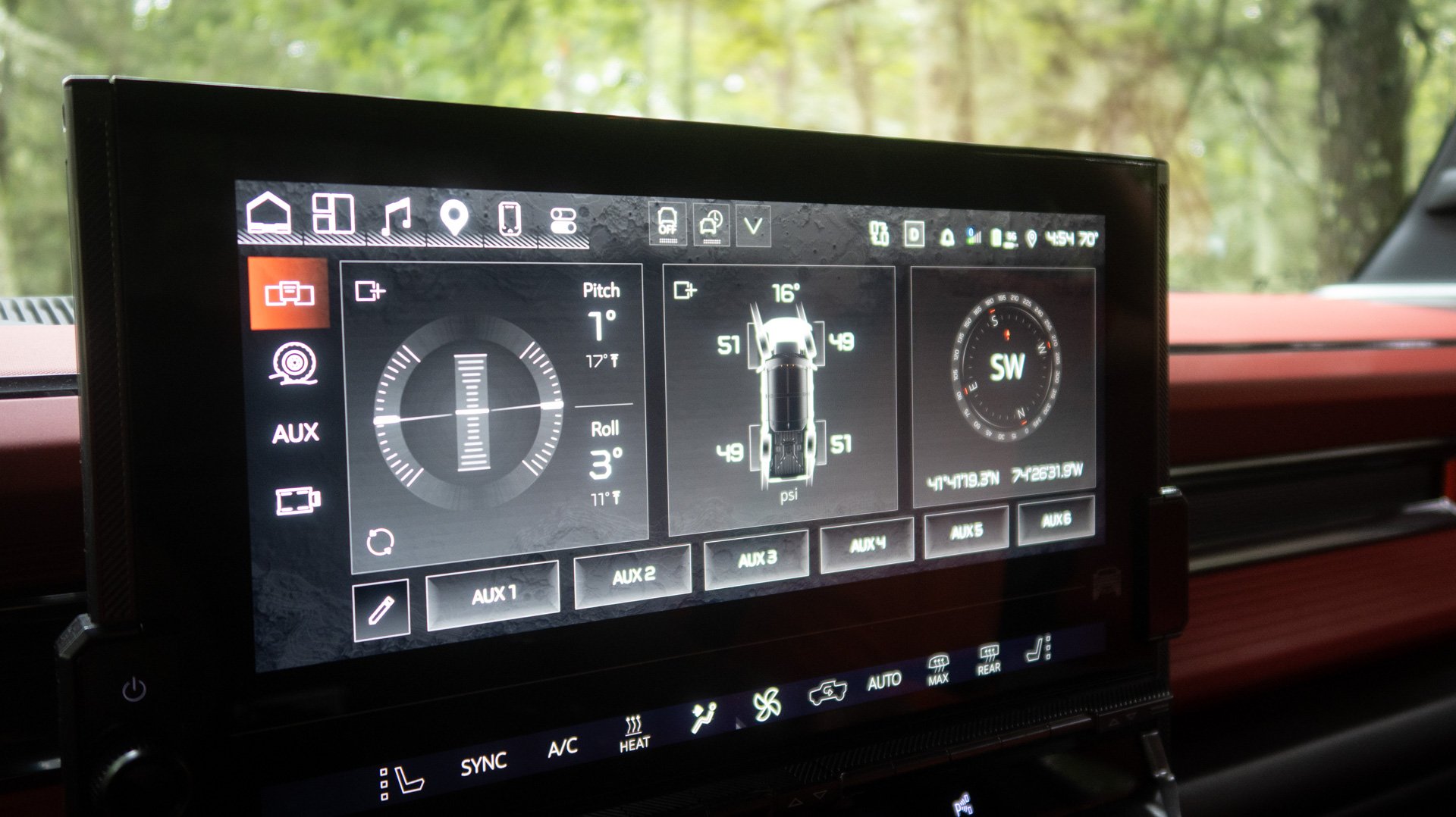
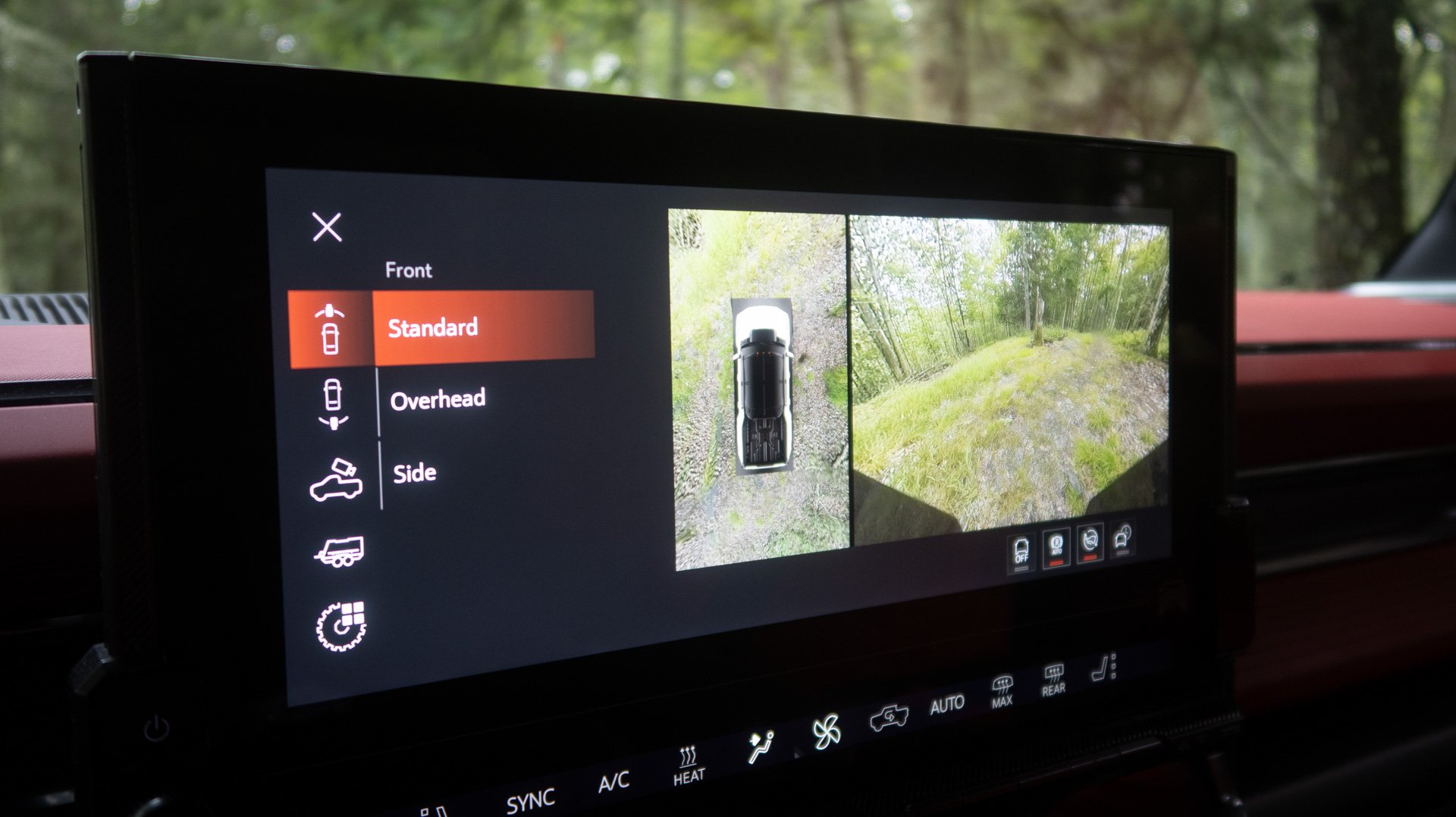
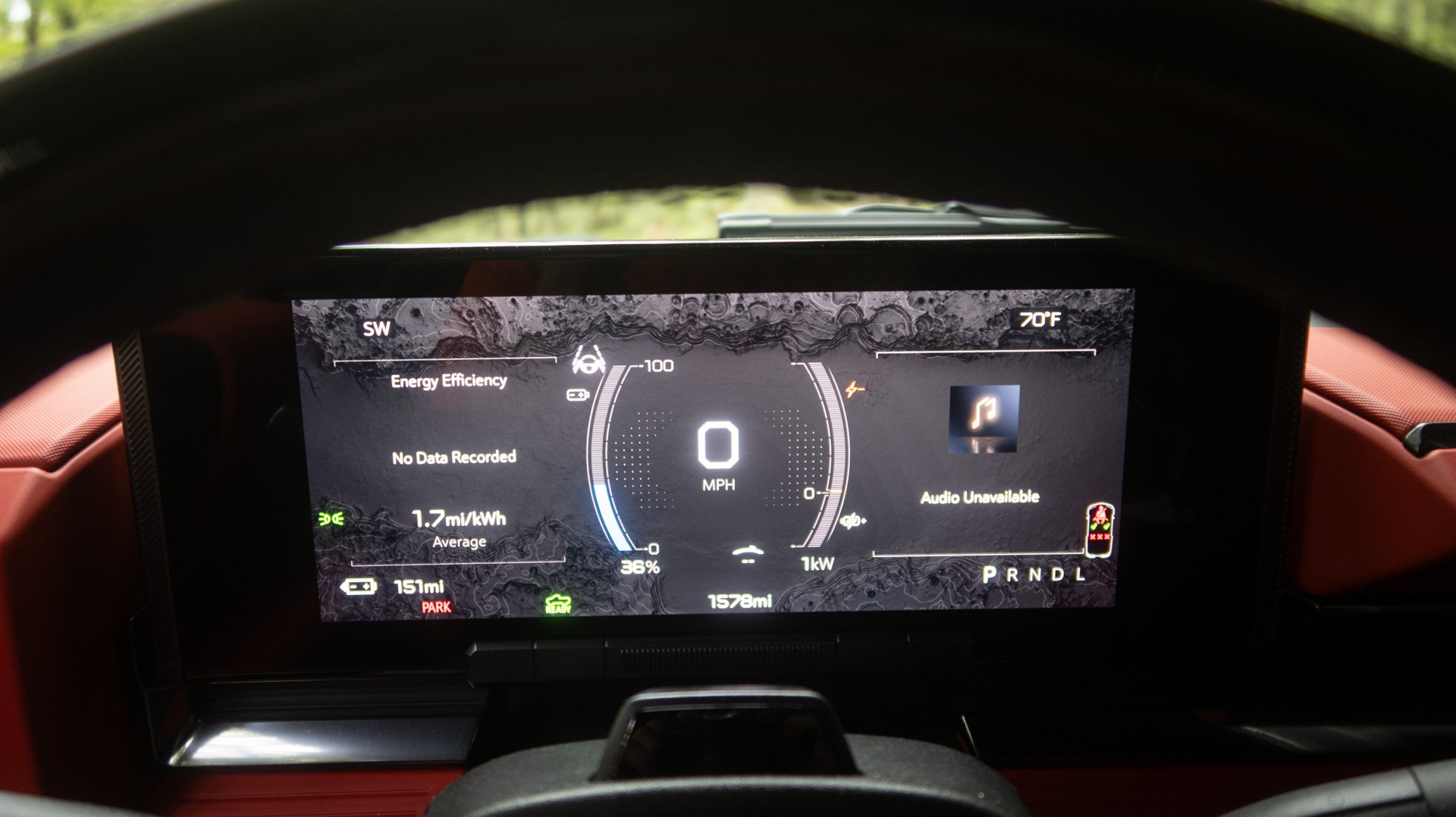
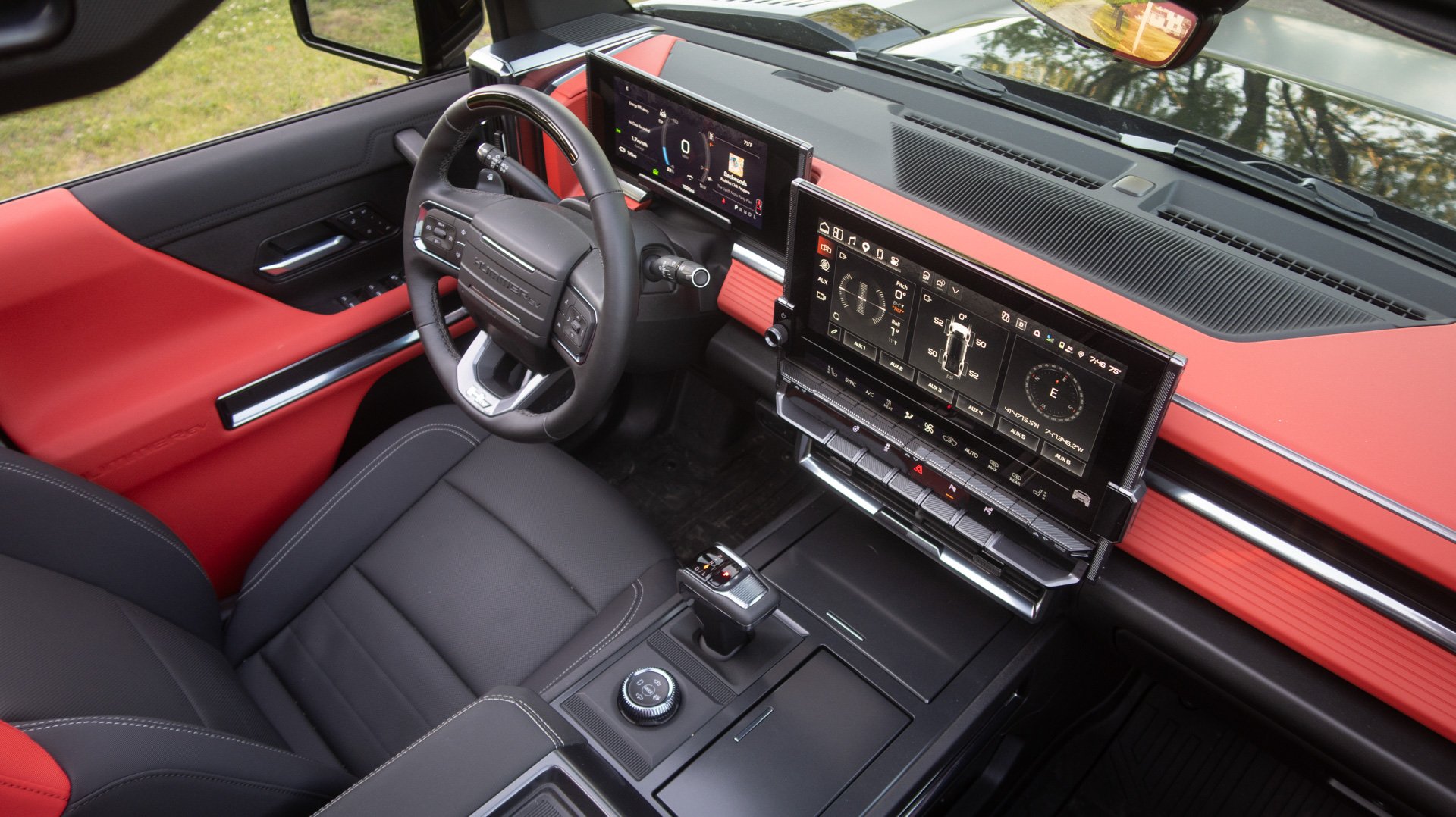
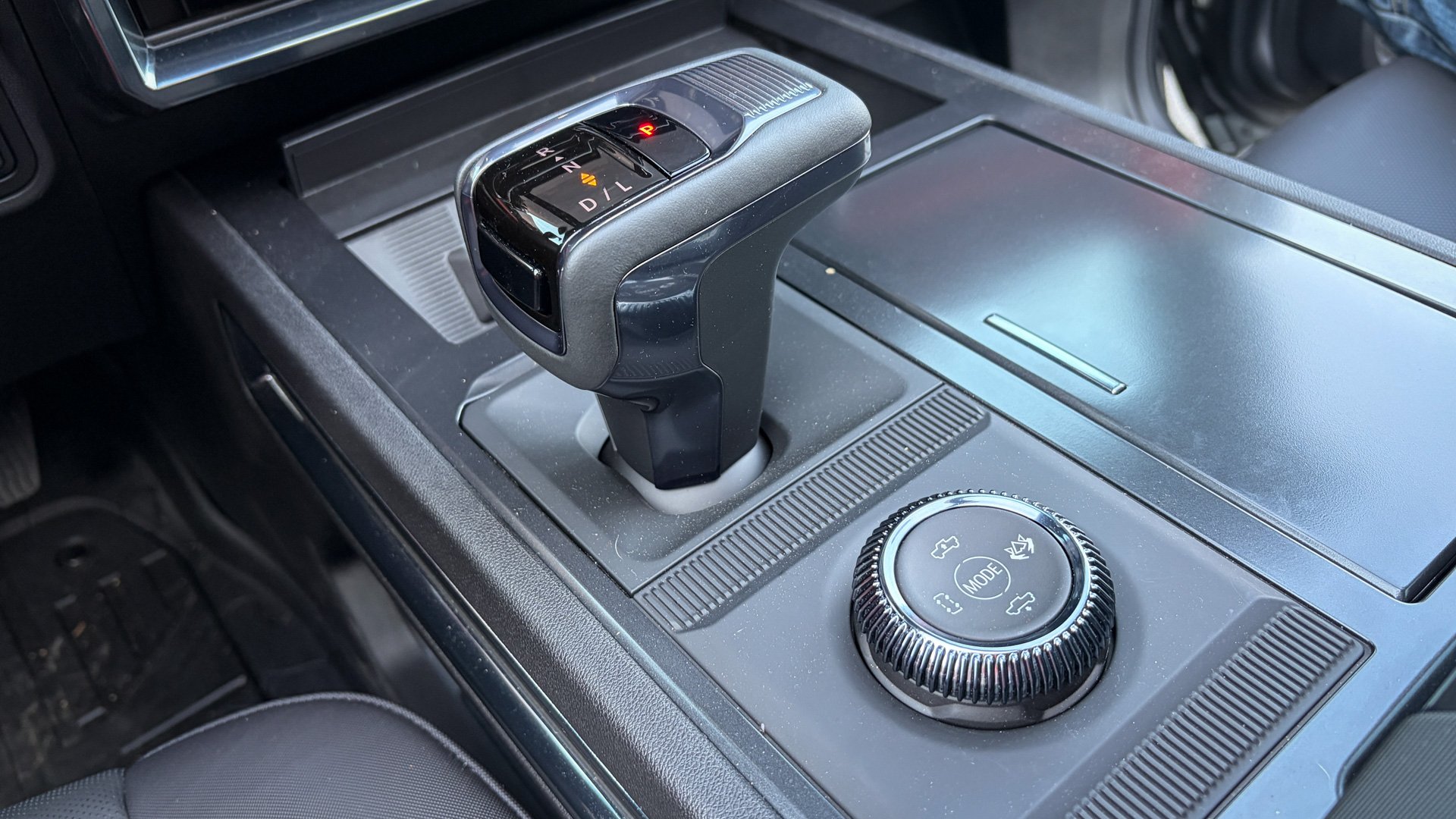
The Extreme Off-Road package supposedly adds more “virtual spotter” camera capability, but I wasn’t really impressed with the vision afforded by this model’s screen setup.
When it comes to physically positioning the truck, both crab modes are brain-breakingly impressive. Since the rear wheels can turn with, or against, the fronts, you have an incredibly wide range of control over the position of the vehicle in low-speed situations. The CrabWalk and King Crab modes made me feel like a kid again, on my knees, scooting a little toy around my mom’s rug—not like I was shunting a five-ton machine with five figures’ worth of carbon fiber around dangerous obstacles.
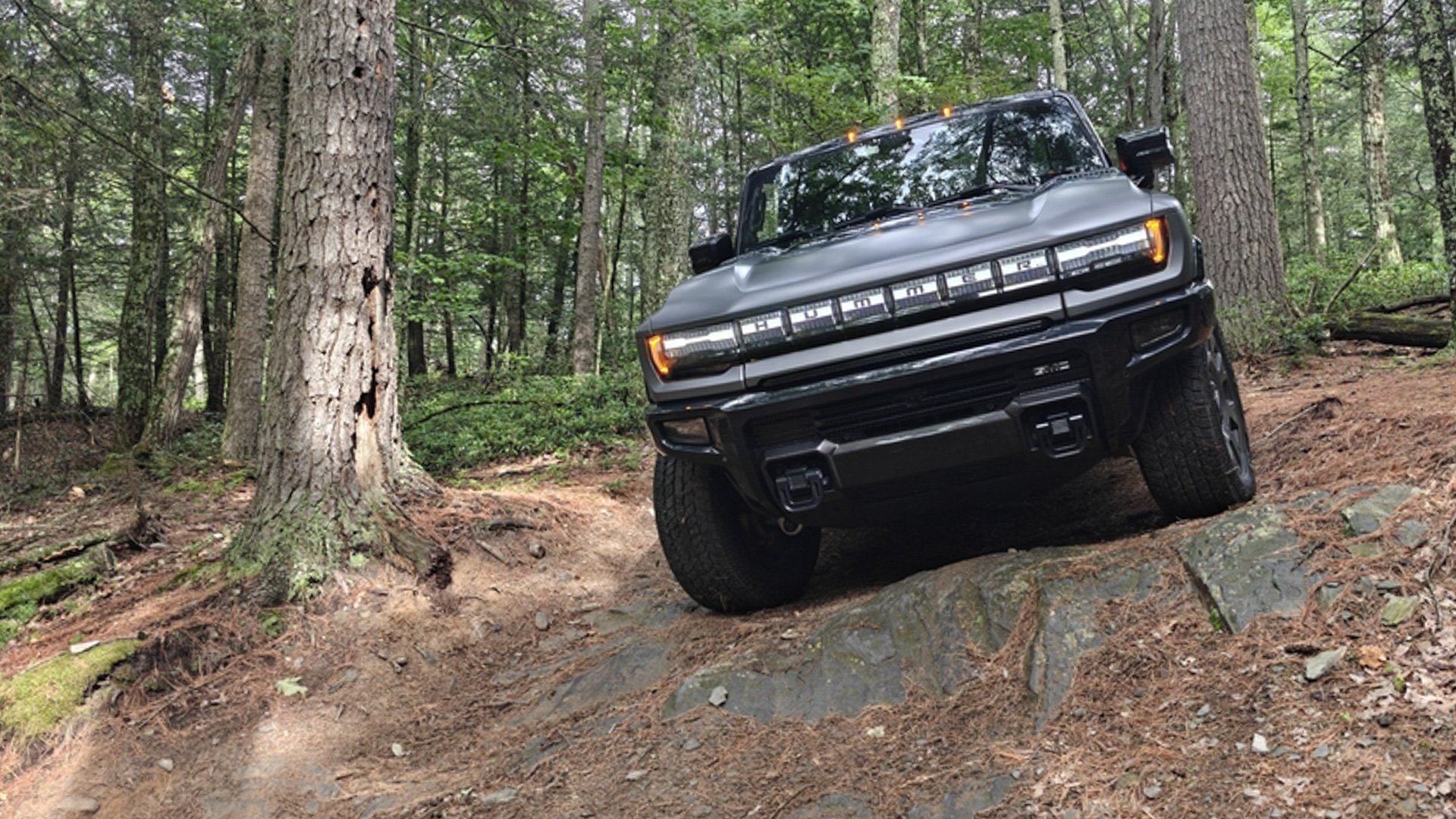
The super-aggressive rear-wheel steering feels unnatural and impossible. So while it’s easy to use, it definitely takes some getting used to.
That said, I only had a week with the truck, so I wasted no time looking for trouble. Alex (one of the main NORA guides) and I started lumbering down a trail, and it took about three minutes for me to get us mired.
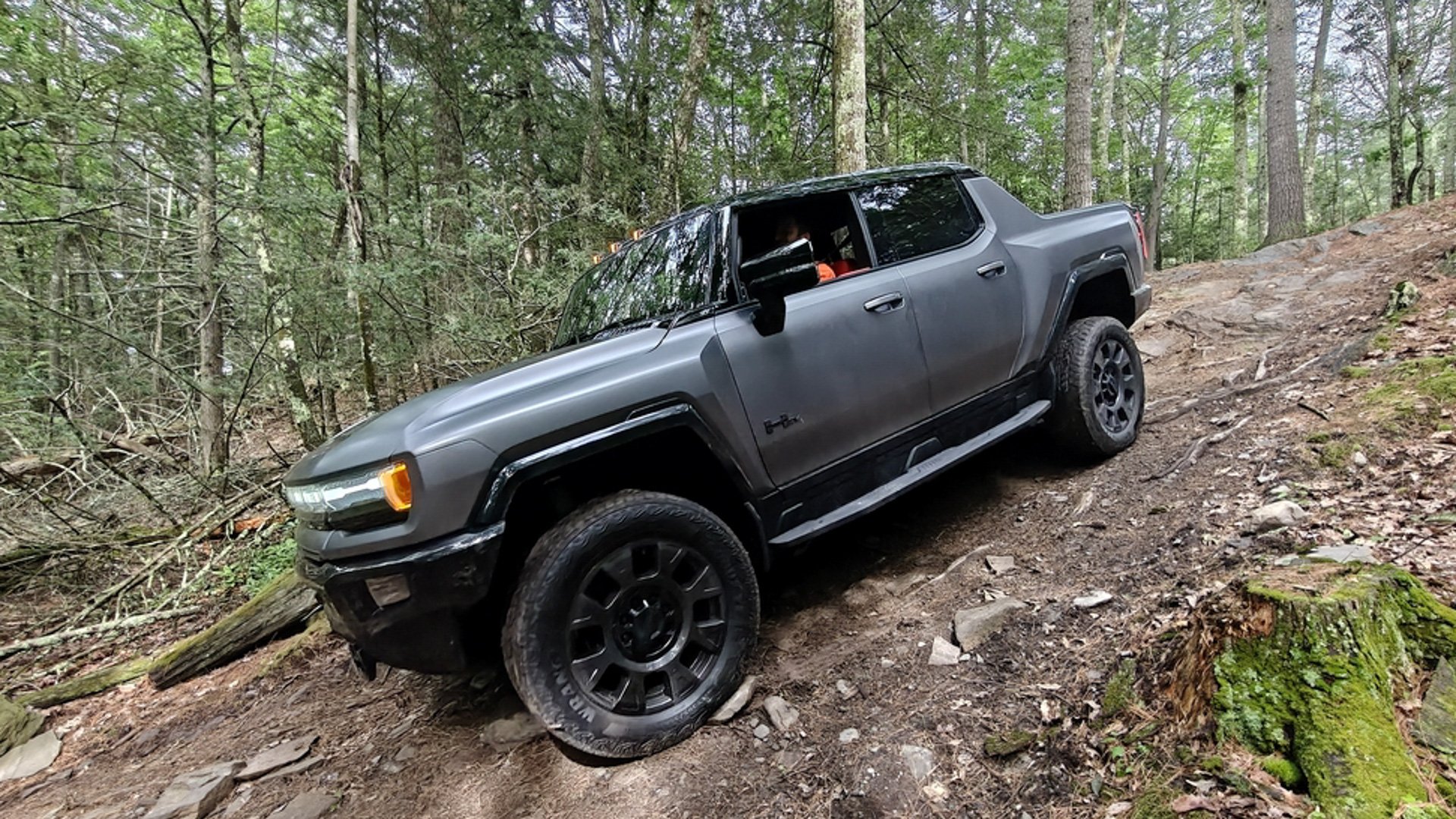
On a steep, tight, and loose ascent, the truck started spinning its Wrangler Territory tires (in their defense, I hadn’t bothered to air down). The off-road driving techniques I’m used to don’t all work the same way in an EV as they do in a traditional car—there’s no left-foot braking, no clutch slipping. In many ways, an EV powertrain is superior off-road. You can hypothetically control power output with such extreme precision, and there’s no need to rev an engine to make torque.
But in this moment, with the windshield showing sky and the parking sensors beeping at me, I was simply struggling. Every time I tried to breathe on the go-pedal, the vehicle seemed to want to spin its tires, which was causing the whole machine to slowly but consistently slip down and left towards a big ol’ tree.
It was the perfect time for four-wheel steering to shine.
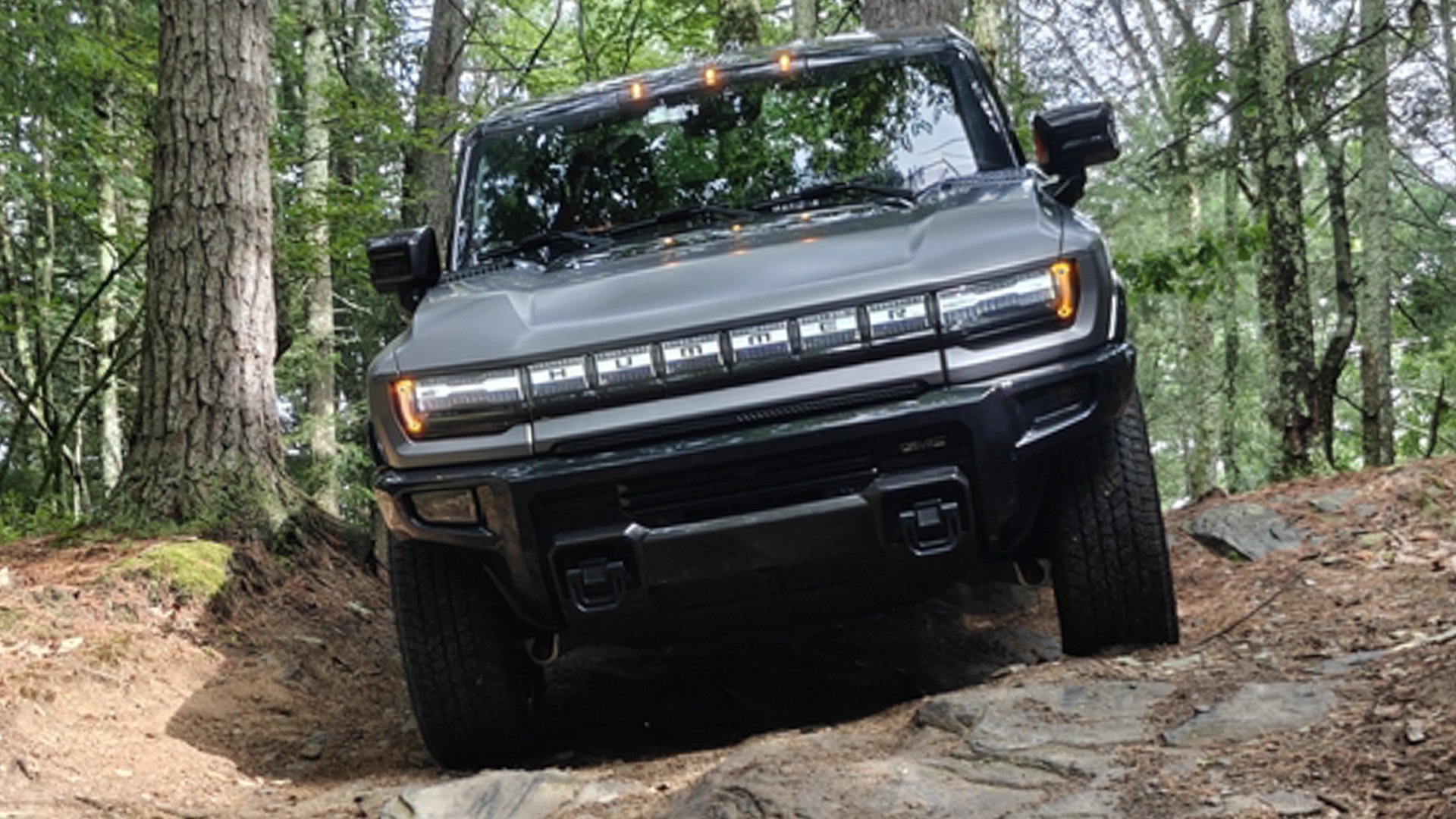
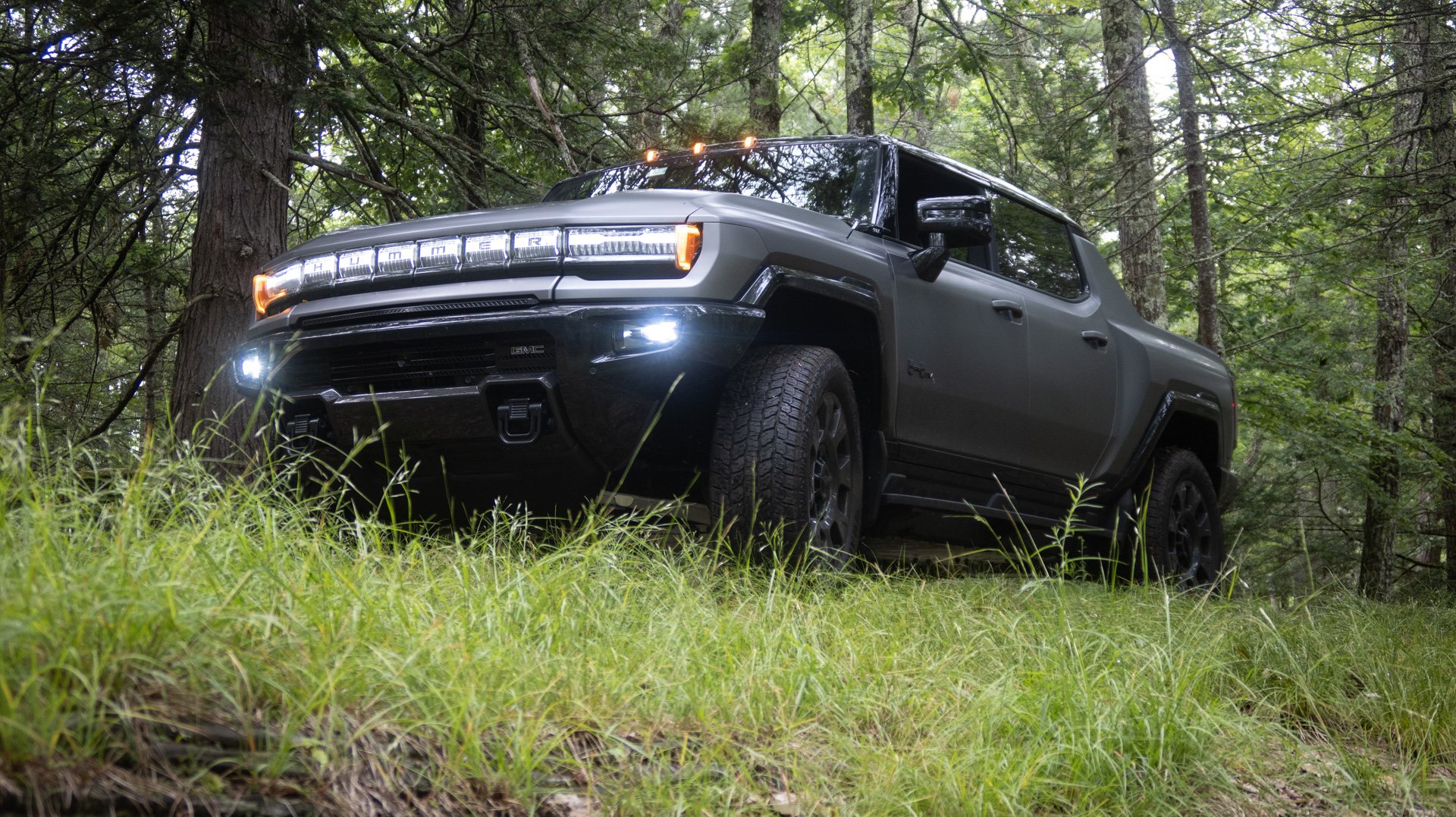
Alex kept an eye on things, ready to yell if any carbon was about to crack, while I clicked into CrabWalk mode and carefully, carefully, stepped into the right pedal. The vehicle found traction where no other truck could have, and simultaneously scooted away from danger and up the obstacle.
And that wasn’t even the last toy we had at our disposal. The Hummer EV also has an Extract Mode, which maxes out the air suspension to lift the truck another six inches at low speed, for, as GM puts it, “traversing boulders, fording water, or surmounting other tough obstacles.”
All this to substantiate: The Hummer EV’s crustacean modes are cool, and yes, they do work as advertised. And with that functionality combined with the vehicle’s immense ground clearance (no driveline to drag on obstacles) and aggressive approach angle, I have no doubt that a skilled driver could take this thing places where a building-sized truck has no business being. And that’s the bragging right you’re buying, after all.
But the experience also confirmed what I expected about this truck when I read the spec sheet. While the Hummer EV’s terrain-management technology is incredible, it really only solves problems created by the vehicle itself. See, I’d driven that same obstacle before in a third-gen 4Runner, and no drama. I was genuinely impressed with how well the Hummer got its girth through some glorified goat paths, but, like, do you really need your SUV to be wide enough to play football in?
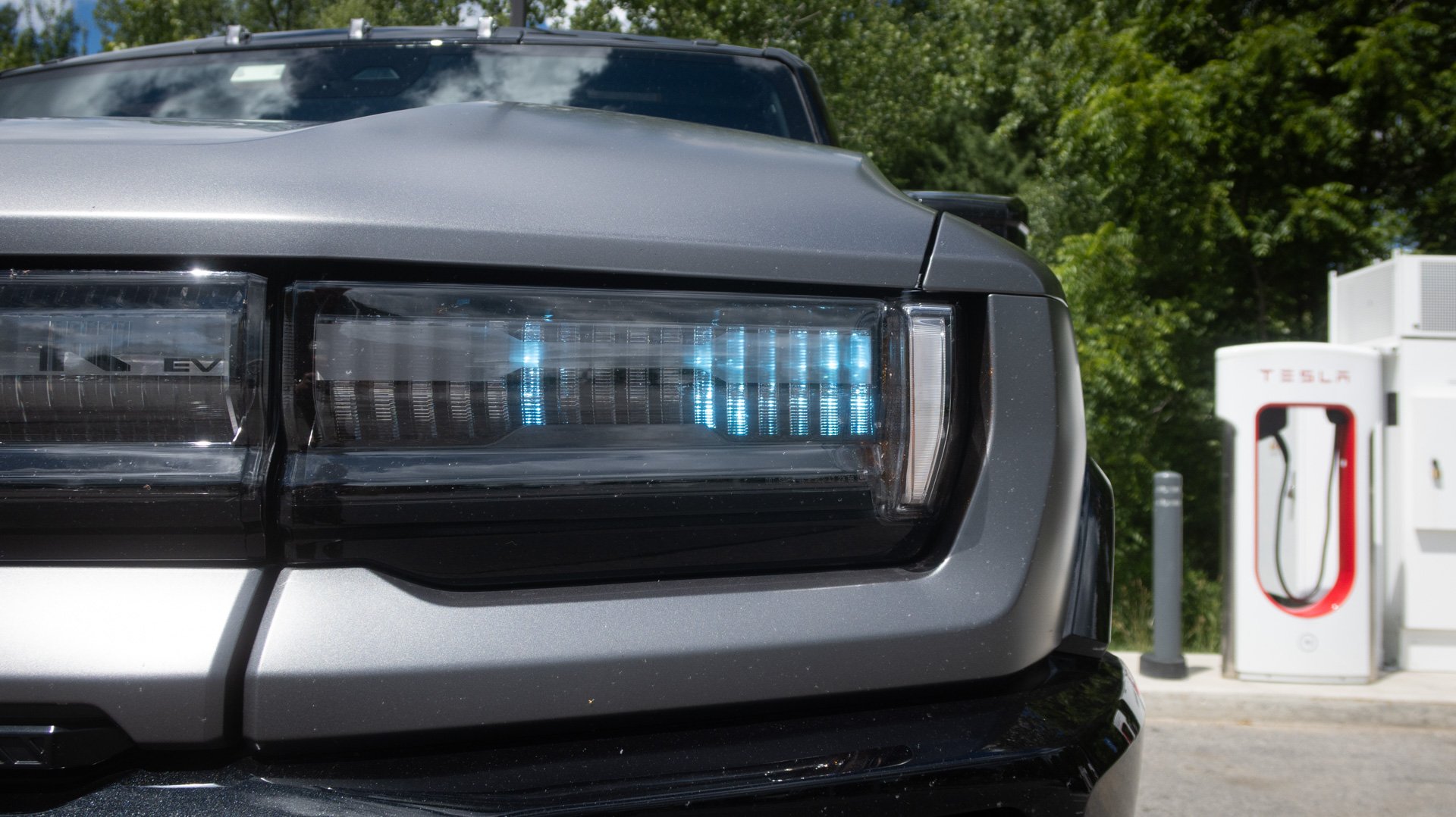
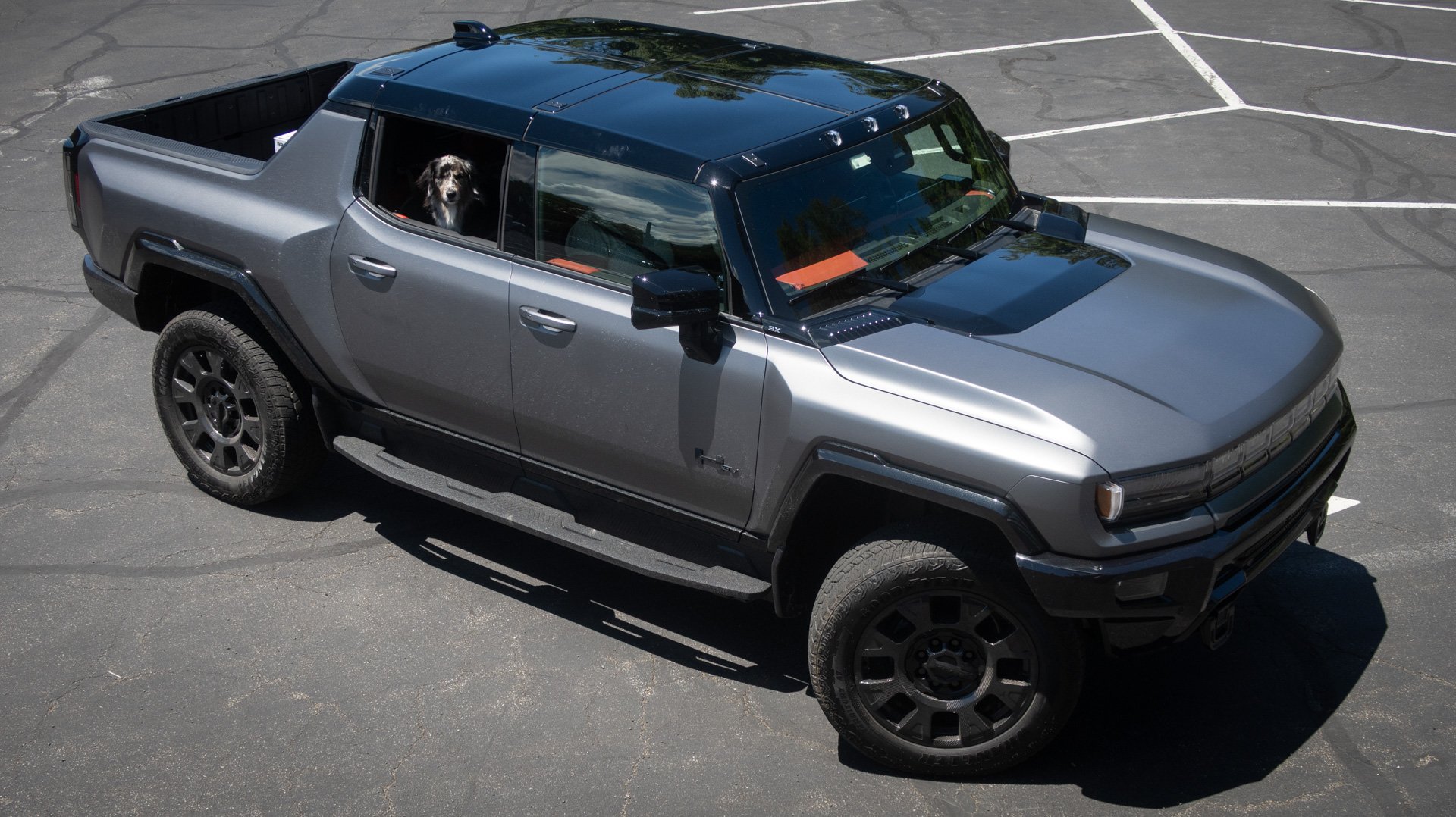

Ultimately, this isn’t really a vehicle that needs to make sense. It’s a toy. And in the same way that plenty of Lamborghinis never go on a racetrack, the Hummer’s capability is really more of a “not that you would, but you could” kind of thing.
I’m not going to be saving up for one of these myself, but I’m here to tell you, it really can wheel. In spite of itself.
GMC provided The Drive with a seven-day loan of this vehicle for the purpose of writing this review.
2026 Hummer EV 3X Pickup Specs
| Base Price (24-Module Battery Carbon Fiber Edition as tested) | $107,195 with destination ($131,770) |
| Powertrain | 3 electric motors |
| Horsepower | 830 nominal, 1,160 in WTF Mode |
| Torque | 1,200 lb-ft est. |
| 0-60 | 2.8 seconds |
| Seating Capacity | 5 |
| Curb Weight | 9,640 pounds est. |
| Max Payload | 1,300 pounds |
| Max Towing | 10,600 pounds |
| Cargo Volume | 36.70 cu. ft. in bed (5-foot bed) |
| Width | 86.67 inches |
| Length | 216.80 inches |
| Height | 79.10 inches |
| Ground Clearance | 10.10 inches |
| Off-Road Angles | 49.6° approach | 32.2° breakover |
| Range | 363 Miles (GM estimated) |
| Score | 6.5/10 |

Quick Take
As close as you can get to driving the Warthog from Halo while still being street-legal.
Loading comments…
Comments couldn’t be loaded. Please refresh the page.