
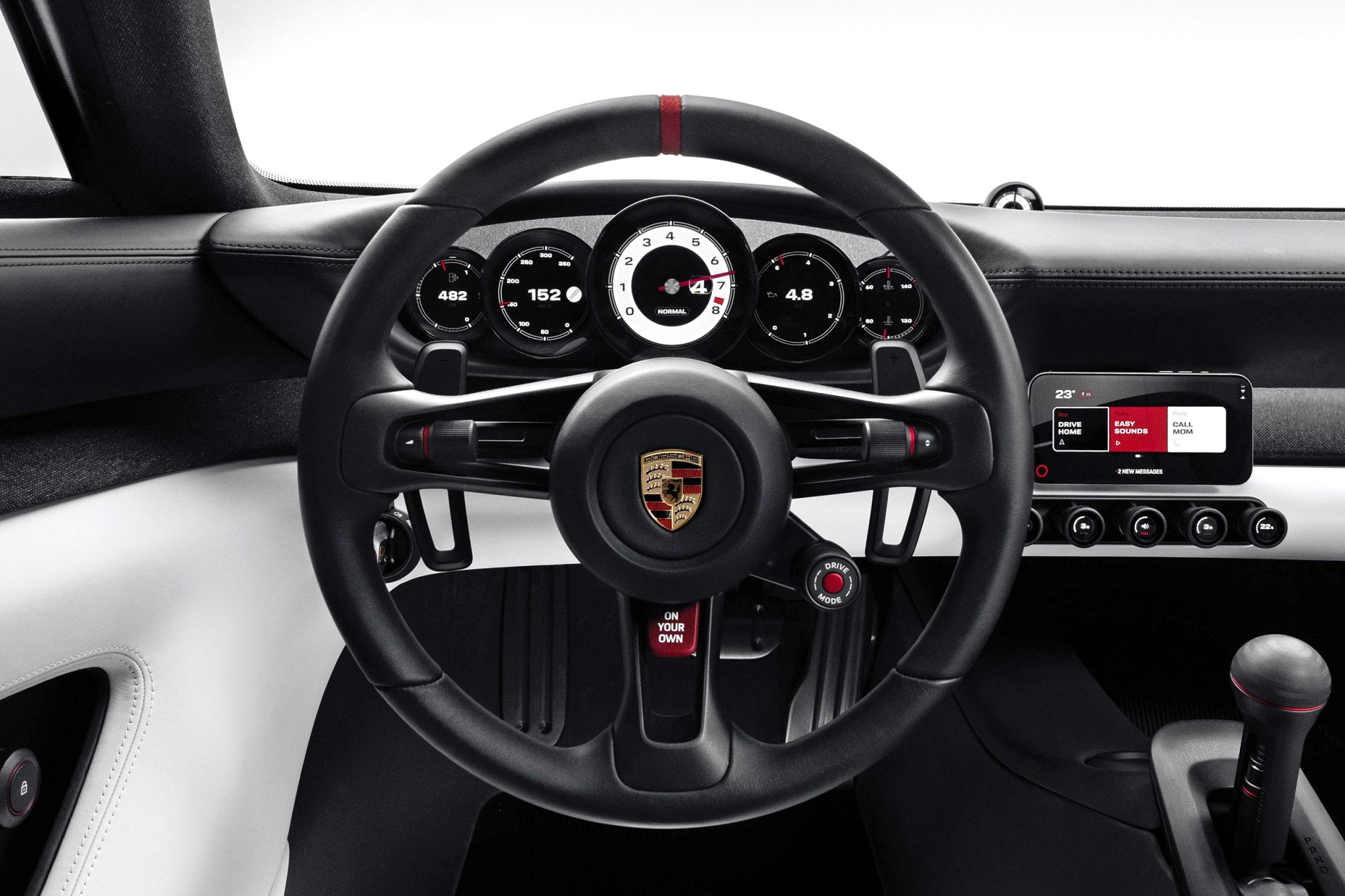
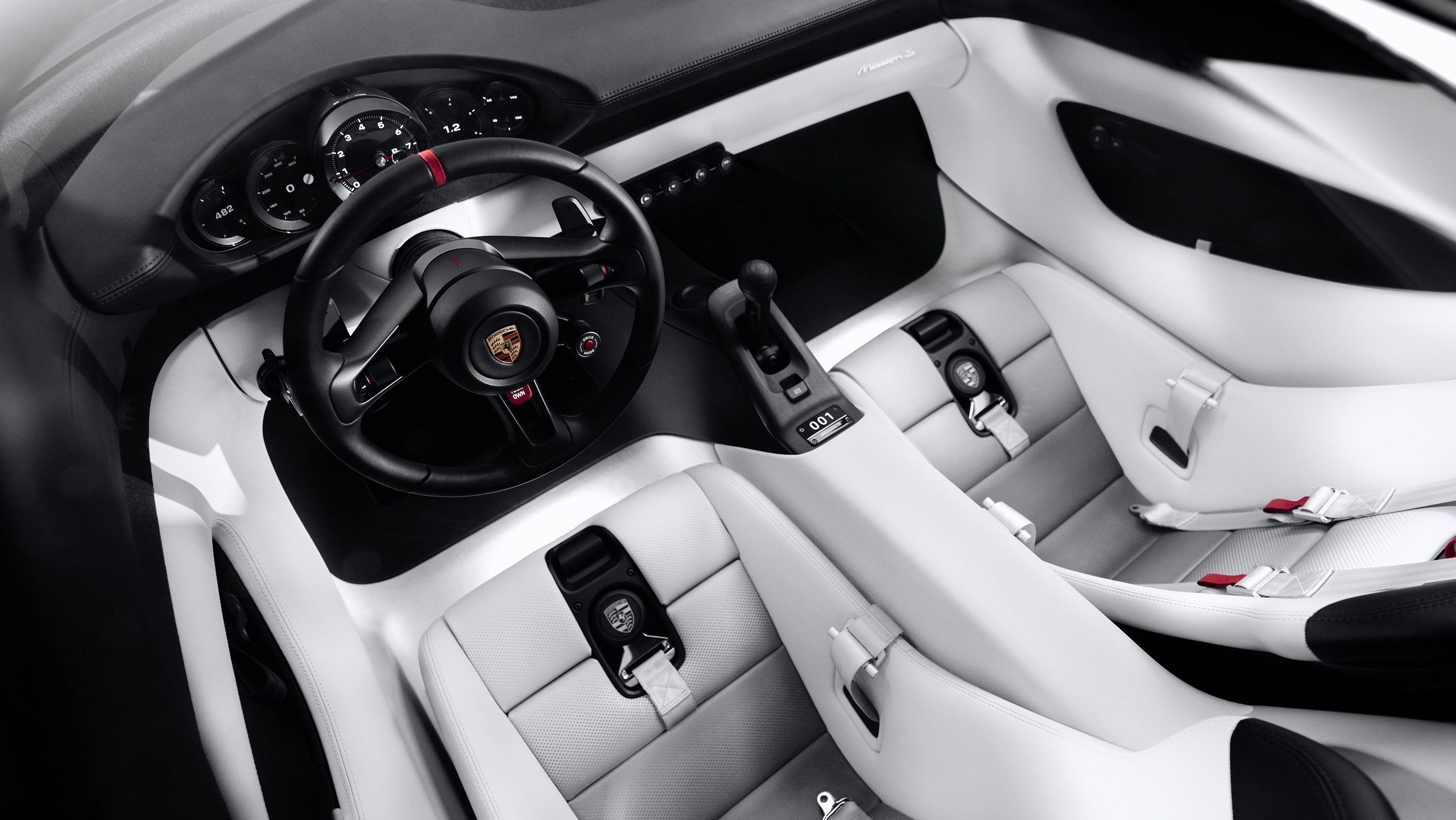
Once upon a time, screens in cars were a luxury. Then everything got ’em, and now, owners are looking for relief. So, the new luxury is digital detox. Don’t believe us? Porsche’s new Mission S concept—previewing its future flagship mid-engine supercar—doesn’t have a built-in infotainment display. It doesn’t even have a fully digital rev counter; instead, it uses a physical needle over a circular screen.
If you’re looking for such an instrument cluster in any of Porsche’s current models, you won’t find it. This is all new, and it follows a trend started by the uber-luxe Bugatti Tourbillon, with its timepiece-inspired gauges, and the controversial Ferrari Luce.
Say what you will about the Luce’s exterior, but its interior melds tech and tradition in a thoughtful way few cars have, and that appears to be Porsche’s thinking with the Mission S. The brand talks about the “symbiosis of analogue and digital controls,” and the five independent circular gauges are representative of that.
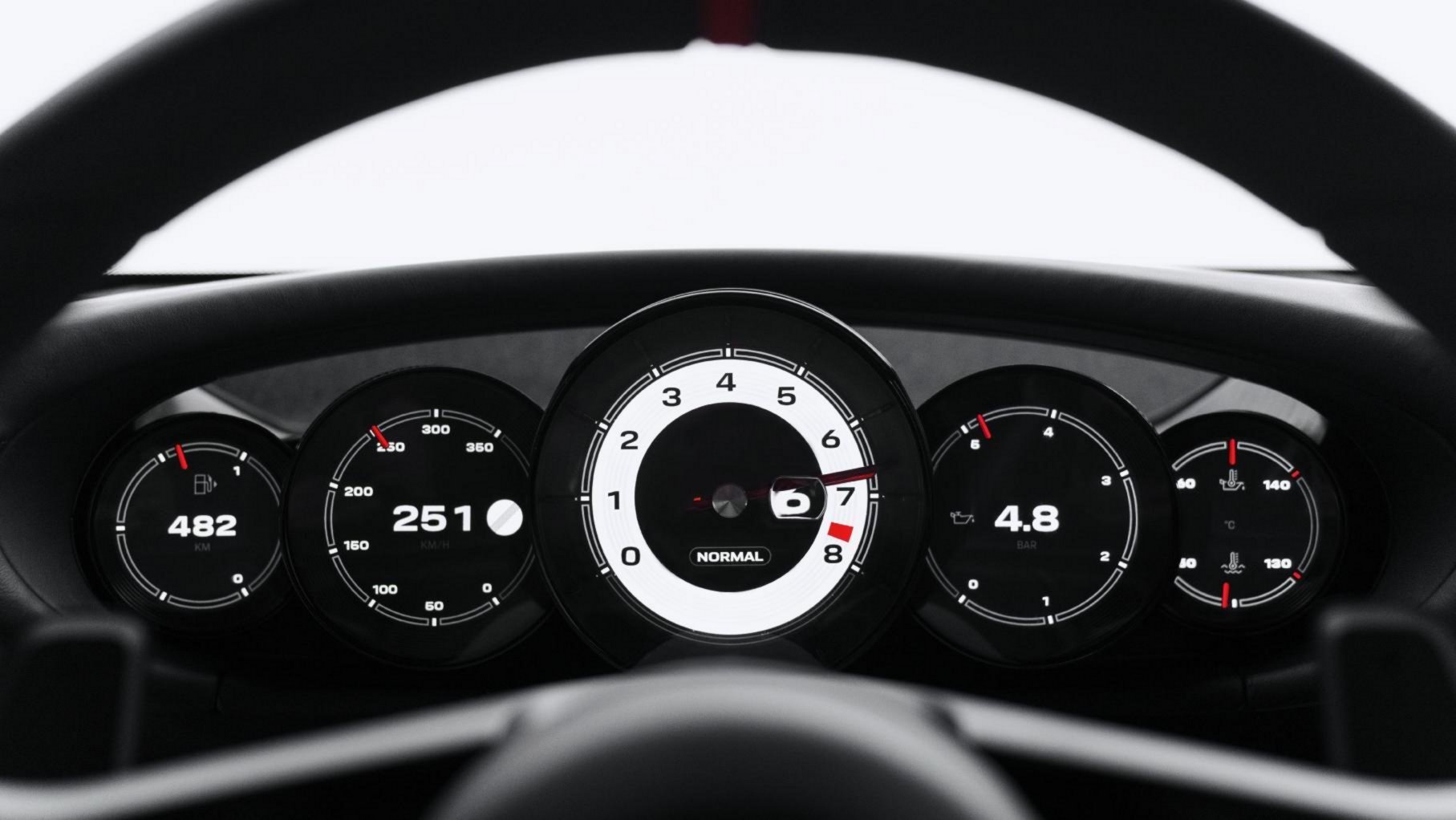
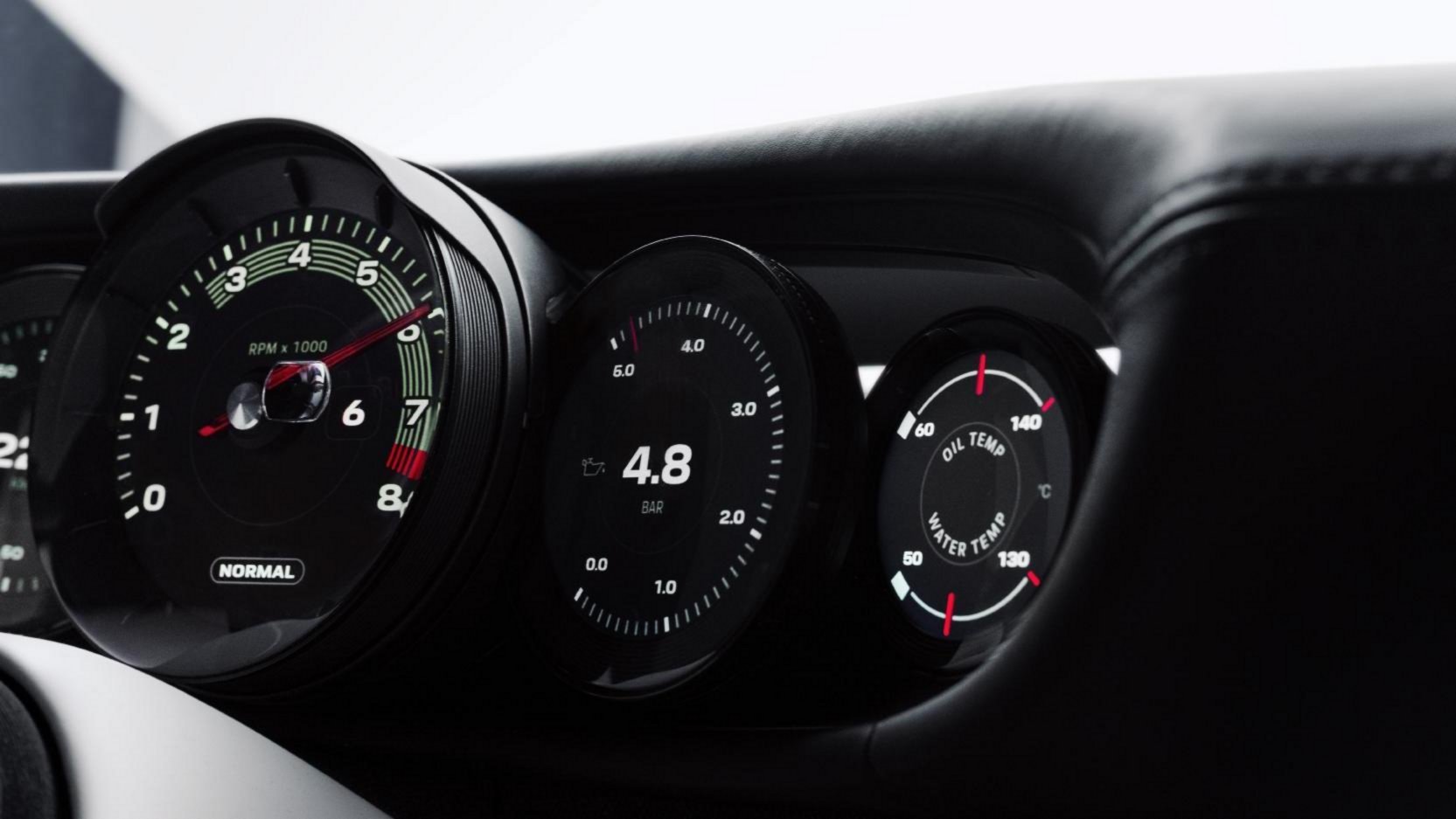
The central one—a tachometer—has that analog needle, but a tiny portion of the glass over it is magnified to enlarge the gear readout, for a very retro, clever touch. Depending on the drive mode, the tach will telescope out toward the driver to set itself apart from the gauges flanking it.
Creating hybrid gauges like this isn’t as simple as it might seem. Screen quality is critical; the panel should be OLED for perfect black without light bleed. (Porsche doesn’t say what panel tech they’ve used, but you’d figure it has to be OLED.) This is something that came up during my chat with Jean, owner of Usual Suspects Garage that wrenches on German performance cars. He’s developing a plug-and-play digital gauge set for E28 5 Series and E30 3 Series sedans, and he told me display selection has been paramount in that project.
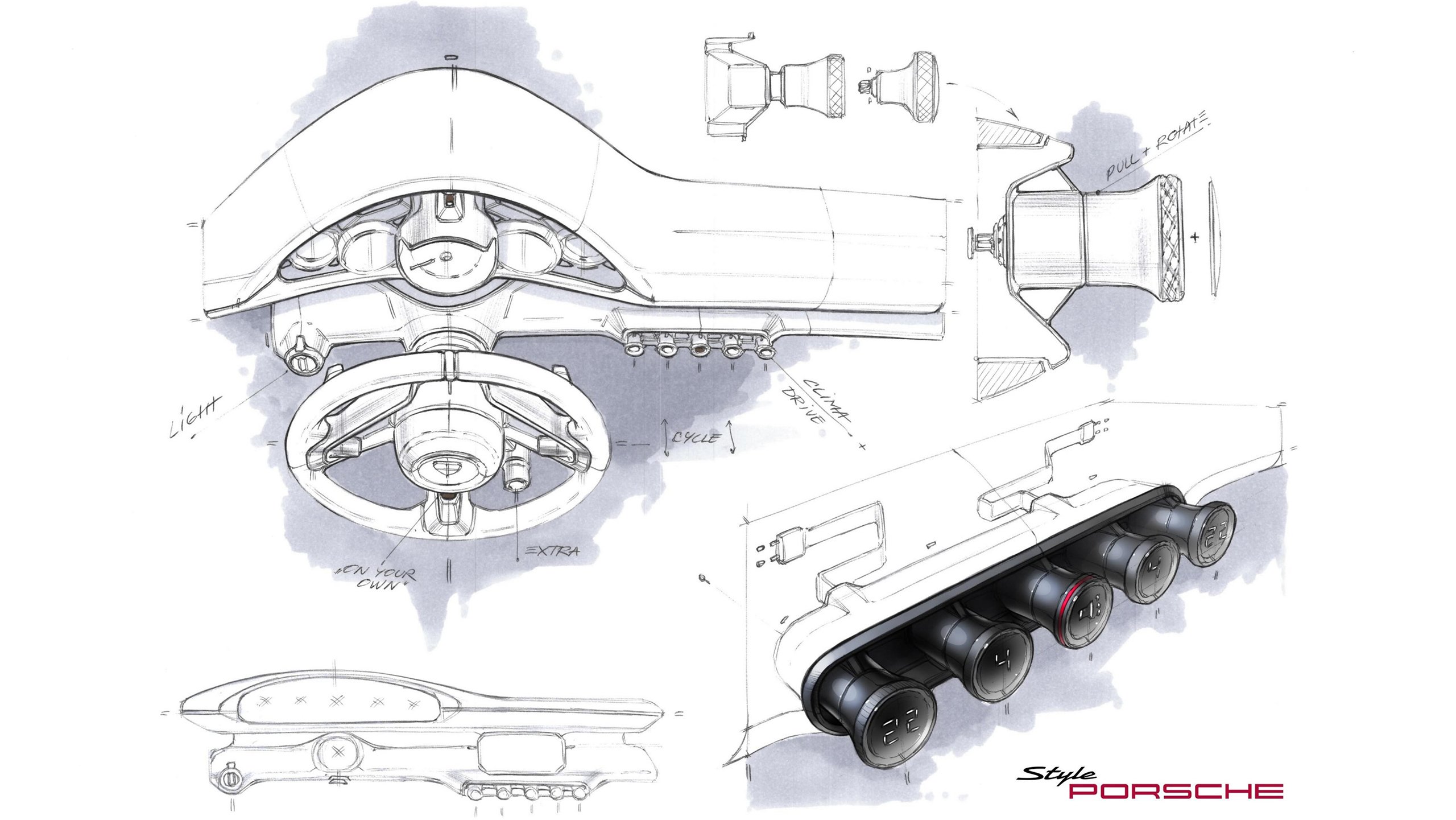
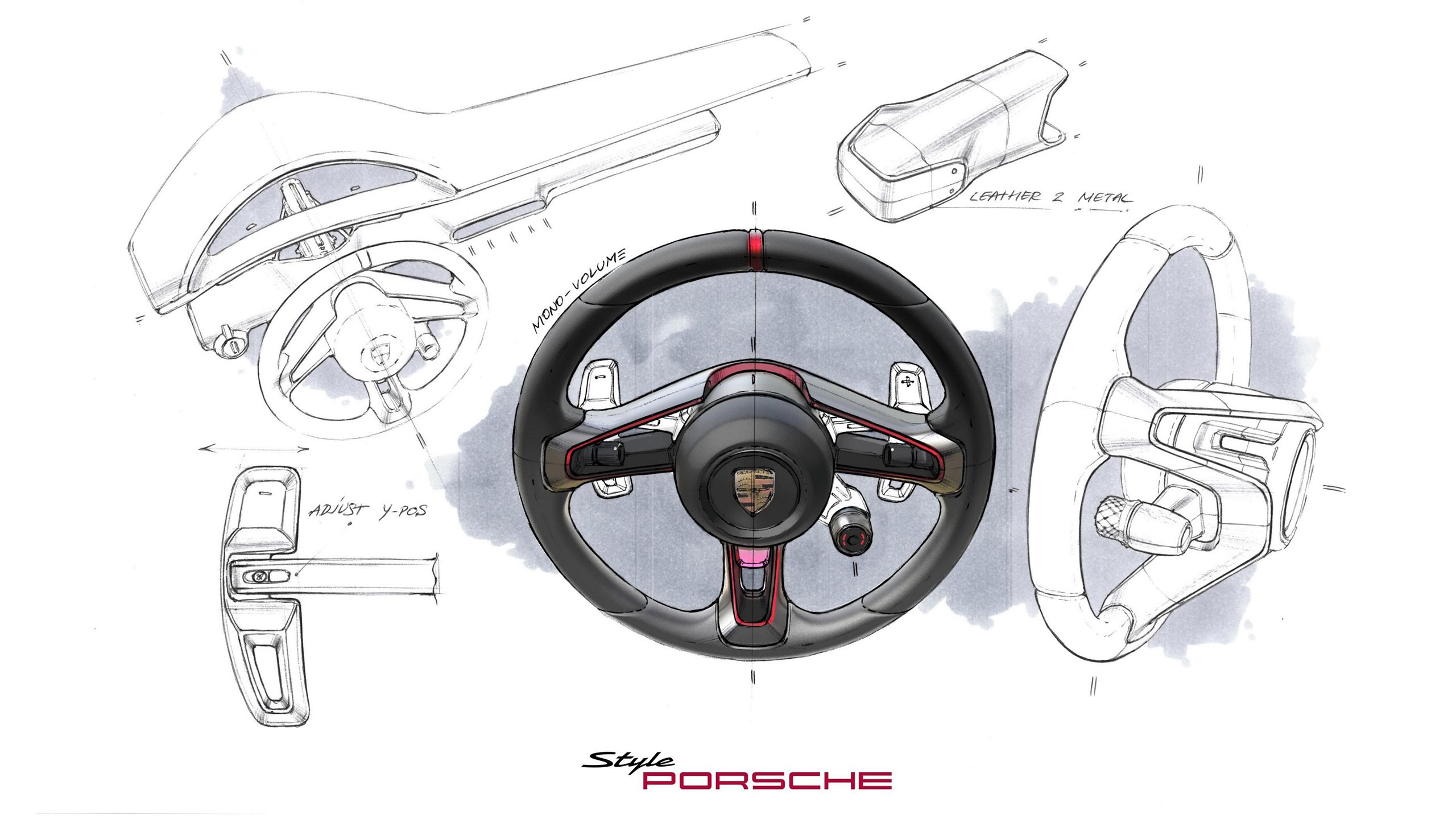
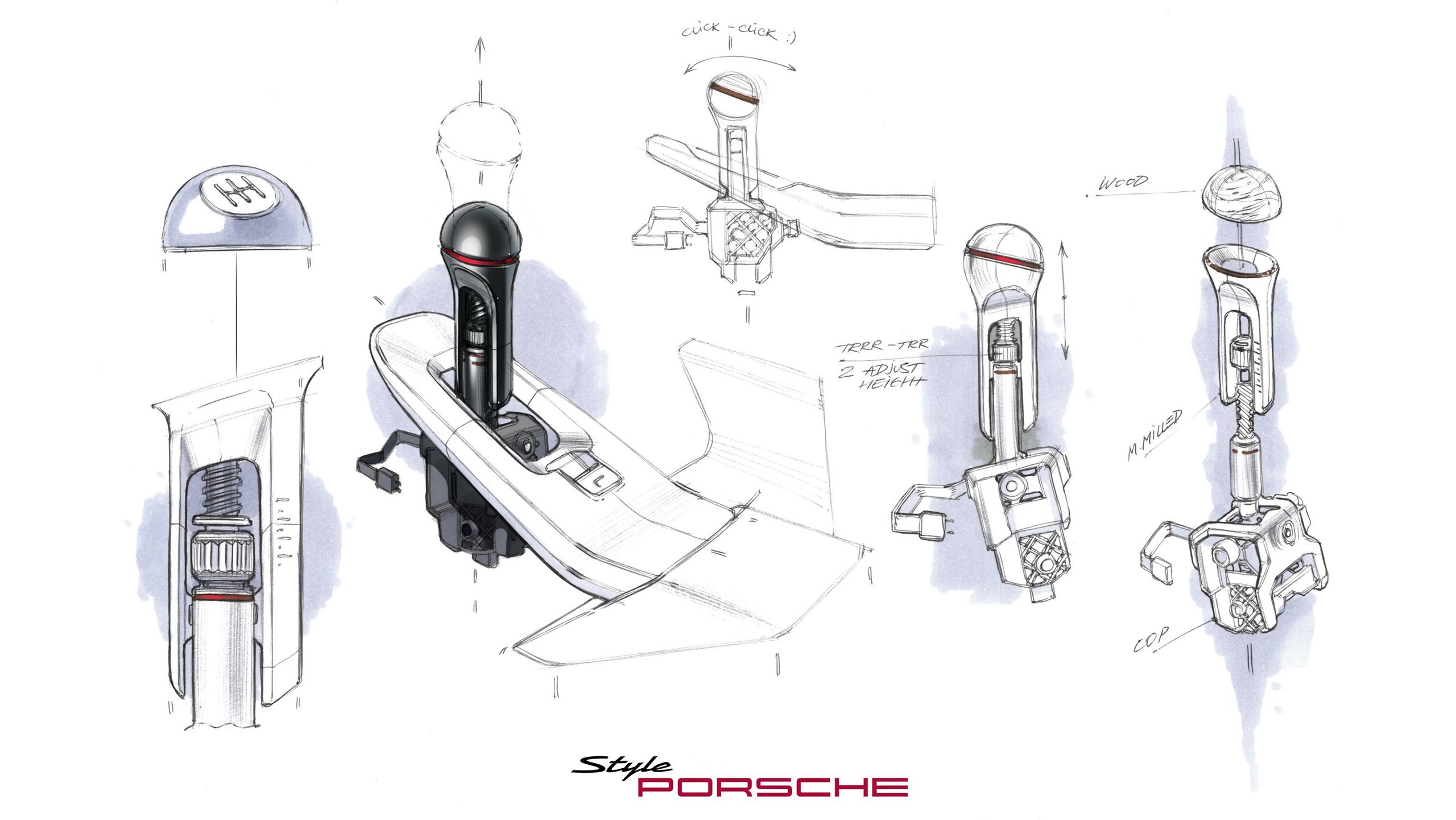
Is this a trend we’ll see trickle down into slightly more affordable models? Perhaps. Instrument clusters went partially digital before fully digital in the first place, of course. Once screens became cheaper than physical hardware, the business case flipped.
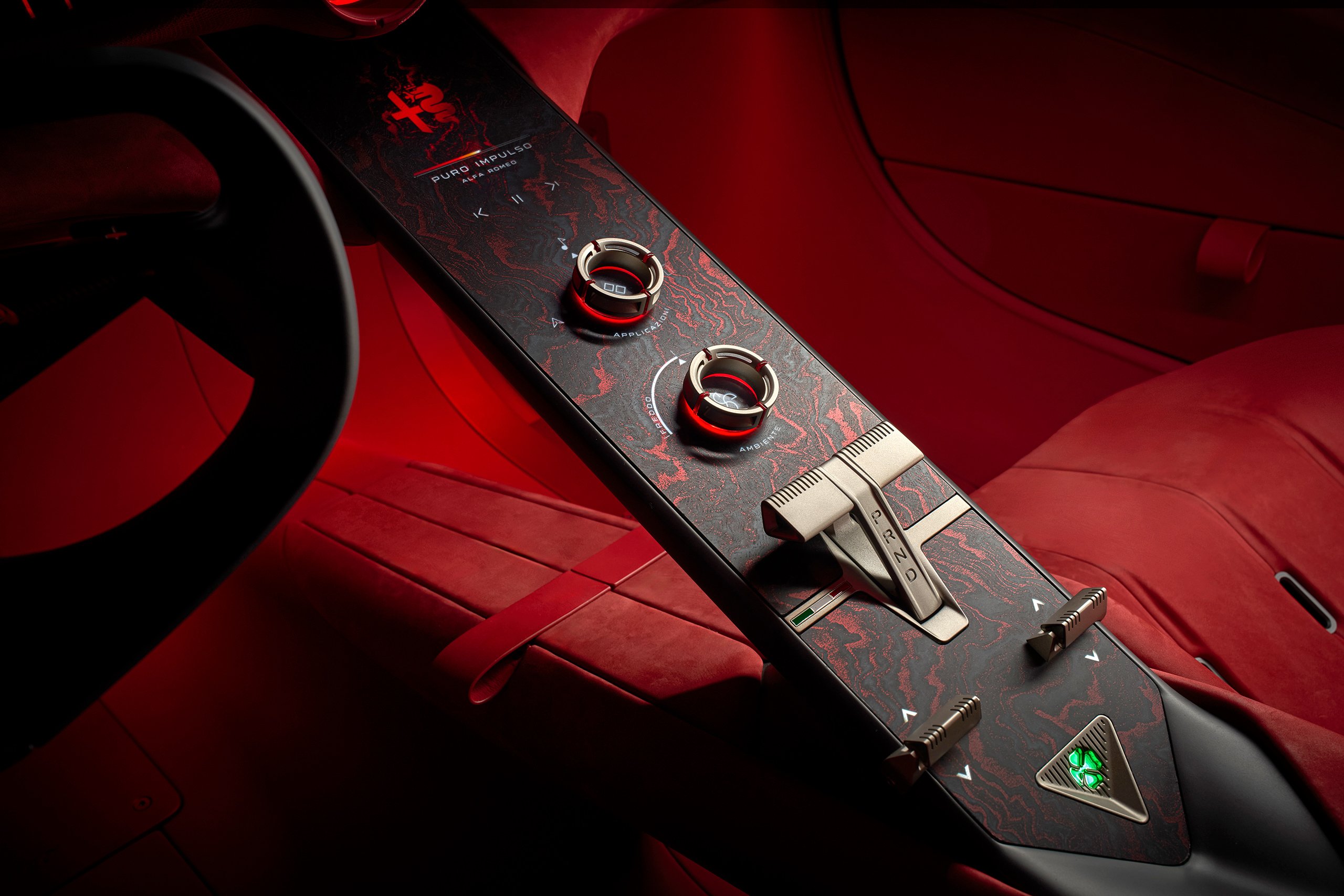
This is why Mate Rimac says the supercar market has entered its “Swiss watch phase,” where analog craftsmanship, rather than the latest and greatest software and digital user experience, has become the defining philosophy. You see the same idea in the concept sport sedan Alfa Romeo recently introduced, which has a central screen, though it sits beneath a stylized, mirrored, canted center console that lets it effectively vanish when not in use.
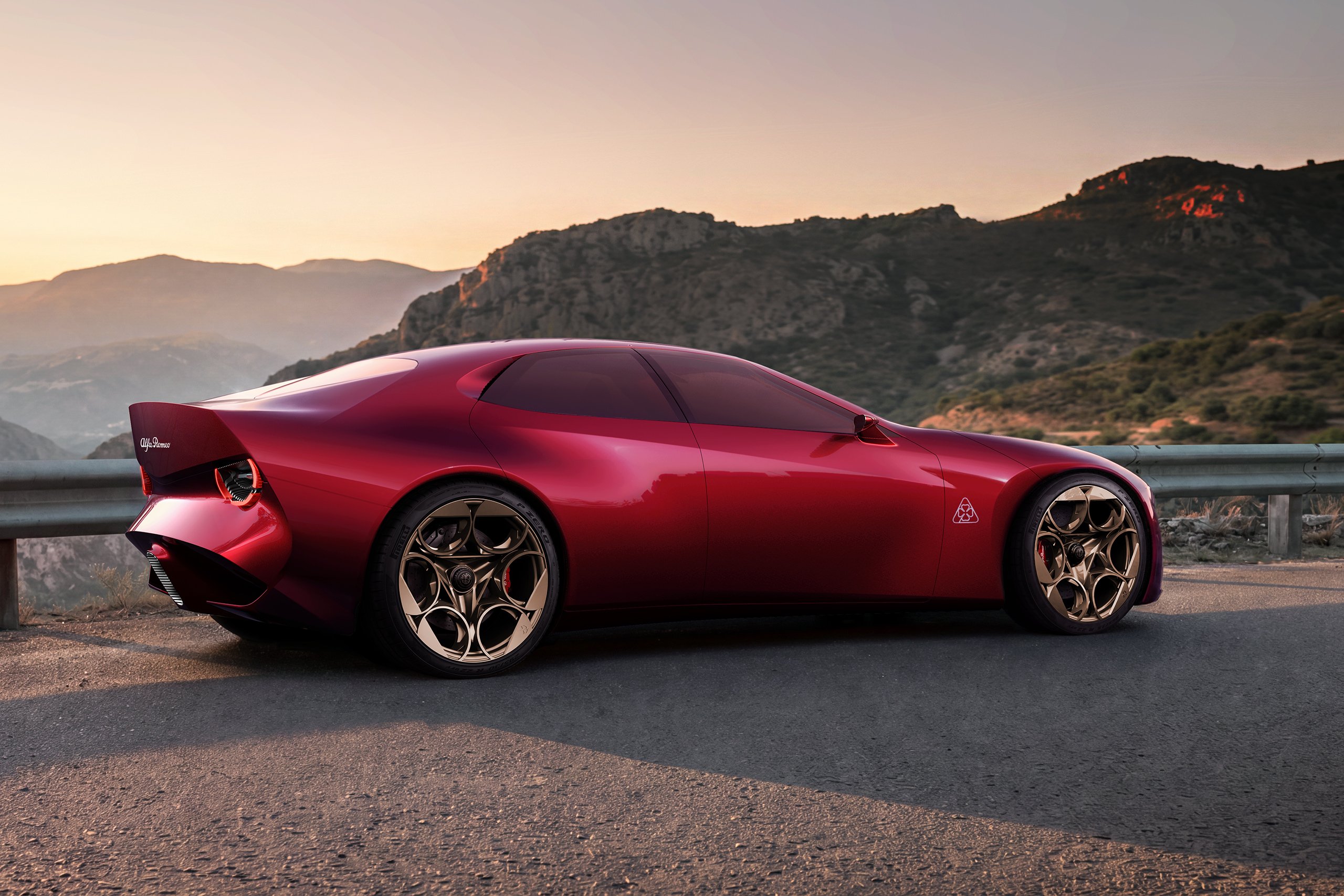
The Mission S doesn’t even have that. Personally, I think it might be a step too far to ask buyers of what is likely to be a half-million-dollar car at minimum to place their smartphones on the dash every time they get into the vehicle; surely a sensibly sized, compact screen for only the most pertinent information would come in handy. But Porsche is making a statement here, and it’s one enthusiasts have been waiting to hear.
Got a tip? Reach out to tips@thedrive.com
Loading comments…
Comments couldn’t be loaded. Please refresh the page.