
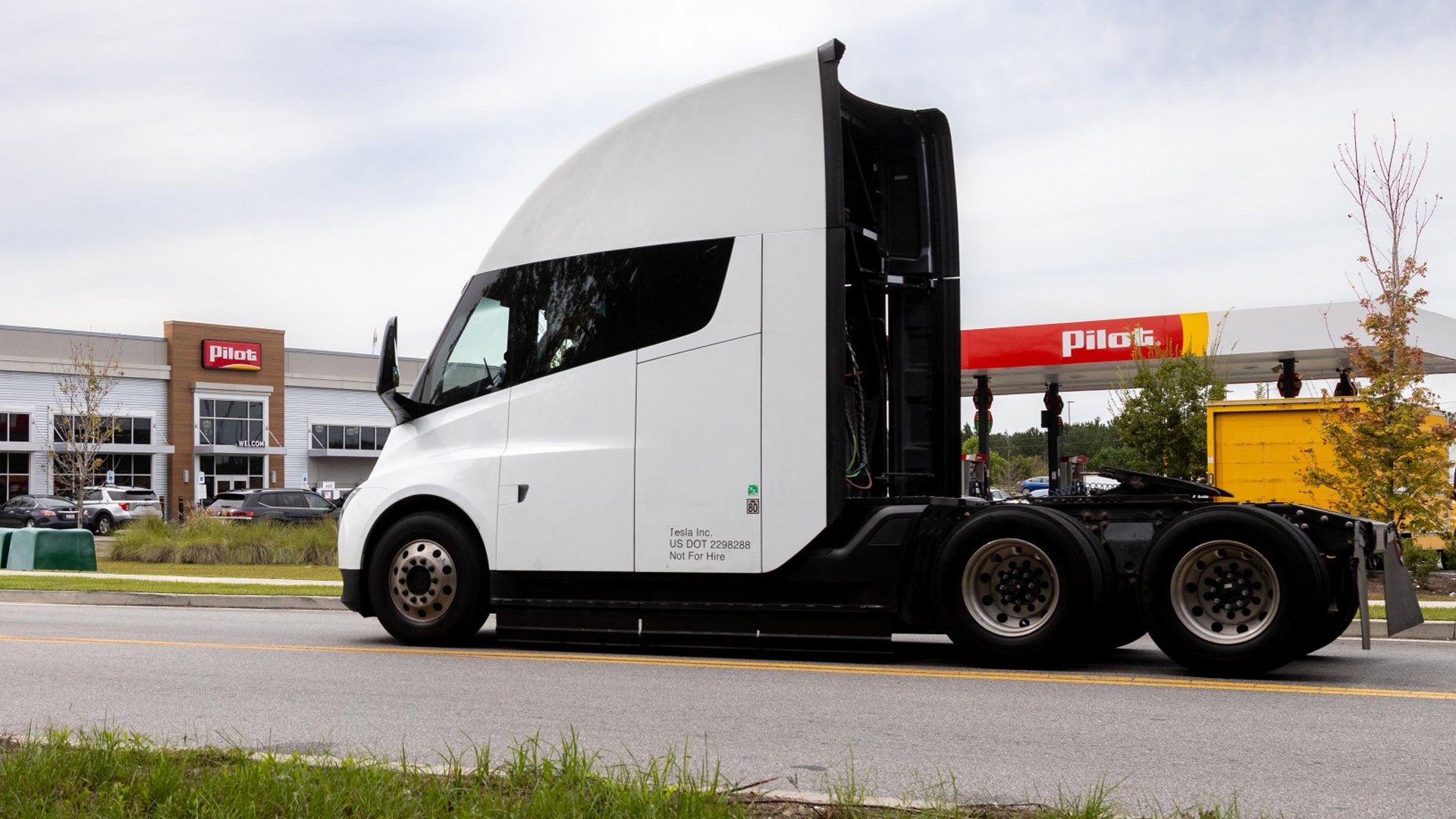
This month, Pilot, which also runs Flying J and is the biggest truck-stop operator in the US, opened its first Megachargers for Tesla Semis. They’re crazy powerful and spreading quickly. Six 1.2-megawatt stalls are up and running at a Pilot in Ellabell, Georgia, and a Flying J in Tulare, California, came online the next day. Sites in Fort Stockton, Texas, and North Las Vegas are next.
Until recently, Semi charging was limited to Tesla’s own facilities, like Giga Nevada and a fleet depot near the Port of Long Beach, plus a handful of customer-facing sites in Southern California. One of those is at a TA truck stop in Ontario, California, which has been open since March but tops out at 750 kW. Ellabell, along with a new eight-stall Megacharger near Atlanta that opened around the same time, gives the Semi its first public charging outside California. Pilot runs more than 900 locations across the US and Canada, and 12 more Megacharger sites are under construction, so it could soon host a big share of Tesla’s truck charging network.
That network is still small. Electrek counted four customer-facing sites and 26 stalls once Ellabell opened. Tesla said it planned about 37 Megacharger sites for 2026, and Semi program lead Dan Priestley has said the goal is 46 by early 2027. As of February, Tesla’s map showed 64 more sites marked “coming soon” across 15 states, led by Texas with 19 and California with 17.
The Pilot chargers were supposed to open this summer, so they’re a couple of months late. Still, seeing them turn on at established truck stops feels like a big step for electric big rigs. According to Tesla, the 1.2-megawatt stalls can restore 60% of a Semi’s charge in 30 minutes, the same length as the break federal rules require after eight hours behind the wheel.
The catch, for now, is that only Teslas can plug in. The stalls use the Megawatt Charging System (MCS) connector, the same standard Daimler, Volvo, and the rest of the industry are building their electric trucks around, and Priestley has said other trucks will eventually be able to use them. Neither Tesla nor Pilot has said when, though, and Tesla played the same game with its Superchargers, keeping them exclusive for years before opening up to other brands. There also aren’t many Semis on the road to take advantage of all this yet. But electric trucking has always had a chicken-and-egg problem, and a fleet manager isn’t going to buy trucks that can’t charge on the same routes their diesel rigs already run. Megachargers at Pilot truck stops don’t solve that on their own, but they’re a big step.
Got a story tip? Drop us a line at tips@thedrive.com.
Loading comments…
Comments couldn’t be loaded. Please refresh the page.