
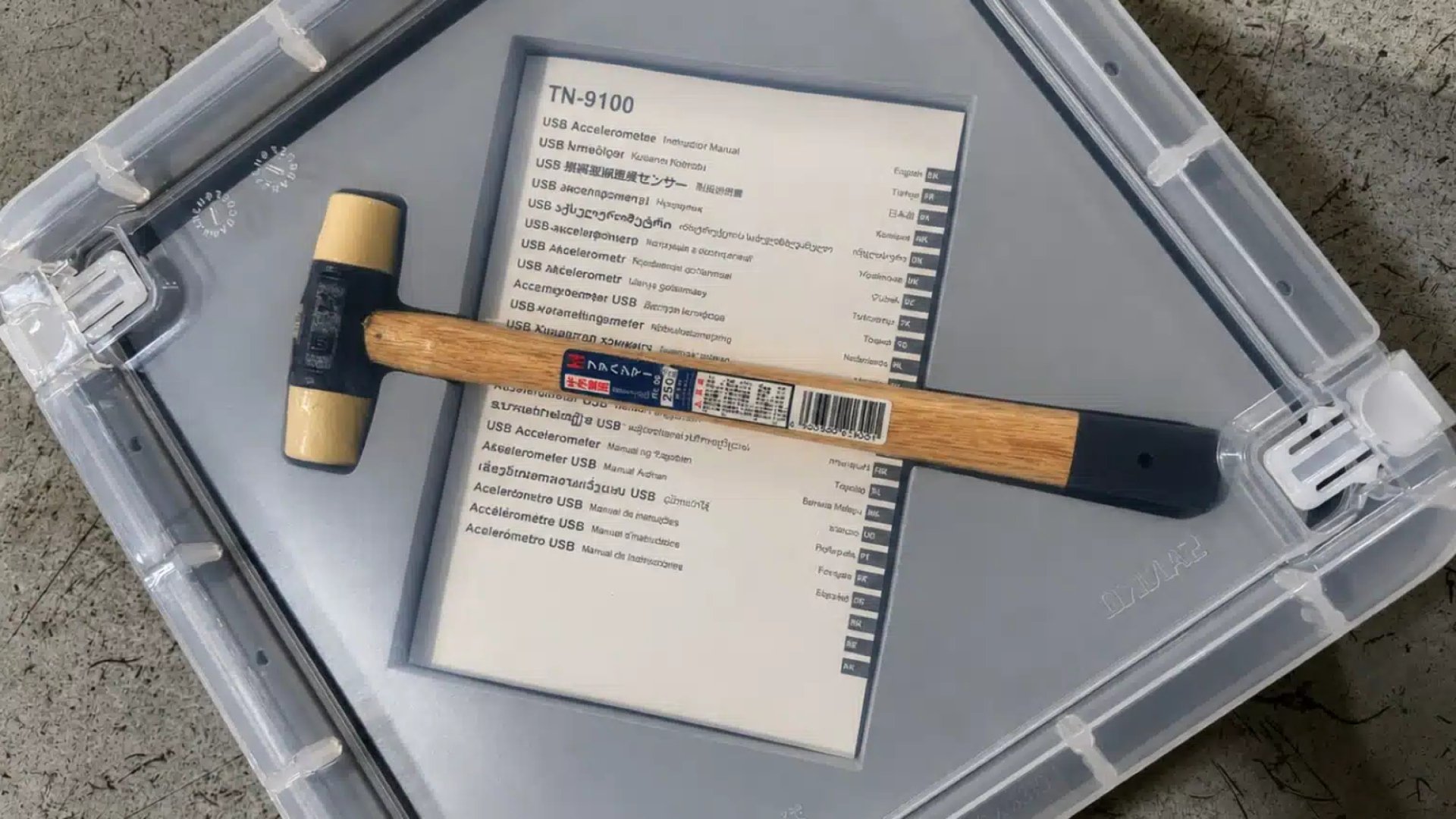
What do you do when you’ve got a malfunctioning part that won’t quite cooperate? If your answer was “smack it with a hammer,” then congratulations: you might be qualified for a job in Toyota’s warranty department. Because that’s the sophisticated solution the company’s engineers have come up with to test Toyota and Lexus trucks for the potentially catastrophic engine defect that prompted a massive, ongoing recall campaign covering more than a quarter-million trucks and SUVs.
Yep, a hammer—In this case, a tiny, plastic hammer built specifically for the purpose of creating a vibration that can be measured in a controlled environment. Pickup Truck + SUV Talk shared a fairly detailed breakdown of the procedure over the weekend. Essentially, by measuring the vibrations that move through the engine when struck by the tool, Toyota can determine the health of critical components without having to tear the engine down for a costly, time-consuming physical examination.
“Fundamentally, this inspection uses the resonant frequency of the front of the crankshaft to assess the condition of the #1 main bearing,” a Toyota spokesperson told The Drive via email. “Toyota’s development of this inspection included testing numerous engines to identify the resonant frequency differences between a #1 main bearing with and without abnormal wear.”
This is the same principle behind a tuning fork. High-quality ones are manufactured to exacting specifications to assure that they chime at the correct frequency—the note we hear. The sound of a tiny plastic hammer hitting a metal crank pulley probably isn’t going to sound particularly melodic, but vibrations are measurable things that produce predictable data. To nerds, that’s a tool.
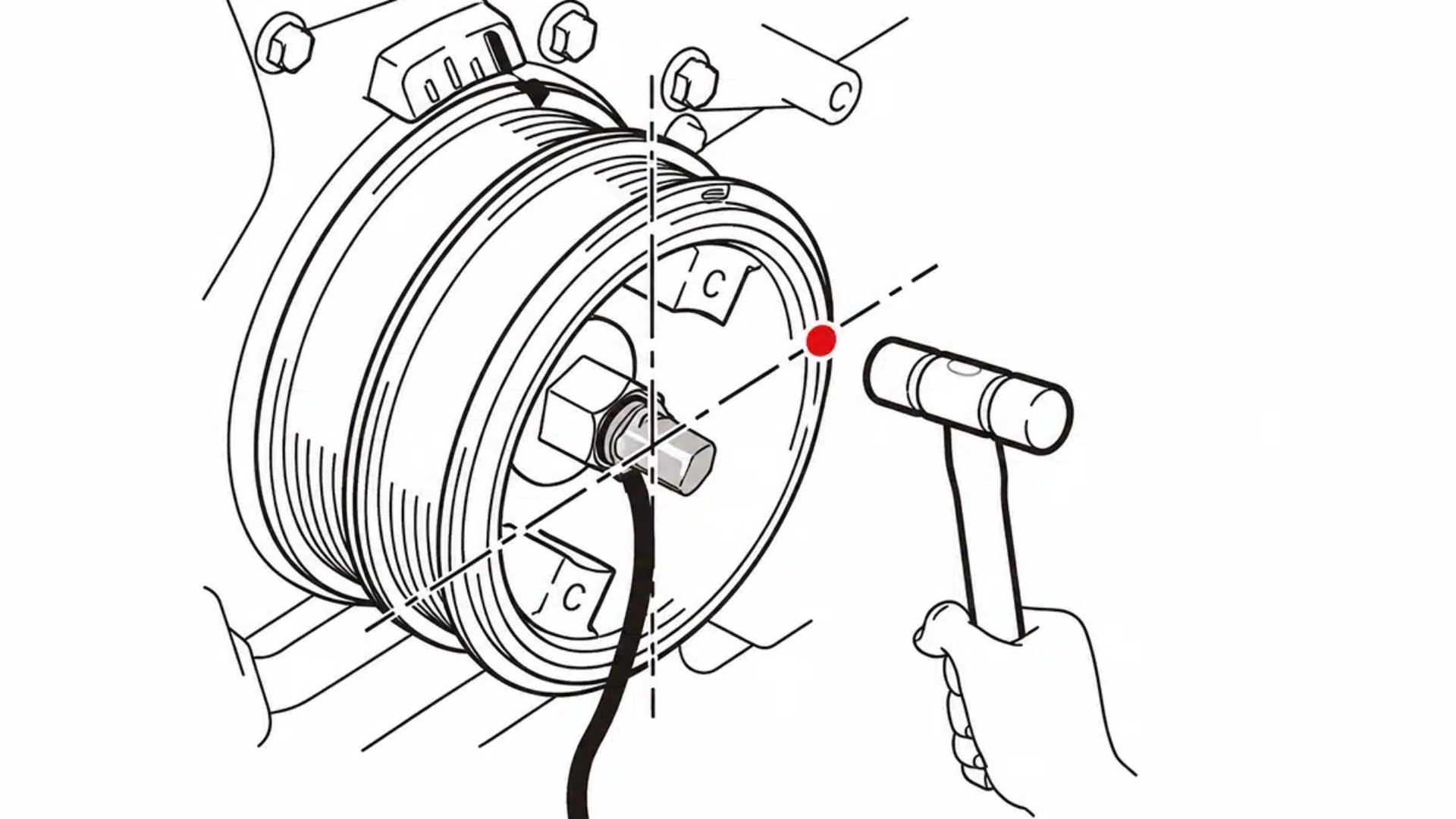
After changing the engine’s fluids and inspecting for any other potentially confounding variables, Toyota techs connect a small accelerometer to the crank bolt and then strike the pulley itself with the hammer at the 3:00 position. The impact strength has to fall within a certain range for the software to get a good reading, and the hammer itself provides feedback to the technician if their swing is too weak or too strong—kind of like Mjolnir, one must be worthy.
Every component is manufactured to an identical spec—same shape, same material composition, same mass—and this means they all vibrate at the exact same frequency. It’s not quite that precise, of course. The tools used to machine those parts wear with time, and tolerances become less tight, but manufacturers provide a range for what is acceptable and standard quality control procedures assure that the product remains within the manufacturer’s specs. But of course, mistakes happen.
In this case, Toyota says that debris left behind during the manufacturing process is degrading one of the main bearings (the parts on which the crankshaft “floats” inside the case), eventually leading to engine failure. Toyota says it has taken steps to prevent debris from entering the crank case in trucks produced more recently, but in many instances, the damage has already been (or is still being) done. This is one of the reasons why Toyota’s recall campaign for the V6 has seemed so disjointed. To this day, Toyota still maintains that not every truck with the V35A actually needs a new engine.
Owners are understandably skeptical, but Toyota hopes this new procedure will give them some reassurance that the process isn’t entirely arbitrary. By measuring the frequencies transmitted through the engine, Toyota can tell how much main bearing #1 has degraded. When combined with a software analysis of the truck’s service life, Toyota techs will be able to tell with a reasonable (but not 100%) degree of certainty whether a given engine is a goner.
“Toyota developed this remedy to be effective in identifying if the engine needs to be replaced in a covered vehicle,” Toyota’s rep said. “Using an inspection software, dealers will evaluate the #1 main bearing and collect available vehicle drive data to confirm the condition of that bearing. If the inspection software cannot confirm that the bearing will be free from abnormal wear due to this issue, dealers will replace the engine.”
This solution is primarily meant to help Toyota discern whether a given truck might have an issue down the road; it’s not meant to serve as a diagnostic method for trucks that are already showing signs of a faulty engine. In that case, don’t wait:
“[O]wners with vehicles experiencing any symptoms, such as engine knocking, rough running, or no-start, should contact their Toyota or Lexus dealer,” the spokesperson told us.
Got a news tip? Let us know at tips@thedrive.com!
Loading comments…
Comments couldn’t be loaded. Please refresh the page.